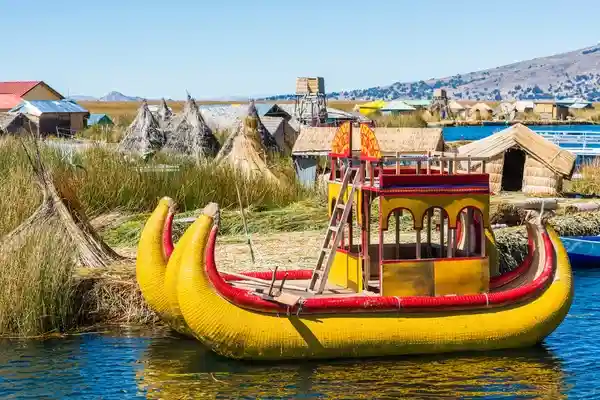
In the heart of Lake Titicaca, the floating islands of Uros are a true marvel of human ingenuity and resilience. Handwoven from layers of totora reeds, these islands are not just a place to live—they are a testament to the deep connection between the Uros people and their environment. Walking on the soft, springy surface feels surreal, while the warmth of the locals makes the experience even more special. Here, life moves at a different pace, where fishing, crafting, and storytelling are part of everyday existence. At 3,812 masl, in Peru Titicaca Lake is the world’s highest navigable lake. You can find the Uros Island a group of approximately 80 islands built from totora, an aquatic plant that grows on the surface of Lake Titicaca. The totora is woven and layered to create the surface of each island. Visiting the floating islands of Uros isn’t just about seeing a destination—it’s about stepping into a centuries-old way of life.
The floating islands of Uros
These islands are inhabited by the Uros People, one of the oldest entries on America, dating back to times before the Incas Civilization This communities claim to be the owners of the waters of Lake Titicaca. The Uros community sustains itself through fishing and hunting activities they also engage in weaving wool tapestries and taxidermy.
For those seeking more adventure, combining a visit to the Uros Islands with the legendary Inka Trail is an incredible way to explore Peru’s diverse landscapes and history. This famous trek takes you through breathtaking Andean scenery and ancient Inca ruins, culminating in the awe-inspiring Machu Picchu. In this article, we will share both options.
Why visit the floting islands of Uros?
Visit the floating islands of Uros is more than just a vacation; it is an immersion into a living and ancient Inca culture and an opportunity to marvel at a sustainable natural life. Lake Titicaca with its blue waters and biodiversity, offers a peaceful and revitalizing experience. On Titicaca, you can enjoy rides on totora boats, appreciate wild birds, and if you’re lucky, witness one of the most spectacular sunsets.
How to get to the floating islands of Uros
To get to the Uros Islands, you must embark on a boat from Puno. If you don’t have a pre-booked tour, locals offer this service. The journey from the mainland to the Uros Islands takes approximately 30 minutes and costs around US$5.
Floating Island Peru from Puno
The city of Puno is the closest city to the Uros Islands and therefore the main gateway for most travelers and adventurers.
From Puno’s main port, there are boats that make the trip to the Uros Floating Islands daily.
The boat expeditions take about 30 min. There are also organized tours available that include:
• Transportation
• A local guide, and sometimes meals.
Floating Island Peru From Cusco
If you are in Cusco you can buy many travel options to reach the Uros Floating Islands.
The best way is to take a flight (1 hour) to Juliaca City from Puno.
From Juliaca you can take a local, transportation or bus to Puno and then a boat to the Uros Floating Islands. Another option is to take a bus from Cusco to Puno a journey that can take between 6 and 8 hours depending on the bus company.
Floating Island Peru From La Paz, Bolivia
You can take a bus to the city of Copacabana on the Bolivian side of Lake Titicaca.
The boats cross to the Peruvian side and arrive in Puno and take around 4 to 6 hourss, depending on the lake’s conditions and from Puno you can take another boat to the Uros Islands.
There are direct flights from La Paz to Juliaca, from here you can hire a taxi or bus to Puno and then a boat to the Uros Floating Islands.
What to Bring to Your Visit to the floating islands of Uros
To make the most of your visit to the floating islands of Uros, we recommend bringing the following items to protect yourself from the sun, cold, and wind:
• Comfortable and warm clothing
• Hat
• Gloves
• Wool socks
• Bottled water
• Chocolate
• Lemon candies
• Sunscreen
• Lip balm
Best Time of the year to Visit the floating islands of Uros
Thefloating islands of Uros are open year-round, but each season’s got its own vibe.
• Dry season (May to August)
• Rainy season (December to March)
If you wanna make your trip extra special, try to time it with one of the local festivals:
• February: The Festival of the Virgin of Candelaria.
• June: During the winter solstice.
Birdwatching and Wildlife
Lake Titicaca’s a dream for nature lovers. It’s got a ton of unique birds and wildlife. If you’re lucky, you might spot flamingos, wild ducks, ibises, and if you’re really lucky, even the Titicaca water frog. Don’t forget your binoculars—they’re a must to really enjoy all the cool biodiversity here. Whether you’re exploring the islands, soaking in the views, or getting to know the local culture, the Uros Floating Islands are an experience you won’t forget. Just pack smart, roll with the weather, and enjoy every second. It’s gonna be worth it!
Visits to Neighboring Islands
If you have time, consider visiting the neighboring islands of Taquile and Amantani. Both islands offer a unique insight into the traditions and way of life on Lake Titicaca. On Taquile, recognized by UNESCO for its textile traditions, you can learn about their famous hand-weaving. Amantani, quieter and less visited, offers the opportunity to stay with a local family for a deeper cultural immersion.
If you’re looking for even more natural beauty, consider a visit to Humantay Lake, a stunning turquoise lagoon nestled in the Andes. This breathtaking destination is perfect for adventure lovers and those seeking a peaceful escape into nature. The hike to the lake is challenging but rewarding, offering spectacular views of the surrounding mountains.
Language
Although the Uros people retain a strong cultural identity, they have not spoken their native language, Uro, for almost a century. Uro belonged to the Uru-Chipaya language family (also called Uruquilla). Today, the only language from this group still spoken is Chipaya, in Bolivian territory.
Currently, the predominant native language of the Uros people is Aymara, followed by Quechua. Many Uros also speak Spanish as their first or second language. In an effort to recover and strengthen their identity, there are initiatives to revive knowledge of their extinct ancient language, supported by the Ministry of Culture.
Cosmovision and ancestral wisdom
The Uros people have been widely known for their traditional use of totora, a perennial plant that is the primary natural resource for the inhabitants who have settled around the wetlands and swamps of Lake Titicaca since ancient times. Throughout their history, the Uros have given totora two main uses, which have been central to their survival: first, totora has been an essential resource for building large habitable rafts, “floating islands,” where many Uros families still live. Second, the Uros have used totora to build boats for fishing, hunting, and collecting bird eggs on the lake; these boats also serve as a means of transportation (DRC Puno 2012).
Floating islands of Uros Tour
During the journey from the mainland to one of the Uros Islands, you can see totora plants growing in Lake Titicaca, which are the basic food source and maintenance system for the Uros to sustain the islands.
Upon arrival at one of the islands, the women of the community will welcome you with their traditional clothing and songs, and the island’s chief will give you a warm welcome in their native language, Uro. You will meet the family living on the island, who will show you their way of life. You can also explore the island, and take photos, and if you love souvenirs, you can buy handicrafts. Additionally, you can take a ride on their Totora boat, which costs around US$10.
Experiential Tourism
Both authorities and residents participate in the Community-Based Tourism project. This allows interested visitors to participate in the daily activities of the Uros community and feel like part of it. The locals teach visitors how to cut totora, fish, navigate totora boats, cook, and more. “Experiential tourism is not just about providing accommodation; it’s about making the tourist feel like your child, and feeling it from the heart” – Cristina Soaña, president of the Uros Island Experiential Tourism Association.
There are different programs for experiential tourism on the Uros Islands, varying depending on the number of days you wish to stay as part of the community. In terms of amenities, there are now solar panels on the islands to provide light at night and ecological bathrooms for visitors. For those looking to extend their adventure beyond Lake Titicaca, the Salkantay Trek offers an incredible alternative to the classic Inka Trail, leading travelers through breathtaking landscapes, snow-capped mountains, and lush cloud forests on the way to Machu Picchu.
Uros Island residents
Below are approximate prices for the visit:
• Island entrance: US$1.5
• Boat transportation cost: US$3
• Accommodation cost: US$52 per person per night, including meals and activities
Cultural respect
The Uros Islands are much more than a tourist destination; they are home to a community with a rich history and traditions.
• Cultural Sensitivity: Show respect for local customs and follow the guidelines given by the inhabitants or guides.
• Photography: Always ask for permission before taking photos of locals or their property.
Supporting the Local Economy
Your visit can have a positive impact on the community.
• Responsible Shopping: When buying handicrafts and souvenirs, ensure they are authentic local products.
• Direct Contributions: Consider supporting community projects or services that directly benefit the community.
Other Islands and Tourist Sites to Visit on Lake Titicaca
1. Taquile Island
o Location: 45 km from Puno, Peru.
o Description: Known for its textile culture, declared an Intangible Cultural Heritage of Humanity by UNESCO. The inhabitants of Taquile are famous for their colorful weavings and traditional techniques.
o Activities: Scenic hikes, visits to textile workshops, and tasting local food.
2. Amantani Island
o Location: 40 km from Puno, Peru.
o Description: A quiet island with mountainous landscapes and spectacular views of the lake. It is home to Quechua communities that offer homestays.
o Activities: Hikes to the Pachatata and Pachamama viewpoints, participation in traditional ceremonies, and nights of music and dance.
3. Isla del Sol (Bolivia)
o Location: On the Bolivian side of the lake, near Copacabana.
o Description: Considered a sacred place in Inca mythology, this island has archaeological ruins and stunning landscapes.
o Activities: Visit Inca ruins, such as the Sacred Rock and the Temple of the Sun, hike ancient trails, and enjoy panoramic views.
4. Isla de la Luna (Bolivia)
o Location: Near Isla del Sol, on the Bolivian side.
o Description: Also known as Isla Koati, it is smaller than Isla del Sol but equally important in Inca mythology. It houses the Temple of the Virgins (Iñak Uyu).
o Activities: Explore Inca ruins and enjoy the tranquility of the place.
5. Copacabana (Bolivia)
o Location: On the Bolivian shore of the lake.
o Description: A picturesque town known for its basilica, which houses the Virgin of Copacabana, the patron saint of Bolivia.
o Activities: Visit the basilica, boat rides, and climb Cerro Calvario for panoramic views.
6. Puno (Peru)
o Location: On the Peruvian shore of the lake.
o Description: Known as the “Folklore Capital of Peru,” Puno is the starting point for exploring the lake and its islands.
o Activities: Visit Puno Cathedral, participate in traditional festivals, and explore local museums.
7. Chullpas de Sillustani
o Location: 34 km from Puno, Peru.
o Description: An archaeological site with funerary towers (chullpas) built by the Colla, a pre-Inca culture.
o Activities: Guided tours to learn about the history and architecture of the chullpas.
8. Lago Menor (Wiñaymarka)
o Location: Southern part of Lake Titicaca, in Bolivia.
o Description: Less visited than Lago Mayor but offers a quieter environment and pristine landscapes.
o Activities: Birdwatching, boat rides, and visits to local communities.
9. Reserva Nacional del Titicaca (Peru)
o Location: Around the lake, near Puno.
o Description: A protected area that conserves the lake biodiversity, including unique flora and fauna natural species.
o Activities: Ecotourism in the andes, birdwatching and wild life, and boat rides through the totora reeds.
The Uros are much more than just a people living on floating islands; they are a living culture that has adapted over time without losing its identity. Despite the changes of the modern world, they continue to uphold their traditions, building their homes with totora reeds and passing down their ancestral knowledge from generation to generation. Visiting the floating islands of Uros is not just a tourist experience but an encounter with a unique way of life, where connection with nature and community is essential. In every smile and every shared story, the Uros teach us that true wealth is not found in material things but in the ability to live in harmony with the environment and with others.