
We all know the Andean heart of Peru has a lot of important traditions that keep alive their culture and show their vision of life. One of those traditions is the celebration of the Qoyllur Rit’i, every year, around the end of May, a lot of people gather to celebrate this also called snow star festival.
Either if you are a curious Peruvian or a traveler who wants to visit the Andean part of Peru and experience this kind of ceremonies, you should keep reading this article. I’m sure you’ll learn something new about Peruvian people and the origin of their traditions and why they believe and celebrate what they do with so much fervor everytime.
También te podría interesar: How to prepare for high altitude trekking in Cusco: 16 tips for your trek
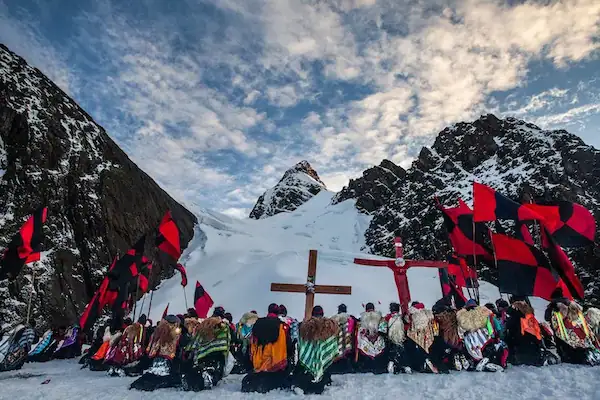
What is the Qoyllur Rit’i festival?
The Qoyllur Rit’i festival is one of the most important pilgrimages in the Peruvian Andes, it combines two of the more predominant beliefs Peruvian people have, wich are catholic religion and ancient Andean beliefs. The festival consists in walking during days, people come from different regions until getting to the sanctuary of the Lord of Qoyllur Rit’i, they walk there because there they say a miraculous image of Christ appeared on a rock in that place, and also, because from there you can witness the change of natural weather cycle from looking at the sky.
What does Qoyllur Rit’i means?
Like I said, it’s a combination with Andean beliefs, that’s where the name of this festival comes from. Qoyllur Rit’i is the quechua written name, it means Snow Star and it describes the moment where the visual phenomenon of Venus resting on top of the glacier as it ascends above the mountain happens. In this moment, where the rising star appears, worshipers pray and ask for their animals and the good times to their harvest.
Where and when is the Qoyllur Rit’i festival celebrated?
The Qoyllur Rit’i takes places in a remote site in the Ausangate region, pilgrims come from all over the world to the Mount Sinakara, this is in the province of Quispicanchis, district of Ocongate, located at 4,700 meters above sea level. There they find the Sanctuary, but later they keep going on a hike until reaching the Apu of Ausangate where they find the image of Christ to pay respect.
This celebration happens at the end of May or beginning of June every year, coinciding with the full moon prior to the Catholic celebration of Corpus Christi, it lasts three days, these are some long but definitely worth three days. People from the Andes participate in this ritual or ceremony because they truly feel that conection to the place where it all happens and also to the christian part of this festival.
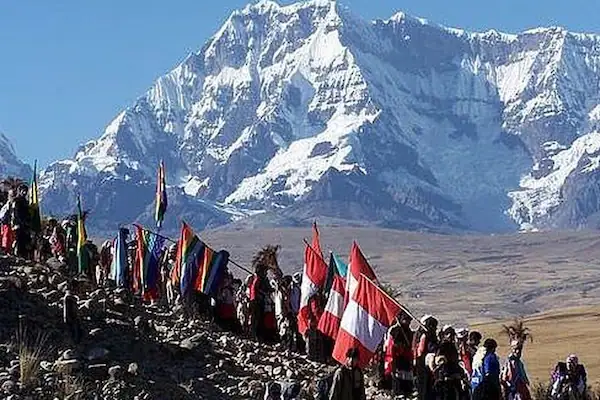
Origin of the Qoyllur Rit’i or Snow Star celebration
The Andean part of the Qoyllur Rit’i celebration is said to have been originated long ago, since the Incas Civilization times, when the people would appreciate the natural phenomenon happening during those days. As you may know, Andean communities have always based their cosmovision and life beliefs in the rhythms of nature. So, this isn’t a random celebration, it is a festival to celebrate the start of a new cycle in the year. During these late May or early June days, the constellation of the Pleiades disappears for some weeks and then it reapperars in the southern skies, this event signals the end of the rainy season and the beginning of a new agricultural cycle.
After this, the skies open up, the cold arrives and the future harversts starts, they celebrate the happiness of a new cycle in harmony with nature. This is also something tourists who come to Peru should know, because the weather change does not only affect the agriculture but also the tourism in this area. It’s like the Qoyllur Rit’i also inaugurates the best season to travel, for example, going on an Ausangate Trek 5 days tour after this celebration would be the best decision to have a good trip because of the weather.
Later on, when Christianity arrived in Peru, it gave a different meaning to this festival. The story says that there was a mysterious boy who was helping a sheperd to take care of his alpacas, knowing this, the Bishop of Cusco wanted to recognize that kid for its labour but he never found him. After sometime, a miraculous image of Christ appeared etched in a rock at the original meeting place, and there is where you’ll find the Temple of the Lord of Qoylloriti today.
También te podría interesar: Best Treks in Peru 2025
What happens during the Qoyllur Rit’i festival?
Now that we know the meaning behind this festival, let’s go deep into the three days celebration, what exactly do people do during this festival? If you have wondered that, now you’ll know.
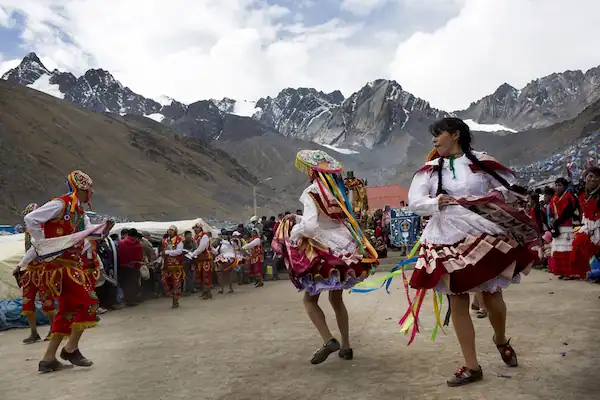
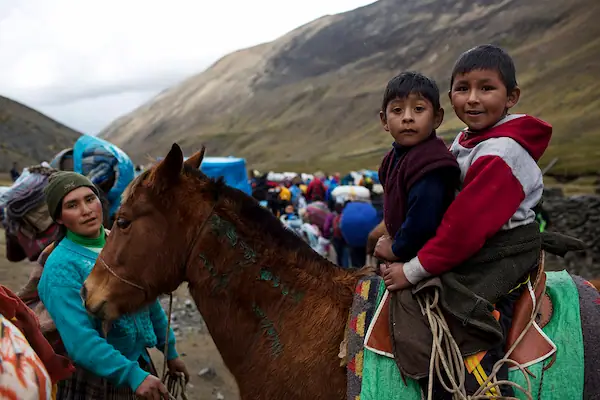
The Qoyllur Rit’i festival is full of joy, color and deep emotion. In the middle of the mountains the people will start dancing, singing and celebrating. Despite the long journey they have and the cold temperatures, people really experience the connection to their beliefs and share that with the other thousands of people who feel the same way.
Main components of the festival:
These are the main components that make this festival an alive celebration.
Pilgrims
The pilgrims are divided into what they call “nations”, there are eight of them and they are separated by their villages of origin wich are: Paucartambo, Quispicanchi, Canchis, Acomayo, Paruro, Tawantinsuyo, Anta and Urubamba.
Here the pilgrims go on a twenty-four hour procession and every nation has an especific role during it. For example, the Paucartambo and Quispicanchi nations carry images of the Lord of Tayancani and the Grieving Virgin until getting to the village of Tayancani. The Council of Pilgrim Nations and the Brotherhood of the Lord of Qoyllurit’i are the ones in charge of keeping the order during the celebration by planning the activities, the rules, the supply food and how people should behave. On the other hand, ther are people called pablitos or pabluchas, who are in charge of maintaining the order.
Dance and Comparsas
Each nation brings comparsas, or dance groups, that perform traditional dances unique to their community. These dances are not only artistic expressions, but also spiritual acts of devotion. Many include masks, colorful costumes, and symbolic choreography passed down through generations. Here are some of the dances out of the bunch the Andean culture has.
- Qhapaq Qolla: This dance represents highland merchants from colonial times. Dancers wear colorful costumes, carry symbolic llamas or mules, and wear masks with exaggerated features.
- Qhapaq Ch’unchu: Symbolizing the Amazonian peoples, this dance is energetic and vibrant. Dancers wear feathered headdresses, body paint designs, and carry spears, reflecting their jungle roots.
- Saqras: Dressed as devil-like tricksters, the Saqras wear grotesque masks and playful costumes. Despite their scary look, they act as guardians of the pilgrimage and help maintain order.
- Ukukus: These mythical bear-men wear thick woolen suits and black masks. They perform ritual dances, night vigils, and climb the glacier, serving as spiritual protectors and messengers.
- Wayri Ch’unchu: A more elaborate version of the Ch’unchu dance, mixing elements of the jungle and the highlands. Their outfits are highly decorated, and their dance bridges two cultural worlds.
- Auqa Chileno (or Qhapaq Negro): This satirical dance portrays “the enemy” or colonial powers. With powerful and theatrical movements, it critiques oppression and highlights historical resistance.
- Negrillos: This dance reflects the experience of African slaves brought during the colonial period. Dancers wear black costumes, large hats, and bells, moving rhythmically in protest and remembrance.
Rituals and Masses
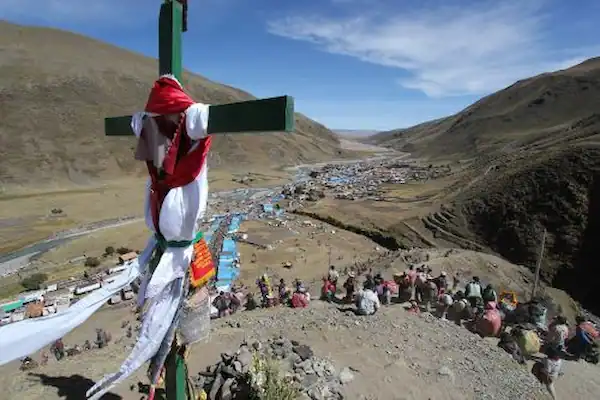
Religious ceremonies are held throughout the event. Catholic masses blend with ancient Andean offerings to the Pachamama (Mother Earth) and the Apus. Candles are lit, crosses are honored, and people ask for blessings related to harvest, health, and protection.
Sacred Market
Along the route and at the sanctuary in the Qoyllur Rit’i, a vibrant ritual marketplace emerges. Here, pilgrims symbolically “buy” and “sell” miniature items that represent their hopes and desires: houses, animals, money, diplomas. It’s a form of sympathetic magic, as if by symbolically owning something, they will attract it into their real lives.
Then the pilgrims attend multiple masses held at the sanctuary of the Lord of Qoyllur Rit’i, where candles are lit and prayers are offered to Christ. At the same time, Andean rituals take place all around the site, people offer coca leaves, flowers, and miniature symbolic items (such as small houses or animals) to the Apus (mountain spirits) and to Pachamama, the Earth Mother. Some bury these offerings in the ground as a sign of gratitude, while others burn them to send their intentions to the spiritual world. This powerful coexistence of traditions reflects the syncretic nature of Andean spirituality, where Catholic faith and indigenous cosmology come together in celebration, reverence, and hope for a new agricultural cycle.
Guide to attend Qoyllur Rit’i as a tourist
Qoyllur Rit’i is far from being a commercial or superficial celebration. Like many Andean festivals, it holds deep spiritual meaning, blending Catholic devotion with ancient indigenous beliefs rooted in nature and the cosmos. While it has traditionally been a local pilgrimage for Quechua communities, recent years have seen a growing interest from both national and international visitors.
If you plan to attend, maybe because you are going to a short inca trail trek and then you want to keep exploring the Andes, then it’s important to approach the experience with humility, preparation, and respect. Here are some essential tips to help you honor the journey and the people who live it.
Prepare for the altitude
The pilgrimage takes place in the Sinakara Valley, at over 4,000 meters above sea level. Make sure to acclimate in Cusco for a few days before attending. Drink plenty of water, avoid alcohol, and consider coca tea to help with altitude sickness.
Be ready to walk long distances
The route to the sanctuary includes long uphill walks, often in cold weather and rough terrain. Wear sturdy shoes, layered clothing, and be prepared for physically demanding conditions — especially at night when temperatures drop sharply.
Learn about the symbols and dances
Take time to research the significance of the rituals, dances, and characters (like the Ukukus or the Qhapaq Qolla) before you go. Understanding their meaning will deepen your experience and show respect for local traditions.
Respect sacred rpaces
The sanctuary and the glacier are sacred sites. Do not interrupt rituals, take intrusive photos, or treat the event as a spectacle. Always ask for permission if you wish to photograph someone, especially during rituals.
Ask questions with respect
If you don’t understand something, it’s okay to ask, but do so kindly and without judgment. Many locals are proud of their traditions and happy to share their meaning when approached with genuine interest.
También te podría interesar: What Is the Cusco Tourist Ticket?
Conclusion
If you ever have the oportunity to participate in the Qoyllur Rit’i, don’t waste it, it would be an amazing experience that can teach you about how other cultures see the world and what a deeper conection they have to nature and their cycles. Andean culture is a really mystic one, that can amaze you with every detail of the main beliefs it has, so if you are a curious traveler you should chek this festival out.
Remember that this festival practiclly inagurates the beginning of the best season to travel to the Andean part of Peru, so, if you want a little more insight of this celebration and you are going to visit Machu Picchu or Ausangate, you could ask the Peru Tour Operator you are going to travel with, to give you some advice on about how to participate in the Qoyllur Rit’i Festival.


