
Sacred Valley Peru
This place is located right between Cusco and Machu Picchu, those huge crowd-pleasers. Visitors usually spend a couple of nights here in a basic hostel or hotel, or even in a dome. During the day, you can kayak or go horseback riding. Then, at night, gaze at the twinkling stars. Is it the drop in altitude from Cusco that makes breathing easier, or do those enormous mountains simply lift your spirits? Or imagine ancient Inca groups walking along the Urubamba River. Anyway, this place feels different, you know?
When you’re not out in nature, learn some Inca history and delve into how the people of the Andes lived. Discover what weaving meant in their customs. Try a meal cooked underground in the traditional way. Or explore the ancient stone sites scattered across the landscape. In any of these experiences, talk to the locals in the small villages. And yes, even the llamas. It opens up a whole new perspective.
What’s This Place Anyway?
Thanks to that good dirt for growing stuff, people lived here way before the Incas showed up. Farming was big.
Word is, Chanapata folks were around about 800 BC. Some historians back in 1946 said they found this culture near Cusco’s edge. Sites close to farm land, not many hunting spots. So, probably grew crops. Lots of llama bones mean they had herds. Pots well done, plenty decorated ones in trash heaps.
Then Qotacalla from maybe 500 to 900 AD. After that, the Killke until the Incas took over in 1420. Spanish came later.
For all of them, growing food mattered most. The Incas started in Cusco but came here for the warmer air at lower spots. Better for crops.
The Valley became the main spot for corn. Used it for chicha, a fermented drink for ceremonies. Also brought in coca leaves and peppers to Cusco.
Those steps on hills, andenes, show Inca work clearest today around here.
One old explorer in 1877 noted how these steps cover both sides of the Yucay valley, from wide ones at the bottom, up the mountains 1000 to 1500 feet. Get narrower, the top ones are barely two feet. Walls of rough stones lean in a bit, at different heights.
Incas split the area into lands for leaders. Machu Picchu famous one, was maybe built for Pachacuti, the ninth ruler. He had Pisac too. Name means world changer in Quechua. Started big takeovers, grew the empire huge in three generations, from the Cusco valley to most west South America.
Some book says Pachacuti lifted their view high, like condor wings. Tough, mean, hard work, then boom, big chapter in history. Wait, not sure if that’s exact, but close.
Stuff to Do Active Wise
Quad biking. Popular path links Chinchero to Moray, then Maras on those four-wheelers. Rider sees those round terraces at Moray and salt pools at Maras.
Hiking routes. Inca Trail big one, starts near Ollantaytambo, hits Machu Picchu after about 39 km on old paths. Man, that trek gets intense quick!
Rock climbing. Done in Pachar by Urubamba. Ropes, metal steps, rails, and nails keep you safe while climbing high rock. Extreme stuff in the valley. Heart pounds.
Zipline. Near Maras salt spots. Four cables, the longest 1250 meters. Pick all or one. The top view shows the whole area’s beauty. Whoa.
Rafting. On the Vilcanota River, sacred to the Incas. Launch between Urubamba and Ollantaytambo. Levels vary by skill. Trip one to two hours. Water rushes.
Biking. Kick off at Abra Malaga, high up around 4316 meters. Drop down miles to Ollantaytambo at 2792 meters. Legs burn, but views? Worth it. Or maybe not, if heights freak you.
Ticket for Sites in Sacred Valley
Most old spots and places talked about need the Cusco pass. It lets you go to lots of the draws on the area chart. After that, head out alone or join one of those group outings around this spot. Smart to get planning now, dodge headaches later.
Look, the whole layout of this area packs in tons of unique stops. Doing a full loop here ranks high before hitting that big wonder. Plus, get used to the height, and feel better overall on the journey. Hope this helps, check more with pros if needed.
Peru packs a punch with options; it’s tough to pick a start. Folks with tourism know-how can sort out your plans to that famous site and nearby loops. Turn it into something you won’t forget! Wait, maybe overkill, but yeah.

Weather Patterns Here
This upland weather stays pretty steady year-round. Up on tall peaks like Salkantay, cold enough for snow all the time. Down low, where spots like Ollantaytambo, Urubamba, Pisac sit, a milder feel.
Dry Times Against Wet Ones
Like other high Peru areas, splits into dry and wet periods.
Dry runs April through October.
The sun shines steadily, and rain is rare.
Nights chill hard.
Days around 68-72°F, or 20-22°C.
Nights drop to 35-40°F, about 1.7-4.4°C.
Wet hits from November to March.
Mornings are cloudy, light drips are common, then heavier pours later.
January and February usually get the most water.
Nights are warmer on average in wet, colder in dry.
Days 68-70°F, 20-22°C.
Nights around 45°F, 7.2°C. Or so.
Prime Window to Show Up

Busy times match dry spell: June, July, August. Weather often clear, aligning with north summer breaks. High demand for spots and limited rides or entries to that main site, book ahead for sure dates.
Slow periods line up with wet months: December, January, February, and March. Storms pop up randomly, so flights to or from Cusco might lag. But upsides? Fewer people at places, hills turn lush green tones. Stunning, really pumps you up!
Midway Spot Thoughts
Sits smack between hot spots Cusco and Machu Picchu. Good for a break, snag a room or two at the simple lodge. Paddle kayak or horse ride days. Nights, stars pop like crazy. Lower than Cusco, easier to breathe? Or those massive ridges boost mood. Imagine Inca crews along the Urubamba flow. Feels charged, man.
Not out in the wild? Grab Inca bits, sink into Andes ways. See weaving’s part in old life. Eat from the ground oven tradition. Wander stone remnants across lands. Chat locals from small settlements, llamas included. Eye-opener to something magic. Doubt it? Try and see.
Weather Again
Upland setup keeps temps even all year. High summits are cold with constant snow. Valley bottom milder for towns like Pisac, Urubamba, and Ollantaytambo.
Top Visit Slot
Peak crowds in dry: June-July-August. Sunny often fits northern summers. Demand spikes, limited train spots and entries, plan early for dates.
Low in wet: Dec-Jan-Feb-Mar. Unpredictable downpours, flight waits are common. But sites are emptier, landscapes green explosion. Whoa, that shift hits hard!
Geography & Map
Sacred Valley lies between Ollantaytambo and Pisac. That’s northwest of Cusco. Urubamba river flows right through, soil’s fertile, water’s plenty. Altitudes start at around 9,000 feet down low, up to 16,000 or more on mountain tops. Lower than Cusco, yeah? Helps with adjusting to height.
Elevation from 6,730 to 9,800 feet, that’s 2,050 to 3,000 meters.
Population about 65,000, give or take.
History of the Sacred Valley Cusco
Sacred Valley’s past ties are tight with Cusco, the Inca hub. The Inca Empire grew in the 14th century, spreading over Peru, into Ecuador, Bolivia, Chile, Argentina, and Colombia. Everything pointed back to Cusco, where the ruler stayed. Valley’s rich lands fed them all, crops like grains, fruits, and veggies.
Inca builders put up temples and spots in the valley. You see those now at sites in Chinchero, Ollantaytambo, and Pisac.
Before the Incas, the Wari people lived there, say from 500 to 1100 AD, roughly. The Incas moved in around the 12th century, with Manco Capac as the first ruler.
Spanish hit in 1531, Pizarro with 168 men. By 1535, Manco Inca fought back, a big win against the Spaniards at Ollantaytambo – intense stuff, blood everywhere!
But then, in 1572, the last Inca, Tupac Amaru I, was caught in Vilcabamba and dragged to Cusco. Viceroy Toledo ordered the head cut off in the plaza, thousands watching. Horrific, man.
16th to 18th centuries, Cusco turned into a trade spot in the southern Andes, plus pushing religion on locals. Churches went up all over the Sacred Valley.
1911, Hiram Bingham from Yale finds Machu Picchu ruins. National Geographic covers it, and the world notices this Peruvian corner.
1999, PeruRail started trains for tourists to Machu Picchu. In 2004, Potato Park was set up, guarding hundreds of potato types, keeping farming diversity in the area.
Now, tourists flock more, but locals push projects to hold onto Quechua ways. Not sure if it’ll last, though.
Rural or Experiential Tourism in the Sacred Valley
Travelers don’t just look at scenery, but also breathe clean air. They jump in, stay with folks, pick up on habits, culture, traditions. Like tilling soil, rituals for Pachamama – that’s Mother Earth, baking bread, planting seeds, that kind.
Three spots for this: Salineras de Maras first, tourists help pull salt from 3,000 wells. Then Yucay, good for eco stuff, bike rides on mountains. Pumahuanca last, guides show farming tricks.

How to get to the Sacred Valley, Peru
Sacred Valley fits any schedule. Spots connect easily, two hours max between them.
Short on time? Quick dips work, no need week-long haul. Day trips from Cusco to each.
Machu Picchu sits at the valley’s end, tie it in with Peru trips.
Cheapest ride from Cusco to towns? Collectivos.
Minivans are used by locals to travel between places. Cost 2-8 soles, about 1-2 bucks.
No set times, leave when full. Chill, go with the flow. Modern ones, AC sometimes. Roof for big bags, even my tall hiking stick from Chinchero woods.
For collectivos Cusco to Urubamba, Ollantaytambo, Pisac – go Calle Pavitos. In towns, from Plaza de Armas.
Tip: Buy the Boleto Turistico before.
130 soles, around 39 bucks, covers 16 sites, museums, 10 days. Pays off after two visits, every 70 soles or 21 bucks alone. Must-have for valley trek.
Get it at the COSITUC office, 103 Avenida del Sol, Cusco center. Or at ruin entrances.
Geography and Getting There
To get to the valley towns from Cusco, you really just need to find Calle Pavitos. Go there. You need to catch a colectivo. These are minivans that the locals use to move around. It is cheap. Maybe 8 to 15 Soles. That is roughly 3 or 5 USD per ride.
They do not have a schedule. They leave when the bus is full. You just sit back and wait. It is Latin time. Surprisingly, the vans are modern and usually have air conditioning. They tie the big luggage on the roof. I once saw a 6-foot hiking staff, looking like it belonged to Gandalf, tied up there near Chinchero.
The Sacred Valley is a deep cut in the earth between Pisac and Ollantaytambo. The Urubamba River moves through it. The soil is good. There is water. Altitudes change fast. The valley floor is around 9,000 ft (2,790 m), but the mountain tops hit 16,000 ft (5,000 m) or more. Since it is lower than Cusco, it is a good place to fix your breathing and acclimate.
My Recommendations to Visit Sacred Valley, Peru
If you only had a few days and had to pick, choose Pisac first. The town is full of flowers and cacti. They seem to come out of every inch. The hike up to the Inca City is one of the things you will remember most. There is a hostel there, Wolf Totem. Probably the best I have stayed in.
My second choice is Ollantaytambo. It is basically an Inca town that is still alive, not ruined. You can hike around it for a week.
From Cusco, you can reach these places easily. Distances are short. Maybe two hours max from one site to another. You can do it all in day trips if you are short on time.
A Violent History
The history here is heavy. It connects tightly with Cusco. The Inca Empire got big in the 14th century. They went into Ecuador, Chile, and Colombia. But Cusco was the center. The valley was the breadbasket. They grew grains and vegetables for the King.
But then the Spanish came. Francisco Pizarro arrived in 1531 with 168 soldiers. It got ugly. By 1535, Manco Inca organized a rebellion. He actually won a massive military victory against the Spanish in Ollantaytambo.
It didn’t last. In 1572, they caught the last King, Tupac Amaru I, in Vilcabamba. They took him to Cusco. Viceroy Francisco Toledo ordered his beheading in the main plaza. Thousands watched. It was brutal.
Before the Incas, the Wari Culture was here. Maybe 500 to 1100 AD, approximately. Then the Incas took over around the 12th century with Manco Capac.
Practical Details
Before you go, you have to buy the Boleto Turistico. Do not skip this. It costs 130 Soles (about 39 USD). It lets you visit 16 sites and museums for 10 days. Since a single entry costs 70 Soles (21 USD), if you visit two places, you already saved money. You can buy it at the COSITUC office on 103 Avenida del Sol in Cusco or at the entrance of the ruins.
Machu Picchu is at the end of the valley. Hiram Bingham arrived there in 1911. National Geographic wrote about it, and everyone started looking at this part of the Andes. By 1999, PeruRail started running trains.
More Than Just Looking
You don’t just have to watch. You can do things.
There is Yucay, where you can practice ecotourism and mountain biking. Then, you have Salineras de Maras. There are 3,000 salt wells there. You can get involved in the salt extraction process. And in Pumahuanca, locals guide you. You learn farming techniques.
It is interesting that in 2004, they made the Potato Park (Parque de la Papa). It protects hundreds of native potato species. Tourism is rising, but people are trying to keep the Quechua traditions alive. You can stay in local houses, bake bread, or make a payment to the Earth (Pachamama).
Eating and Sleeping in Urubamba
Urubamba does not have the giant ancient ruins on the hillside like the other towns, but it has something else. It has luxury. There are boutique hotels just outside the town. It is a good place to stay overnight if you want to understand the valley at a slower pace. You get spas and endless views of the Andes from the room.
For food, it is becoming a serious destination. Peruvian food is not a secret anymore; the restaurant Central in Lima was named the best in the world for 2025. In Urubamba, you can taste this culinary rise. I recommend Tierra Cocina Artesanal if you want high-end versions of classics, like Lomo Saltado. You can also try Q’anela or Paca Paca. The restaurant Alma at the Casa Andina Private Collection is also very good.
Many people just pass through here because the main road connects everything. Tours stop for lunch. If you have time, walk to the plaza and visit the indoor market two blocks away.
Also, the river here is alive. You can go rafting. The rapids are Class I to III. This means beginners can do it, but you still feel the rush of the water.

The High Plains of Chinchero
Life in Chinchero moves slowly. Except on Sundays. On Sundays, the town hums. The market here is intense. Vendors sell produce they grew, but the main thing is the weaving. Blankets, ponchos, belts. The weaving tradition in the Andes is old, but Chinchero celebrates it the most.
You should go to The Center for Traditional Textiles of Cusco. You can watch them spin alpaca thread on looms that haven’t changed design in centuries. It is the best place to learn this.
To see the main plaza and the ruins, you must buy a ticket. There are stone structures and terraces that sweep down the hill. A white church from the 16th century stands there. It was built right on top of the Inca stones. The walls inside are painted beautifully. On a clear day, you can see Apu Salkantay in the distance.
Poc Poc waterfalls
If you’re looking for a place to eat lunch and end up walking an hour from the archaeological site along an original Inca road on the canyon side. A family shared their potatoes and alpaca meat with me.
Chinchero feels less touristy than the other towns, but they are building a new airport nearby. It might change soon.
Pisac: The Market and The Mountain
Pisac is really 2 towns. One is modern, down in the valley. The other is ancient, up on the ridge.
The modern town is pretty. It has yoga studios and tarot readers. It feels spiritual and the climate is balmy because it is lower than Cusco. The market here is famous. It happens every Sunday and Thursday. People from the highlands come down to sell. You see handmade textiles with natural dyes. You should look for those, not the mass-produced stuff. It is okay to bargain a little to lower the price by a few Soles.
The Inca City sits high above. To get there, you have to do a steep walk. It takes about 90 minutes to go up through the terraces. Or you can take a taxi. The site is huge. It has military areas, urban areas, and temples. The Temple of the Sun has a rock called Intihuatana. They say it tracks the seasons. Pisac means “Partridge” in Quechua. The terraces look like a bird’s wing.
If you are very brave, you can hike here from Cusco. You go past Sacsayhuaman, Qenqo, and Puka Pukara. From Puka Pukara, you catch a vehicle. For everyone else, just go to Calle Pavitos in Cusco. Pay 2 Soles. It takes 40 minutes.
Ollantaytambo
This town is small, but its history is long. It is effectively the end of the road. There is no road to Machu Picchu from here, so you have to take the train. The station is busy.
The town wakes up after noon when travelers arrive. You can browse shops or sit in a cafe. The archaeological site is a fortress on the slope. You climb stone steps up the terraces. The view from the top is perfect for photos.
It is a living Inca town. It has not been ruined. It is unique.
Chinchero and the Weavers
Life in Chinchero usually drags. It is slow. But on Sundays, it wakes up. The market takes over. You see vendors selling things they grew in the dirt, but the main reason people come is for the weaving. They sell ponchos, belts, and rugs. This tradition is old. It has been happening here for generations.
If you want to understand how this works, you should go to The Center for Traditional Textiles of Cusco. It is in the town. You can watch them spin alpaca thread. They use looms that look like they haven’t changed design in five hundred years. It is raw and impressive.
To get into the main plaza and see the Inca City structures, you have to buy a ticket. There are terraces that sweep down the hill. A white church from the 16th century stands there. It was built right on top of the Inca stone foundations. The walls inside are painted, and the ceilings are tall.
If the sky is clear, you can see Apu Salkantay in the distance.

A Hidden Waterfall
There is a waterfall called Poc Poc. I found it by total accident. I was just looking for a spot to eat my lunch away from the noise. You walk from the archaeological site for roughly an hour. The path follows an original Inca road that clings to the side of a canyon.
When I was down there, I met a Peruvian family. We didn’t speak much, but they shared their potatoes and alpaca meat with me. It felt very real.
Right now, Chinchero is less crowded than Pisac. But they are building a new airport nearby for people going to Machu Picchu. It will change. The quiet might not last.
The Stop in Urubamba
Urubamba is different. It does not have the big ancient ruins on the hills. Instead, it has comfort.
Many people just pass through here because it is on the main road that connects everything. Tours usually stop here just for lunch. But if you have time, do not just sit in the van. Walk to the town plaza. Visit the indoor market two blocks away. It is loud and interesting.
If you stay overnight, it is usually in the luxury hotels just outside town. You get spas and views of the Andes. It is a good place to slow down.
The food scene is getting strong here. I recommend Q’anela or Paca Paca. Also, the restaurant Alma inside the Casa Andina Private Collection is very good.
Ollantaytambo: The Living Stone City
You should stay here for at least 3 nights. Maybe four. People call it Ollanta. Most backpackers know the name because the train to Machu Picchu stops here, but it is a mistake to just pass through.
The town is about 500 meters lower than Cusco. The air is thicker. It is warmer. What I noticed most was the mountains. They are huge ramparts that wall you in. At night, you look up, and half the sky is gone, blocked by black rock. It is intense.
This place has been inhabited without a break since the Inca Empire. It is the only place in the Sacred Valley where the Inca City is still a house, not a museum. I remember having to stoop under a stone doorway that was 600 years old just to get my laundry done. It felt strange. The water channels cut into the streets still carry running water.
The Fortress. This is included in the Boleto Turistico. You must visit it. It has agricultural terraces carved into the mountain. But it was also a battlefield. Manco Inca stood here against the Spanish Conquistador Hernando Pizarro. The Inca hero unleashed a flood on the plain below and rained stones and arrows down on them. He actually drove the Spanish away.
At the top, there is a Sun Temple. The carving is exquisite.
The Mystery of Moray
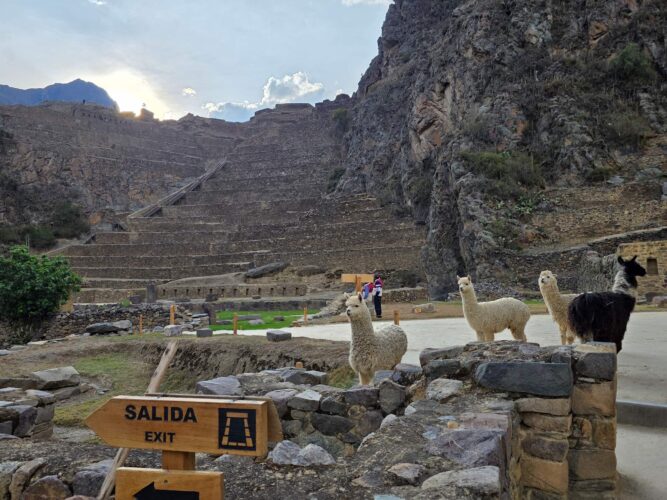
This place confuses archaeologists. It wows everyone else. Moray consists of three circular sinkholes, carefully terraced. The main theory is that the Incas used it as a laboratory. They wanted to see how plants grew in different microclimates. Or maybe it was a water temple. Who knows.
You have to decide for yourself. To get there, get a colectivo to Maras. Then walk. It is a 6km walk on a flat path. You move parallel to the Cordillera Vilcabamba range. It is stunning. You might see a Quechua herder moving alpacas, or purple corn drying in the sun.
I once combined Moray and Salineras de Maras into one hike. It was a mission. Approximately 27km. It took me 8 hours. I lost track of time looking at the circles in Moray and had to race the sun to get back to Maras before it got dark. I almost didn’t make it.
Huchuy Cusco
The name means “Little Cusco” in Quechua. It is a ruin of a 13th-century Inca estate.
To get here, you don’t need a ticket. Entry is free. But you have to sweat for it. It is a 20km round trip. Give yourself 7 hours.
What stuck with me wasn’t just the stones. It was the altitude change. You start in the high, bleached Puna grass and drop down until you are surrounded by waterfalls and tropical plants. You are walking on an original Inca road.
The Route: Do not go back the same way you came. Start by taking a taxi or colectivo from Chinchero to Umasbamba. The trail is marked. When you are done looking at the ruins, walk the steep three-mile trail down to Lamay. It is hard on the knees. From Lamay, there are plenty of colectivos to take you back to Pisac or Chinchero.
The Walk to Intipunku
You start this walk at the Inca Bridge in Ollantaytambo. Follow the trail. It is marked.
The hike is long. Approximately 18km in total. Because of the elevation gain and the time you will spend staring at the view, expect it to take 5 hours. Along the path, you see tombs. They are old. Pre-Inca.
At the end, you find Intipunku. It is a Sun Gate. It uses that classic trapezoidal shape the Incas loved. It frames the snow-capped mountains to the North perfectly. Archaeologists believe they used it to observe the stars. I don’t know if that is true, but standing there, it feels like it could be.

The Route to the Inca City
Ollantaytambo is the closest train station to Machu Picchu. It is the easy way to get to the bucket list spot.
But if you want to save your soles, do not take the train. There is another way. Take a colectivo to a place called Hidroelectrica. From there, you walk along the train tracks to Aguas Calientes. That is the town at the bottom of the Inca City.
I chose this route. It was better than I expected. The trains move slowly, so you hear them coming. You are rarely alone on the tracks because it is popular. I met a German couple on the bus. We ended up walking together. We found wild coffee beans growing right there. We even jumped into the Urubamba River and swam beneath the mountain. It was cold, but we felt alive.
Travel Tips on the Sacred Valley Peru
Planning the Trip
If you are thinking of coming in the high season—June, July, August—do not wait. You need to plan months ahead. Everything fills up. The flights, the hotels, the trains. If you want to walk the Inca Trail, those permits can vanish four months in advance. Also, remember that in February, the trail closes for maintenance.
What to Put in the Bag
Do not overthink it, but be smart. The weather here changes fast. You need layers. T-shirts are fine, but bring long sleeves and a fleece. You will need them. For your feet, bring hiking boots. If you are doing multi-day hikes, your ankles will thank you. If not, athletic sneakers with good grip work for walking around the sites.
The sun is strong. Bring a hat. Bring glasses. Wear sunblock. You need a daypack with tight straps to carry your water and camera. And if you come during the rain, bring a waterproof jacket or a small umbrella. You can buy plastic ponchos here, but better to have your own.
Health and Altitude
The altitude is real. Most people feel it in Cusco first. Since the Sacred Valley is lower, it is easier on the body. If you are worried, skip Cusco and come straight down here. The symptoms are shortness of breath, headache, and nausea.
You have to drink water. A lot of it. But—and this is critical—only drink bottled or filtered water. Never drink from the tap in Peru. It is not safe.
Staying Safe
The valley is friendly. I rarely see problems. But do not be naive. Pickpockets exist in crowds. Keep your things close. I wear a traveler’s wallet under my shirt for the important stuff. Leave the jewelry and the passport in the hotel safe. Carry a paper copy.
Moving Around
If you booked a tour, they drive you. If you are on your own, you have choices. The local bus is the cheapest way. Taxis are faster but cost more.
There is a train. It runs from Cusco (Poroy) to Ollantaytambo and then continues to Aguas Calientes. That is the town at the bottom of the Inca City.
Money Matters
You need Soles. That is the currency. You need it for taxis, small things, and tips. Keep small bills. The vendors in the markets and small stores never have change for big notes. It is annoying.
Exchange your money in Cusco if you can; the rates are better there. But if you run out, there are ATMs in Pisac, Urubamba, and Ollantaytambo that give out Dollars and Soles.
The Train and Your Bags
This is strict. If you take the train to the Inca City, you cannot bring everything. They allow one bag per person. It cannot weigh more than 5kg (11lbs).
It is a small limit. You have to leave the heavy stuff behind. The hotels in Cusco and the Valley will store it for free.
Aguas Calientes
This town sits below the ruins. Almost everyone passes through here. The trains from Ollantaytambo arrive at the station here.
To get up to the ruins, you take a shuttle bus. They leave from the stop on Av. Hermanos Ayar, next to the river. If you hiked the Inca Trail, you would arrive on foot through the Sun Gate.
There are no taxis in this town. You walk. The streets are steep or full of steps. If your bag is heavy, ask the hotel staff for help. They have people who carry luggage from the station.
Cultural Events in the Sacred Valley
September 14th: Señor de Huanca, Urubamba
The story of the Señor de Huanca is intense. It happens around September 14th in Urubamba. It starts with fear. In the 17th century, a man named Diego Quispe, a descendant of the Incas, was running away. He was trying to escape punishment from his Spanish overseer. He hid in a cave. He was terrified.
While he was praying not to be found, he saw a vision of Jesus. It must have been overwhelming. Diego offered him a small silver cross. That cross became the first piece of the Temple of El Señor de Huanca. People still celebrate this apparition today with music and processions.
February (Moving Date): Carnival
Somewhere in February, the specific days move, you have Carnival. It is loud. You find festivities all over the valley. It is exactly what you expect.
What I like are the yunzas. These are trees that the locals decorate with small presents and colorful objects. Then, they dance around them. It is a community thing.
January 6th: Bajada de Reyes, Ollantaytambo
On January 6th, in Ollantaytambo, they have the Bajada de Reyes. It marks the end of the Christmas season.
There is a procession. People carry the “Niño Jesús de Marcacocha”. That means Baby Jesus of Marcacocha. What caught my eye was the dance. They perform the huallata. It is a traditional Andean dance, very light-footed. They end up at the Niño Samachina chapel.
July 15th to 18th: Virgen del Carmen, Pisac
From July 15th to the 18th, Pisac changes. They celebrate the Virgen del Carmen. They also call her Virgen de la Mamacha.
This goes back to the 17th century. The Spanish sent an image of the Virgin Mary to the indigenous Qolla people. The Qolla people accepted it. Since then, they celebrate her arrival every year. There is a lot of folkloric dancing. It feels very old.
May/June (Moving Date): Señor de Torrechayoc, Urubamba
In Urubamba, around May or June, there is the festival of Señor de Torrechayoc. The legend is strange. It starts in 1860. Villagers put a cross up in a remote area in the snow-covered mountains. They wanted good luck for a new road.
Years later, they found a second cross next to it. It was smaller. Nobody knew where it came from. They took it as a miracle. Now, they celebrate it alongside Pentecost. There is food. A lot of food.
Restaurants in the Sacred Valley
MIL Centro
This place is intense. It is arguably the most high-end dining experience you can find in the Sacred Valley. It was created by Virgilio Martinez, the guy behind Central in Lima. The food is avant-garde. They use purely local flavors. But honestly, the view is the thing. You look right out over the Moray ruins while you eat. It is located at the Complejo Arqueológico de Moray, Maras.
El Huerto
Located at the Belmond Rio Sagrado Hotel, roughly at Km 75 on the road to Ollantaytambo. They have a garden at the hotel and use the fresh produce in the food. The “Seco de cordero” is lamb slow-cooked in cilantro sauce with mashed potatoes. The “Lomo saltado criollo” is sautéed beef with rice. It is comforting.
Paca Paca
The ceilings are high wood. It feels cozy. Local artisans made the decorations. The food is a mix. You can get traditional Peruvian dishes like trout crusted in quinoa. But they also bake thin-crust pizzas in an adobe oven. It is strange, but it works. Order a pisco sour. You find it at Av. Mariscal Castilla 640, Urubamba.
Sacred Valley Brewing Co.
In Spanish, it is Cervecería del Valle Sagrado. It is located in Pachar, at the Paradero Puente. They take imported malts and mix them with local fruits and herbs. The result is beer with unique flavors. The taproom is small and intimate. If it is sunny, you can play games on the lawn outside.
Restaurante Hawa
This is fine dining inside the Tambo del Inka Resort in Urubamba. They use ingredients grown locally. The chicken comes in aguaymanto sauce. That is a golden berry type of fruit. Or you can try the Amazonian fish served on quinoa risotto.
Q’anela Restaurant
You find this place two blocks from the main plaza in Urubamba, at Jr. Grau 654. They specialize in traditional stuff. Lomo saltado. Chicharrón de pollo. But they also do fusion dishes that sound interesting, like aji de gallina lasagna or mushroom ceviche. The courtyard garden is very green.
El Albergue
This restaurant sits right at the Ollantaytambo Train Station. It feels loud and alive. You can eat alpaca steak or homemade pasta with lamb ragu. They also do a good quinoa salad and aji de gallina. Everything is made with fresh ingredients. If you are just running for the train, stop at Cafe Mayu on the platform. Grab a coffee and a cookie or a sandwich.
Mar & Cielo
It is weird to eat seafood this high up in the mountains, but here it is. Located in Urubamba, right in front of the Hotel San Agustin Monasterio. The presentation is beautiful. Grilled octopus. Squid-ink spaghetti. Mixed ceviche. Try the maracuya sour instead of the normal pisco.
Killa Wasi
This spot is inside the Hotel Sol y Luna in Urubamba. You have to be bold here. They serve Andean specialties like guinea pig and alpaca. The river trout is also excellent. I tried the pumpkin lasagna once; it is made with zapallo, a local pumpkin, and cheese. It is different.
Cuchara de Palo Restaurant
This is right in the Pisac main plaza. The menu covers traditional Peruvian cuisine and some Novo-Andean dishes. They use locally grown produce. There are vegetarian options too, which is helpful.

Things to Do in the Sacred Valley
Pachamanca Experience
“Pachamanca” means “earth cooking pot” in Quechua. It is cooking in its rawest form. They take meat, potatoes, and vegetables, wrap them in banana leaves, and bury them. They cook it underground with hot stones. It is intense. You watch the preparation, then you eat the feast. It is the most unique meal you will have here.
Zip Lining and Mountain Climbing
Halfway between Urubamba and Ollantaytambo, you find the steel ladders. They call it Via Ferrata. You climb up a steep rock face. It requires physical exertion, so be in shape and acclimate first. At the summit, you hook onto zip lines. They range from 100 to 500 meters. You fly down.
Visit an Archaeological Site
The valley is full of ruins. You should see them. The Pisac Archaeological Park has the largest Inca cemetery and ceremonial baths perched on a mountain. The terraces sweep down. Then there is Ollantaytambo Fortress. It is sophisticated. It is where the Incas beat the Spanish.
Independent and Guided Hiking
The trails here are world-class. Everyone wants the 4-day Inca Trail, but day hikes are great too. You can hike to Huchuy Qosqo, Pisac, or Ollantaytambo. If you want natural splendor, go to Rainbow Mountain or Lake Humantay.

Visiting Andean Artisans
You can meet the people who live here. Sign up for a workshop. Wood carving, pottery, and basket weaving. Awamaki is a nonprofit that helps. They connect travelers with locals so the money goes into the right pockets.
Llama Trek
This is adorable. It is a 3-4 hour hike. You start near Urubamba and walk uphill. The llamas graze while you have a picnic against the mountain backdrop. It is perfect for families. You learn about the Llama Pack Project and how they help families.
ATV Tours
If you want adrenaline, get on a quad bike or motorcycle. You ride off-road. It is dusty and loud. You stop at landmarks. Bring sunglasses and a jacket. It is a full-day thing.
Maras & Moray Tour
These two are neighbors but totally different. Moray looks like an agricultural laboratory. Concentric terraces. Microclimates. Maras has salt pans on the mountainside. Started by the Wari, expanded by the Inca. Locals still operate them. You can get there by car, foot, bike, or horse.
Water Rafting Tours
The Urubamba River is fun. You get picked up, drive to the river, and jump in. The rapids range from Class II to III plus. It starts gently, then gets faster. You get lunch afterwards.
Pachamama Ceremony
This is serious. It is an offering to Mother Earth. A shaman prepares a “despacho” cloth with coca leaves and other items. You sit in a semi-circle. You give thanks. It is about “ayni”—reciprocity. Restoring balance.

Stand Up Paddle Boarding
Go to Lake Piuray near Chinchero. It is calm. You paddle and look at the mountains. The guide shows you how. It is a good exercise.
SACRED VALLEY OF THE INCAS – TOURS WITH SPECIAL PRICES
Sacred Valley and Machu Picchu
Connect everything in one booking. Day one: Explore the classic valley. Afternoon: Train to Machu Picchu Pueblo. Day two: Tour the Inca City and return to Cusco. Price: 432 USD.
Maras Moray
Visit the salt mines and the agricultural laboratory. Learn the legends. Price: 64 USD.
Sacred Valley of the Incas VIP
Do it all in one day. Ollantaytambo, Maras, Moray, Pisac, Chinchero. Plus lunch at Tunupa in Urubamba. Price: 100 USD.
The classic tour. Pisac, Ollantaytambo, Chinchero. History and views. Price: 65 USD.
The Fight for the Valley
Taking Action to Protect the Sacred Valley
Around 1.8 million people come here every year. Most are just passing through to get to the Inca City. But the valley is a fragile landscape of Quechua villages and ancient estates. Since the 80s, people have talked about building a new airport here. They say it will bring international tourists directly, skipping Lima. Now, the project is finally moving.
Saving Inca Culture in the Sacred Valley
Experts are alarmed. Archaeologists and historians worry about the dust and the vibration destroying the ruins in Chinchero, Ollantaytambo, Moray, and Maras. A petition got 100,000 signatures. UNESCO asked for a report on how this affects World Heritage Sites like the Qhapaq Ñan. The report hasn’t appeared, but the construction has started.
Social Impact on the Landscape of the Sacred Valley
They talk about money, but not the cost. Chinchero is a town of 10,000 people. It has Topa Inca Yupanqui’s royal estate and a colonial church. The government bought land from three peasant communities: Yanacona, Ayllopongo, and Rachchi Ayllo. Now, land speculation is wild. Hotels and businesses are popping up unregulated. It is disrupting the communal way of life that has existed for centuries.
Sacred Valley Faqs
Where is the Sacred Valley, Peru?
The Sacred Valley is a tear in the Andean highlands, near Cusco. It stretches along the Urubamba River. It includes towns like Ollantaytambo, Pisac, and Urubamba. It covers a distance of roughly 62 miles (100km) between Pisac and Machu Picchu.
What is the altitude of the Sacred Valley in Peru?
It varies. The valley floor is between 2,050m and 3,000m (6,730ft-9,800ft). This is about an hour north of the capital. But the mountains that line the walls are massive. Sahuasiray is 5,818m. Veronica is 5,893m. They dominate the view. They rise sharply from the agriculture below.
Crucially, the altitude here is lower than in the city of Cusco, which is up at 3,400m (11,200ft). This makes the valley warmer. It is likely why the Inca people originally moved here from Cusco.
Is the Sacred Valley worth visiting?
Definitely. You have to go through it to get to the Inca City anyway. You might as well explore. The ruins in Ollantaytambo and Pisac are incredible. There is adventure too. Ziplining. Rafting. Hiking. You can do a Pachamama ceremony. Even if you just want to relax at a hotel and acclimate, it is worth it.
What is the Sacred Valley known for?
It is lush. The mountainscapes are stunning. The rivers roar. It is known for the ruins scattered everywhere, from Inca times and before. Travelers come to sleep in luxury hotels, hike, or just stare at the mountains.
How much time should I spend in Sacred Valley?
I recommend a full day. Maybe two. One day is enough for standard touring. But people, especially those who love nature, usually regret not staying longer. They get to their hotel and wish they had more time to just be there. If you prefer cities, one day is fine.
What is a tourist ticket? What sites in the Sacred Valley can I use it for?
The boleto turistico. It is an official paper document. You need it. It gives you access to museums and ruins in Cusco and the valley. The Full Ticket is valid for 10 days. It includes 16 attractions. You can visit Pisac, Ollantaytambo, Moray, and Chinchero. Note this: it does not include the Maras Salt Mines or the Inca City of Machu Picchu.
What’s included on a full-day tour to the Sacred Valley?
Usually, you start in the morning. You go to Pisac to see the market. Then you drive to Urubamba for lunch (you usually pay for this yourself). Then you continue to Ollantaytambo to see the fortress on the hill. Most tours start and end in Cusco, but they can pick you up in the valley too. You can do it privately or in a group. Private is better if you want to move at your own pace.
How far is the Sacred Valley from Cusco?
It depends on where you go. Cusco to Pisac is 20 miles. Roughly 50 minutes. Cusco to Urubamba is 32 miles. About 1 hour and 20 minutes. Cusco to Ollantaytambo is 37 miles. Roughly 1 hour and 30 minutes.
How far is the Sacred Valley from Machu Picchu?
From the Ollantaytambo station in the valley, the train takes 1 hour and 50 minutes.
How do I get to Machu Picchu from the Sacred Valley?
The train starts in Cusco at Poroy Station. It stops at Ollantaytambo in the valley. Then it goes to the Inca City. From Ollantaytambo, it is a 2-hour ride. There is also a station in Urubamba, but it is an exclusive stop at the Belmond Hotel Rio Sagrado.
How much should I tip my guides and porters?
Tipping is a way to say thanks. For a half-day tour, 10 to 30 Soles per person is normal. For a full day, 20 to 60 Soles. This total varies based on how many people are in your group. It is up to you. For trekking, it is similar. 20 to 60 soles per trekker per day. Usually, hikers pool their money on the last night and give it to the guide. The guide splits it with the crew.
What is altitude sickness? Is there anything I can do to prevent it?
It happens when you go up too fast. Your body panics. Most people just feel a little short of breath. But headache, nausea, and loss of appetite are common. To fix it: Don’t run around for the first few days. Eat light. Drink water. Drink coca tea; it is the local remedy. Some hotels pump oxygen into the rooms. You can take meds, but ask your doctor first.
Do all tours offer hotel pick-up, and what other services are included?
Yes. We want you to be ready. We pick you up. The vehicles are modern. We include tickets. If you want, we can arrange hotels, airport transport, restaurant reservations, and tickets to the Inca City.
Who can take the Sacred Valley of the Incas tour?
The classic tour is not hard. Anyone can do it. For the adventure stuff, like ATVs or biking, you should be at least 12. Also, you have to be over 12 to climb Huayna Picchu.
Where do the tours in the Sacred Valley of the Incas start and end?
Usually Cusco. That is where most people stay. We pick you up there and drop you off there, either at a square or your hotel door.
Can I take this tour privately?
Of course. It costs more. But you get an exclusive vehicle. The guide is just for you. It is good for families. You can spend more time at the places you like.
What types of vehicles does The Sacred Valley offer?
Modern vans. Large SUVs. The seats are comfortable. The windows are large, so you can see the landscape.
Can I visit Machu Picchu along with the Sacred Valley?
Yes. Just ask. We can organize it. It is the perfect complement. We can also plan hikes. Just tell us your dates and how many people.
What is the lunch like at the Tunupa restaurant?
It is a buffet. You get a wide variety of Peruvian dishes. The quality is top-notch.
Can I customize my Sacred Valley trip?
Yes. You can plan it by days or destinations. You can see the main Inca sites and experience the diversity of the valley. Contact us to reserve.


