
May month is coming to an end and June is around the corner, the city home to Machu Picchu in Peru, Cusco, is preparing for one of the most important celebrations of the year. Declared as a National Cultural Heritage in Peru for more than 20 years, since 2004, Corpus Christi Cusco 2026 feast is about to start.
This celebration combines a lot of cultural elements of the Andean cosmovision and blends it together to the catholic religion, now the most practiced religion in Peru. There’s a lot of spiritual meaning behind it and it is lived as a whole happiness party. If you are planning to visit Peru, going on June and being part of the Corpus Christi in Cusco celebration would be a great idea. Keep reading to find out the best of this celebration and the key dates for you to plan your perfect itinerary on June.
You may also like: Qoyllur Rit’i: what you need to know about the snow star festival
History of Corpus Christi Cusco
The history of Corpus Christi in Cusco starts way before Catholicism even came to Peru. During the Inca empire days, there were traditional celebrations dedicated to honor their ancestors and of course, to honor their god Inti (the sun). In these celebrations they would go on processions with the mallquis, that were the mommified bodies of the Incas, decorated with all kind of clothes and other elements.
Once the Spanish people came to Peru, everything changed. For them, the only valid religion was the catholic one, so they wanted to evangelize the Peruvian people. In order to do that, they banned the cleebration of these traditions, but used some of the elements of them to set new celebrations and obligate the people to venere catholic images.
In 1572, they replaced the mallquis procession with a procession of 15 saints and virgins. That is the celebration we now know as the Corpus Christi in Cusco.
When is the Corpus Christi in Cusco celebrated?
The Corpus Christi in Cusco follows the church calendar, so it is celebrated 60 days after easter or nine weeks after the Holy Thursday. In 2026 the main procession will be on June 19th, but there is also some days after this celebration in where Cusco has still some other activities related to this. If you want to experience the fervor and traditions of the city you should stay maybe for the whole week.
How is the Corpus Christi in Cusco celebrated?
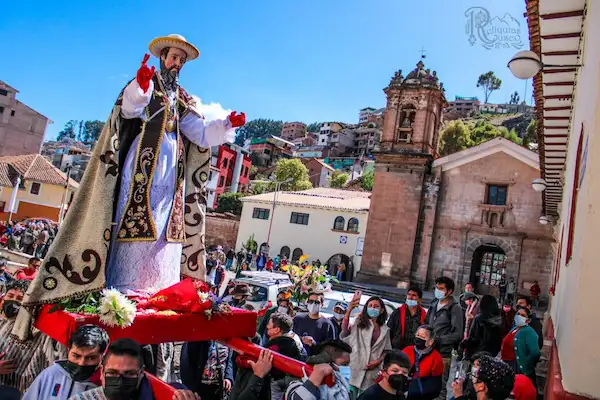
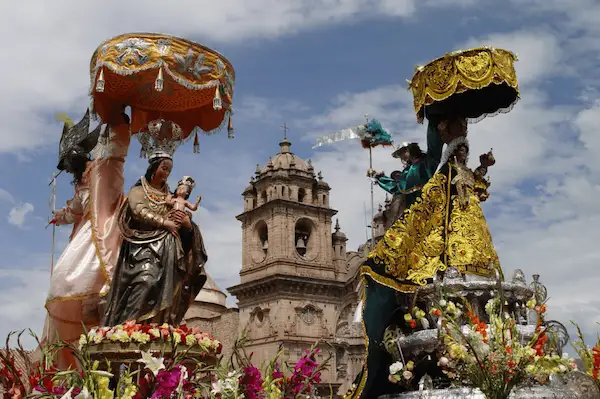
The Corpus Christi in Cusco is celebrated with great devotion and colorful tradition. Fifteen sacred images of saints and virgins, each belonging to different parishes around the city, are beautifully decorated with elaborate garments, flowers, and jewels. These images are carried on large, ornate platforms by devoted parishioners in solemn processions that begin in their home churches and slowly make their way to the Plaza de Armas. There, they are received by crowds of locals and visitors, accompanied by traditional bands, dances, and bursts of incense. The images remain in the Cathedral for several days, and the entire celebration reflects a unique blend of Catholic and Andean cultural expressions.
Saint and Virgins of Corpus Christi Cusco
These are the fifteen sacred images that are taken out to the procession to the Plaza de Armas in Cusco.
- San Antonio from the parish of San Cristóbal.
- San Jerónimo from the parish of the district of San Jerónimo.
- San Cristóbal from the parish of San Cristóbal.
- San Sebastián from the parish of the district of San Sebastián.
- Santa Bárbara from the parish of the district of Poroy.
- Santa Ana from the parish of Santa Ana.
- Santiago Apóstol from the parish of Santiago.
- San Blas from the parish of San Blas.
- San Pedro from the parish of San Pedro.
- San José from the parish of Belén.
- Virgen de la Natividad from the parish of Almudena.
- Virgen de los Remedios from the church of Santa Catalina.
- Virgen Purificada from the parish of San Pedro.
- Virgen de Belén from the parish of Belén.
- Virgen de la Inmaculada Concepción, also known as “La Linda,” from the Basilica Cathedral.
You may also like: How to spend 1 day in Cusco: Tourist Guide 2025
Key dates of Corpus Christi Cusco 2026
If you are thinking of traveling to Peru, going on these dates would be a great decision, because the best season to travel to the Andes in Peru starts. From May to September, a lot of tourists go on their Machu Picchu day tour from Cusco, because during this months is the dry season, and the weather is perfect for all the trekking or hiking tours.
But imagine not only going the Inca citadel, but also having the experience of on the most exciting celebrations in Cusco city as the Corpus Christi is. Here you have a guide through the key dates of Corpus Christi in Cusco 2026
Wednesday, June 18, 2026 – Entrance of the Saints:
In the afternoon and evening, the 15 images of saints and virgins are carried in procession from their parishes to the Cathedral of Cusco. This event is festive, with traditional music, dancers, fireworks, and faithful followers accompanying the images. Once inside the cathedral, the images are arranged for veneration.
Thursday, June 19, 2026 – Corpus Christi Day (Main Procession):
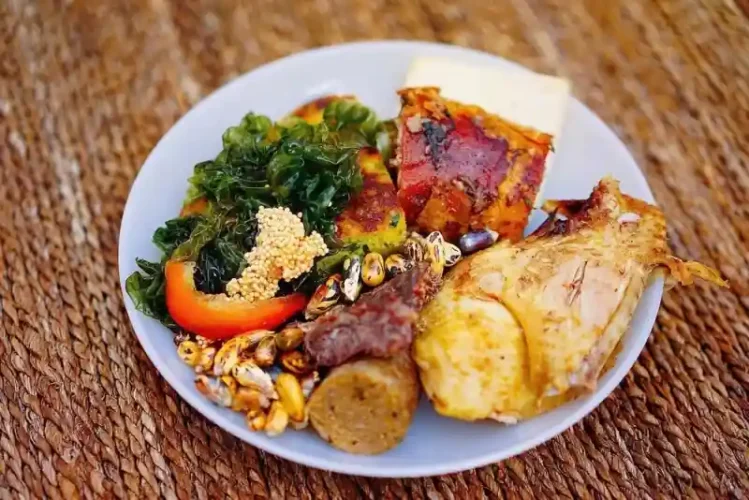
This is the main day of the celebration. Around 11:00 a.m., the Holy Sacrament (Blessed Sacrament) is carried in a solemn procession around the Plaza de Armas, followed by the saints and virgins. Thousands gather to watch, and locals share in traditional food, especially chiri uchu, a typical cold dish prepared especially for this feast.
From Friday, June 20 to Wednesday, June 25, 2026 – Days of Veneration (Octave):
For the following days, the sacred images remain in the cathedral. People come to pray, attend masses, and offer candles and flowers. The Plaza de Armas stays lively, with ongoing cultural activities and local food stalls.
During these days, you can also try another activities to know around Cusco. For example, you can go on a short inca trail 2 days trek to Machu Picchu, since the weather is perfect for it and it is not a really long tour. So you can have the opportunity to be back and keep experiencing the Corpus Christi celebration.
Thursday, June 26, 2026 – Return of the Saints (Octava del Corpus):
This day marks the farewell of the saints. Each image is carried back to its respective church in a joyful and colorful procession, once again accompanied by music, dance, and fireworks, concluding the Corpus Christi festivities.
Chiriuchu, the traditional food during Corpus Christi in Cusco
Chiriuchu is a traditional cold dish from Cusco, whose name comes from Quechua: “chiri” means cold and “uchu” means chili or spicy. It is eaten exclusively during the Corpus Christi in Cusco celebrations, especially on the main day and the days that follow. This dish symbolizes the union of Peru’s diverse regions, coast, highlands, and jungle, as each ingredient comes from a different part of the country. Eating chiri uchu during Corpus Christi is a way of honoring tradition, cultural identity, and gratitude for abundance.
Main Ingredients of Chiriuchu:
- Roasted guinea pig (cuy) – a delicacy from the Andean highlands
- Hen meat (usually boiled or baked) – adds protein and heartiness
- Chorizo (spicy sausage) – typically from the jungle region
- Corn tortilla (tortilla de maíz) – a soft and dense base for the dish
- Toasted corn (cancha) – provides crunch and texture
- Cheese (queso fresco) – adds saltiness and creaminess
- Seaweed (cochayuyo) – brought from the Peruvian coast
- Fish roe (hueva de pescado) – often dried and sliced
- Red chili pepper (rocoto) – for a spicy Andean touch
This colorful and flavorful dish is always served cold and enjoyed outdoors in plazas and streets during the festivities.
Tips to the Corpus Christi Cusco celebration
Attending to Corpus Christi in Cusco is an amazing opportunity to learn more about the Peruvian culture and have a powerful spiritual experience. If you are going on a tour with a Peru tour operator, you could ask the travel agency for some tips during your visit to Cusco. You can also guide from these tips we have prepared for you.
- Be respectful of the faith: This is a deeply religious event for locals. Observe in silence during the most solemn moments, like the procession of the Holy Sacrament.
- Dress appropriately: Even though it might be sunny during the day, remember that this season is cold, especially in the mornings and evenings. Avoid overly revealing clothes — especially if you plan to enter churches or sacred spaces.
- Learn before you go: Take time to understand the meaning of the celebration and the role of each saint and virgin. It will help you appreciate what you’re witnessing.
- Support local vendors: Try traditional dishes like chiriuchu, buy local crafts, and engage with the culture in a responsible way.
- Ask before taking photos: Especially if you’re photographing people in traditional clothing or religious images.
You may also like: How to prepare for high altitude trekking in Cusco: 16 tips for your trek
Where is the best place to watch the Corpus Christi procession in Cusco?
If you’re planning to experience Corpus Christi in Cusco, one of the first questions you’ll probably ask is where to stand to enjoy the procession. Every year, thousands of locals, pilgrims, and international visitors gather in the historic center of Cusco to witness one of Peru’s most important religious celebrations. Choosing the right location can make a significant difference, allowing you to appreciate the procession, capture memorable photographs, and experience the festive atmosphere without unnecessary stress.
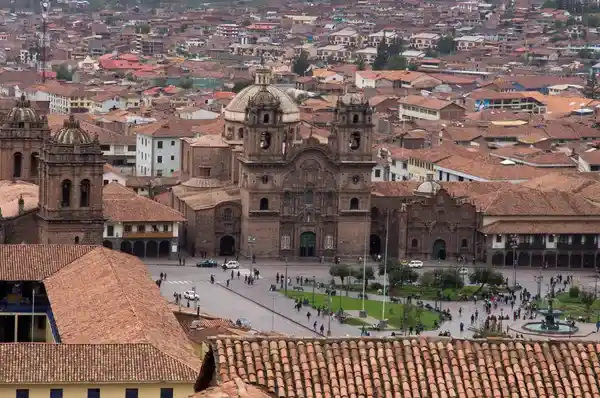
The celebration takes place mainly around Cusco’s Plaza de Armas, where the fifteen saints and virgins from different parishes arrive to honor the Blessed Sacrament. However, there are several excellent viewpoints around the square, each offering a different perspective of Corpus Christi in Cusco.
Plaza de Armas: the heart of the celebration
Without question, the Plaza de Armas is the best place to experience Corpus Christi in Cusco. This historic square has been the spiritual and civic center of the city since Inca times and becomes the focal point of the festival every June.
During the main procession, beautifully decorated images of saints and virgins are carried from their respective churches through the streets before arriving at the Cathedral of Cusco. Each image is accompanied by parish members, musicians, dancers, and faithful devotees dressed in traditional clothing, creating a colorful spectacle filled with music, incense, flowers, and religious devotion.
Standing in the Plaza de Armas allows visitors to witness several highlights of the celebration, including:
- The arrival of the saints from different districts.
- Traditional Andean and colonial religious music.
- The blessing led by the Archbishop of Cusco.
- The gathering of all fifteen sacred images in front of the cathedral.
- The unique blend of Catholic traditions and Andean cultural heritage.
The atmosphere is unlike any other festival in Peru. Throughout the day, the square is filled with the sound of church bells, brass bands, prayers, and applause as each saint enters the plaza. For many travelers, this moment becomes one of the most unforgettable memories of Corpus Christi in Cusco.
Best viewing spots for photography
Photography enthusiasts will find Corpus Christi in Cusco to be one of the most visually impressive events in South America. The vibrant costumes, centuries-old statues, colonial architecture, and dramatic mountain backdrop create exceptional photographic opportunities.
Some of the best places to capture the procession include:
The Cathedral steps
Positioning yourself near the entrance of the Cusco Cathedral in the Corpus Christi in Cusco provides an excellent frontal view as the saints arrive one by one. This location is ideal for photographing the ornate floats against the cathedral’s impressive Renaissance façade.
The arcades surrounding Plaza de Armas
The colonial arcades surrounding the square offer partial shade and slightly elevated perspectives. They are perfect for capturing wide-angle shots of the procession while also including the lively crowds gathered below.
Balconies overlooking the square
Several cafés and restaurants around Plaza de Armas feature second-floor balconies with panoramic views. While many require advance reservations or a minimum purchase during the festival, they offer some of the best angles for photographers who want to avoid the crowds on street level.
The corners of the square
Standing near one of the four corners of Plaza de Armas allows photographers to capture the movement of the processions as they enter and circle the plaza. These positions also provide opportunities to photograph dancers, musicians, and parish groups approaching from different streets.
For the best results, bring a camera with a zoom lens or a smartphone with optical zoom. Morning light is usually soft and ideal for photography, especially before the square becomes completely filled with visitors.

What time should you arrive for see the Corpus Christi Cusco?
Arriving early is essential if you want a good viewing spot during Corpus Christi in Cusco.
Although the main religious ceremonies begin later in the morning, local residents often start gathering several hours beforehand. Many people arrive before sunrise to secure front-row positions along the procession route.
As a general recommendation:
- Before 7:00 AM: Ideal for photographers and visitors who want unobstructed views.
- Around 8:00 AM: Still possible to find a good location, although the square begins filling quickly.
- After 9:00 AM: Expect heavy crowds and limited visibility from street level.
- Late morning: Movement around the plaza becomes slower due to the large number of participants and spectators.
If you’re visiting Cusco specifically for Corpus Christi in Cusco, consider arriving early enough to enjoy the atmosphere before the procession begins. Watching local families decorate the streets, vendors prepare traditional foods, and parish groups organize their arrival provides a deeper understanding of the festival beyond the main event itself.
Can you watch the procession for free?
Yes. One of the best aspects of Corpus Christi in Cusco is that the main procession is completely free to attend.
Anyone can stand along the streets or inside Plaza de Armas without purchasing tickets. This accessibility reflects the community-centered nature of the celebration, which remains first and foremost a religious tradition rather than a commercial event.
However, some optional experiences may involve additional costs, including:
- Balcony seating at restaurants overlooking the square.
- Guided cultural tours that explain the symbolism of the procession.
- Traditional food tastings featuring Chiriuchu.
- Photography tours led by local experts.
Even without paying for any of these services, visitors can fully enjoy Corpus Christi in Cusco simply by arriving early and exploring the historic center on foot.
Is it crowded?
Absolutely. Corpus Christi in Cusco is one of the city’s largest annual celebrations and attracts thousands of people from across Peru and around the world.
The busiest areas include:
- Plaza de Armas.
- Cusco Cathedral.
- The surrounding colonial streets.
- Nearby churches where the saints begin their processions.
Despite the large crowds, the atmosphere is generally friendly, respectful, and family-oriented. Local authorities organize security measures, pedestrian routes, and traffic restrictions to ensure the event runs smoothly.
If you prefer a quieter experience, consider watching the saints as they depart from their respective neighborhood churches before they reach the Plaza de Armas. These smaller processions often provide more intimate encounters with local traditions while allowing visitors to appreciate the devotion of each parish without the congestion found in the city center.
Whether you choose the bustling heart of Plaza de Armas or a quieter street along the procession route, witnessing Corpus Christi in Cusco offers a remarkable opportunity to experience one of Peru’s most important religious and cultural celebrations firsthand. The combination of faith, history, music, architecture, and community spirit makes this festival an unforgettable highlight for anyone visiting Cusco in June.

Which saints participate in Corpus Christi in Cusco?
One of the most fascinating aspects of Corpus Christi in Cusco is the participation of fifteen saints and virgins that arrive from different parishes and traditional neighborhoods of the city. For local residents, these sacred images are much more than religious statues: they are protectors, symbols of community identity, and part of a living tradition that has been celebrated for centuries.
During the festival, each saint is carried in a grand procession toward the Plaza de Armas, accompanied by musicians, dancers, parish members, and devotees. The arrival of every image is greeted with applause, prayers, and traditional music, creating one of the most emotional moments of Corpus Christi in Cusco.
Although fifteen sacred images participate in total, some of them are especially famous among visitors and local worshippers.
Saint Sebastian
Saint Sebastian (San Sebastián) represents the historic district of the same name, located on the outskirts of Cusco.
His image is one of the most recognizable in Corpus Christi in Cusco and is often accompanied by large groups of devotees dressed in traditional Andean clothing. The procession from San Sebastián is known for its festive atmosphere, with brass bands, dancers, and community organizations participating throughout the route.
For many residents, Saint Sebastian is considered a powerful protector of the district and a symbol of local identity that connects modern Cusco with its colonial and Andean heritage.
Saint Jerome
Another important participant is Saint Jerome (San Jerónimo), patron of the neighboring district of San Jerónimo.
His arrival is highly anticipated during Corpus Christi in Cusco, as the parish has a long history of devotion and community participation. The image is carried on an elaborate platform decorated with flowers, silver ornaments, and colorful fabrics, while parishioners accompany the procession with prayers and traditional music.
Visitors often notice the strong sense of pride among the people of San Jerónimo, who view their saint as a representative of their district’s history and cultural traditions.
Saint Christopher
Saint Christopher (San Cristóbal) is one of the most iconic figures of Corpus Christi in Cusco.
Traditionally known as the protector of travelers, Saint Christopher is associated with the historic neighborhood that bears his name, located on a hill overlooking the city. His procession descends through Cusco’s colonial streets before entering the Plaza de Armas, creating a spectacular visual scene against the backdrop of the surrounding mountains.
Many locals believe that Saint Christopher offers protection during journeys, making him one of the most beloved saints among both residents and visitors.
Virgin of Bethlehem
The Virgin of Bethlehem (Virgen de Belén) is another central figure of Corpus Christi in Cusco and one of the most venerated Marian images in the region.
She represents the parish of Belén and is carried in a beautifully decorated procession that attracts large crowds every year. Her image is often adorned with fine textiles, jewelry, flowers, and traditional ornaments, reflecting the deep devotion that Cusqueños have toward the Virgin.
During the celebration, many faithful pray specifically to the Virgin of Bethlehem for protection, health, and family well-being, making her procession one of the most emotional moments of the festival.
Why each saint represents a different parish
A question many travelers ask during Corpus Christi in Cusco is why so many different saints participate in the same celebration.
The answer lies in Cusco’s unique religious and historical organization. Each saint or virgin belongs to a specific parish, district, or traditional neighborhood of the city and surrounding areas. These communities maintain a special relationship with their patron image throughout the year, organizing religious activities, festivals, and acts of devotion.
During Corpus Christi in Cusco, all the saints leave their home churches and gather in the Plaza de Armas to honor the Blessed Sacrament together. This symbolic meeting represents the unity of Cusco’s neighborhoods and the blending of Catholic traditions with Andean community values.
The complete procession includes fifteen sacred images, among them:
- Saint Sebastian
- Saint Jerome
- Saint Christopher
- Saint Anne
- Saint Blaise
- Saint James
- Saint Barbara
- Saint Anthony
- The Virgin of Bethlehem
- The Virgin of the Nativity
- The Virgin of the Remedies
- And other important local patron saints
Each image has its own history, devotees, music, decorations, and ceremonial traditions, which is why no two processions look exactly alike.
For visitors, understanding this parish-based tradition adds a deeper cultural dimension to Corpus Christi in Cusco. The festival is not simply a religious parade; it is a centuries-old gathering where every neighborhood proudly presents its patron saint, preserving a remarkable tradition that continues to unite the people of Cusco year after year.

How to experience Corpus Christi in Cusco like a local?
For many international visitors, attending Corpus Christi in Cusco is an unforgettable cultural experience. However, if you want to understand the true spirit of the festival, it’s worth going beyond simply watching the main procession. The celebration is deeply rooted in the daily life of Cusco’s communities, and experiencing it like a local will allow you to appreciate its religious, historical, and cultural significance.
From following the saints through the streets to sharing traditional food with local families, there are many ways to immerse yourself in one of Peru’s most important religious celebrations.
Attend the entrance of the saints
While the main procession on Corpus Christi Day attracts the largest crowds, many locals consider the Entrance of the Saints (Entrada de los Santos) to be one of the most exciting moments of the entire festival.
Held the day before the main celebration, this event marks the arrival of the fifteen saints and virgins from their respective parishes to Cusco’s historic center. Each image is carried through the streets on elaborately decorated platforms, accompanied by musicians, dancers, fireworks, and hundreds of devoted followers.
Unlike the main procession, the Entrance of the Saints offers visitors the opportunity to witness each parish’s unique traditions and festive atmosphere. Every neighborhood proudly presents its patron saint with different music, costumes, and decorations, making every arrival slightly different.
If you truly want to experience Corpus Christi in Cusco like a local, don’t limit your visit to the main day—arrive early enough to enjoy this spectacular procession as well.
Taste traditional Chiriuchu
No visit to Corpus Christi in Cusco would be complete without trying Chiriuchu, the traditional dish served exclusively during the festival.
Its name means “cold spicy food” in Quechua, and it reflects the cultural diversity of the Andean region by combining ingredients from different ecological zones of Peru.
A typical serving of Chiriuchu may include:
- Roasted guinea pig (cuy)
- Chicken
- Charqui (dried meat)
- Andean cheese
- Corn
- Fish roe
- Seaweed
- Toasted corn
- Rocoto pepper
- Traditional sausages
Although the combination may seem unusual to first-time visitors, Chiriuchu has become one of the culinary symbols of Corpus Christi in Cusco. Local families, restaurants, and temporary food stalls prepare thousands of servings throughout the celebration.
Trying this unique dish is one of the best ways to connect with the festival’s cultural traditions.
Visit nearby churches
One of the most rewarding experiences during Corpus Christi in Cusco is visiting the churches where the saints are housed before and after the celebration.
Each parish church preserves its own religious traditions and beautifully decorated sacred images throughout the year. During the festival, many churches remain open to visitors who wish to admire the floral arrangements, religious decorations, and ceremonial preparations.
Some of the most interesting churches to visit include:
- Cusco Cathedral
- Church of San Sebastián
- Church of San Jerónimo
- Church of San Cristóbal
- Church of Belén
Exploring these churches offers valuable insight into the religious significance of the festival and allows visitors to appreciate colonial architecture, sacred art, and centuries-old devotional practices.
Respect local customs
Although Corpus Christi in Cusco welcomes visitors from around the world, it remains first and foremost a religious celebration for the people of Cusco.
Showing respect for local customs will not only enrich your own experience but will also be appreciated by the communities participating in the festival.
Some recommendations include:
- Dress modestly when attending religious ceremonies.
- Avoid blocking the procession route.
- Ask permission before taking close-up photographs of participants.
- Refrain from climbing barriers or standing in restricted areas.
- Follow instructions from local authorities and event organizers.
Many families participate in this celebration as an act of faith passed down through generations. Respecting these traditions allows visitors to experience the festival in a more meaningful and authentic way.
Stay until the Octava procession
Many tourists leave Cusco immediately after the main procession, unaware that the celebration continues for another week.
The Octava del Corpus, held eight days after Corpus Christi Day, marks the symbolic return of the saints and virgins to their home parishes. Although it attracts fewer visitors than the main procession, many locals consider it equally meaningful.
The atmosphere during the Octava is often more relaxed, allowing visitors to appreciate the traditions without the intense crowds found on the main day. Watching the sacred images return to their neighborhoods offers a unique perspective on the community spirit that defines Corpus Christi in Cusco.
If your itinerary allows, staying until the Octava provides a more complete understanding of the festival and its importance within Cusco’s cultural heritage.

Corpus Christi Cusco 2026 at a glance
| Information | Details |
|---|---|
| Festival | Corpus Christi in Cusco |
| Main celebration date | Thursday, June 4, 2026 |
| Entrance of the Saints | Wednesday, June 3, 2026 |
| Octava (Return of the Saints) | Thursday, June 11, 2026 |
| Location | Plaza de Armas, Cusco, Peru |
| Main procession | Morning to early afternoon |
| Sacred images participating | 15 saints and virgins from different parishes |
| Traditional food | Chiriuchu |
| Admission | Free public event |
| Best arrival time | Before 8:00 AM for the best viewing spots |
| Recommended stay | 3–4 days to experience the complete celebration |
| Weather in June | Dry season with temperatures between 8°C and 20°C (46°F–68°F) |
| Best for | Cultural tourism, photography, gastronomy, religious heritage, and local traditions |
| Nearest airport | Alejandro Velasco Astete International Airport (Cusco) |
| Altitude | Approximately 3,399 m (11,152 ft) above sea level |
| Recommended clothing | Layered clothing, comfortable walking shoes, sun protection, and a light jacket for cool mornings and evenings |
Whether you’re interested in religious traditions, colonial history, photography, or Peruvian gastronomy, Corpus Christi in Cusco offers one of the most authentic cultural experiences in the Andes. Planning your visit around the key dates and arriving prepared will allow you to enjoy every stage of this extraordinary festival while discovering why it remains one of the most important celebrations in Peru.
Experiencing Corpus Christi in Cusco
The Corpus Christi in Cusco is one of the important celebrations in Peru, so if you want to have a real experience of learning about culture and inmersing yourself into this religious feast, visti Peru during these dates. Remember the best season to travel to Peru is from May to September so is the perfect opportunity for you.
Remember this celebrations holds a lot of meaning for locals, so always remember to be respectful and unverstanding about the traditions. And don’t worry, Peru is a country really welcoming with the people who truly values and want to learn about their culture.


