
To speak about peruvian carnivals is to enter a universe where history, emotion, music and collective memory converge. These celebrations are not just annual festivities; they are living expressions of identity that transform streets, neighborhoods and entire cities into vibrant stages of color and joy. During carnival season, Peru reveals one of its most authentic faces: playful, expressive and deeply communal.
The origins of these festivities lie in a unique blend of Andean ancestral rituals and colonial traditions introduced during the Spanish period. Over time, both worlds merged into a cultural language that is unmistakably Peruvian. What emerged was not a simple imitation of European carnivals, but a living tradition rooted in local beliefs, agricultural cycles and community bonds.
For travelers, peruvian carnivals offer far more than entertainment. They provide a rare opportunity to witness how celebration becomes a form of cultural continuity. For cultural explorers and readers seeking meaningful experiences, these festivities open a window into the soul of the country—where every dance, every song and every playful gesture carries the memory of generations.
What Makes peruvian carnivals So Unique?
What distinguishes Peruvian carnivals from those celebrated elsewhere in the world is not only their visual intensity, but their emotional depth. These are not events designed for spectators; they are collective experiences in which entire communities participate. Streets become shared spaces where neighbors, families and visitors engage on equal terms, often forming bonds that go beyond the celebration itself—much like what happens during authentic Peru trekking tours, where travelers stop being outsiders and become part of a living cultural landscape.
Unlike commercialized festivals, Peruvian carnivals remain profoundly local. Each town interprets the celebration in its own way, preserving customs that have been transmitted across generations. In the Andes, the carnival reflects the agricultural calendar and the relationship with nature. In coastal regions, it adopts a lighter, playful rhythm shaped by climate and urban life. In the highlands, it becomes an expression of resilience and cultural continuity.
Water, paint and talcum powder are not mere games—they symbolize renewal, abundance and emotional release. Music and dance serve as collective language, allowing communities to express joy, irony, longing and pride. In this context, peruvian carnivals are not interruptions of daily life; they are extensions of it, moments when identity becomes visible and memory turns into movement.
You might be interested in: Holy Week in Peru 2026: traditions and destinations
When Are peruvian carnivals Celebrated?
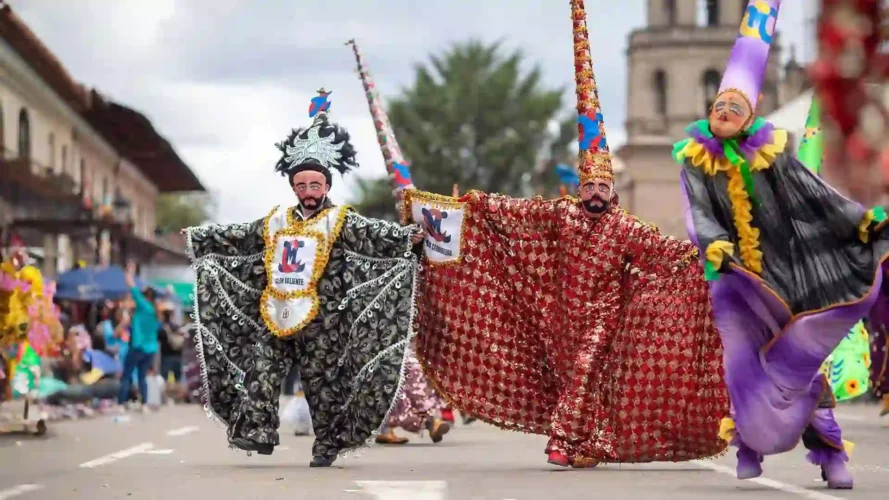
In Peru, carnival season usually unfolds between February and March, leading up to Ash Wednesday and the beginning of Lent. However, the exact dates vary every year according to the liturgical calendar. This fluidity gives the festivities a dynamic character, encouraging both locals and travelers to plan in advance.
Each region adapts the calendar to its own rhythm. Some cities concentrate the celebration over a single week, while others extend it across several weekends. What remains constant is the sense of anticipation that builds throughout January, as neighborhoods prepare costumes, music and rituals.
Understanding this temporal diversity is essential when experiencing peruvian carnivals. It allows visitors to choose destinations according to their interests—whether they seek massive parades, intimate neighborhood rituals or highland traditions deeply rooted in Andean cosmology. Carnival is not a single event; it is a season of cultural expression that unfolds differently across the country.
You might be interested in: Complete guide to go to Peru in february 2026
The Most Important peruvian carnivals
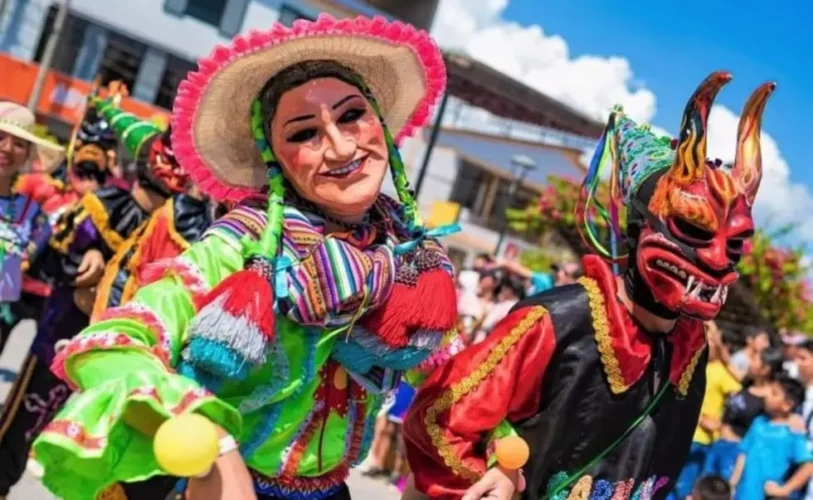
Although carnival is celebrated nationwide, there are places where peruvian carnivals reach extraordinary intensity and cultural richness. These destinations have shaped the national imagination and remain reference points for anyone wishing to understand the true spirit of the festival.
1. Cajamarca Carnival: The Capital of Carnival in Peru
Cajamarca is widely recognized as the epicenter of carnival in the country. Known as “the Capital of Peruvian Carnival,” the city transforms into a massive stage of music, satire and creativity. Parades of elaborately decorated floats move through the streets, accompanied by bands and dancers who perform for hours without pause.
The Cajamarca carnival is distinguished by its theatrical character. Characters, masks and humorous performances offer social commentary while preserving traditional melodies and rhythms. Neighborhoods compete with artistic displays, each one striving to outshine the others. In this setting, peruvian carnivals reach their most exuberant expression—where joy becomes spectacle and culture turns into celebration.
2. Ayacucho Carnival: Songs, Tradition and Andean Identity
In Ayacucho, carnival speaks through song. Traditional coplas narrate love, longing and humor, often improvised in public gatherings. Dance and music fill plazas, creating spaces where the past and present coexist. For many travelers, experiencing this atmosphere feels as immersive as joining authentic hiking tours in Peru, where each step reveals layers of history, emotion and living tradition woven into the landscape and its people.
The Ayacucho carnival reflects the Andean worldview, where celebration is inseparable from memory and land. Participation is communal; spectators quickly become dancers. Here, peruvian carnivals take on a lyrical quality, revealing how music functions as cultural continuity and emotional release.
3. Cusco Carnival: Water Games and Ancestral Rituals
Cusco’s carnival blends playfulness with ritual depth. The iconic “yunza” ceremony—where a tree decorated with gifts is cut down—symbolizes abundance and collective effort. Water games and powder battles transform the city into a joyful battlefield.
Rooted in Andean cosmology, Cusco’s carnival reflects the cyclical nature of life. It is both playful and sacred. In this city, peruvian carnivals reveal their spiritual dimension, reminding participants that celebration is also a form of gratitude toward nature and community.
4. Puno and Juliaca Carnivals: High-Andean Energy
In the southern highlands, carnival unfolds at high altitude with extraordinary intensity. Puno and Juliaca are known for their powerful dances, vibrant costumes and communal devotion. Music resonates across open spaces, and entire neighborhoods mobilize to honor tradition.
These celebrations embody the strength of Andean culture. Despite harsh climates, communities gather to reaffirm identity. In this context, peruvian carnivals become acts of resilience, where joy resists adversity and tradition endures through movement.
5. Northern Carnivals: Piura and the Coast
On the northern coast, carnival adopts a lighter, sun-filled tone. In Piura and surrounding towns, warm weather encourages outdoor gatherings, water games and spontaneous street celebrations. The rhythm is playful, and the atmosphere relaxed.
Here, peruvian carnivals reflect coastal vitality. While still rooted in tradition, the festival becomes more fluid and informal, illustrating how geography shapes cultural expression. Music blends with everyday life, and celebration flows naturally through neighborhoods.
You might be interested in: Complete guide to summer in Peru
How to Experience peruvian carnivals as a Traveler
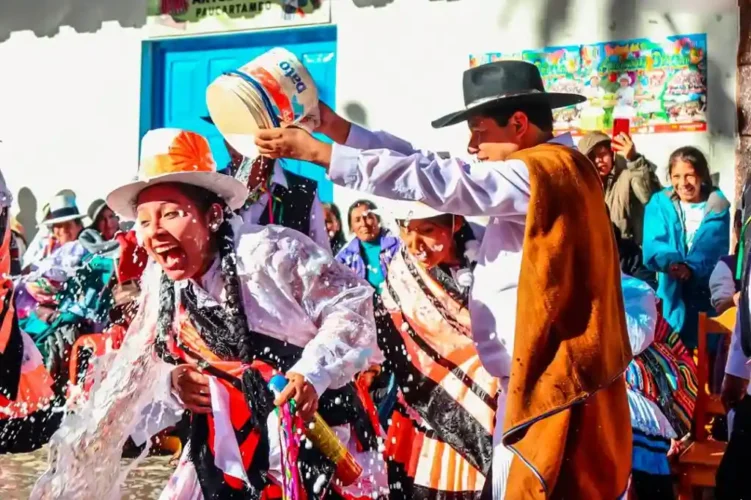
For international visitors, peruvian carnivals are not events designed exclusively for tourism. They are authentic community celebrations that take place in everyday spaces: streets, markets, town squares, schools and neighborhoods. This is what makes them so powerful—and also what requires travelers to approach them with curiosity and respect.
Unlike large commercial festivals, Peruvian carnivals are deeply rooted in local life. They combine Catholic calendars with Andean worldviews, turning each city into a living stage where music, ritual and play coexist. Travelers are not expected to remain spectators. On the contrary, being involved—singing, dancing, laughing, even getting soaked—is part of the experience.
Most carnivals occur between early February and mid-March, depending on the year and the liturgical calendar. While the general period is similar nationwide, each region establishes its own official schedule. Municipalities publish programs that include:
- Opening ceremonies
- Neighborhood competitions
- Parades and corsos
- Ritual events (yunzas, blessings, symbolic burials)
- Concerts and popular dances
For this reason, planning in advance is essential. Understanding dates, locations and local dynamics allows travelers to fully immerse themselves in peruvian carnivals without missing the most important moments.
Major peruvian carnivals: Calendar Overview
To help travelers visualize the diversity and timing of Peruvian carnivals, the following table summarizes the main destinations, approximate dates and cultural focus of each celebration. For many visitors, planning these festivities goes hand in hand with organizing experiences such as the Salkantay Trek 5 Day, allowing them to combine high-Andean adventure with the country’s most vibrant cultural expressions in a single journey.
| City / Region | Approximate Dates | Main Features | Cultural Identity |
| Cajamarca | Mid–February | Parades, Queen of Carnival, massive street games | Andean-coastal fusion |
| Ayacucho | Late February | Coplas, traditional dances, community rituals | Deep Andean heritage |
| Cusco | February–March | Yunza, water games, ancestral symbolism | Inca and Andean worldview |
| Puno / Juliaca | February | High-energy dances, Altiplano traditions | Aymara and Quechua roots |
| Piura (Coast) | February | Tropical carnival, coastal style, music | Afro-Peruvian & coastal culture |
| Huaraz | February | Barrio competitions, Rey Momo, ritual closures | Andean mountain identity |
This diversity shows that peruvian carnivals are not a single event repeated nationwide. Each city transforms carnival into a mirror of its geography, history and social fabric.
You might be interested in: A complete guide to carnivals in Peru 2026
Logistics: When and How to Travel
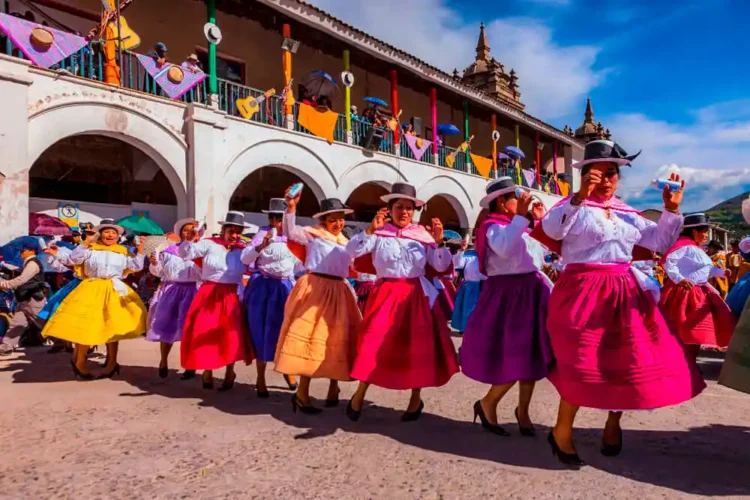
Because carnival season coincides with Peru’s high tourism period, logistics must be considered carefully.
– When to Arrive
Ideally, travelers should arrive two to three days before the main events. This allows time to:
- Adjust to altitude (especially in Cusco, Ayacucho, Puno and Huaraz)
- Understand local customs
- Obtain official programs
- Explore the city beyond carnival
– Transportation Access
- Cajamarca: Flights from Lima (1h 20m) or overnight buses.
- Cusco: Daily international and domestic flights.
- Ayacucho: Flights from Lima or long-distance buses.
- Puno/Juliaca: Flights to Juliaca or buses from Cusco and Arequipa.
- Piura: Flights from Lima or Trujillo.
During carnival week, street closures are common. Walking becomes the most efficient way to move within city centers.
– Accommodation
Hotels and hostels often sell out one to two months in advance in popular destinations. Booking early is crucial, particularly in Cajamarca and Cusco. Staying near historic centers provides easier access to events.
You might be interested in: How to Visit Machu Picchu from Cusco: in 2025 – 2026 Best Routes, Tours & Tips
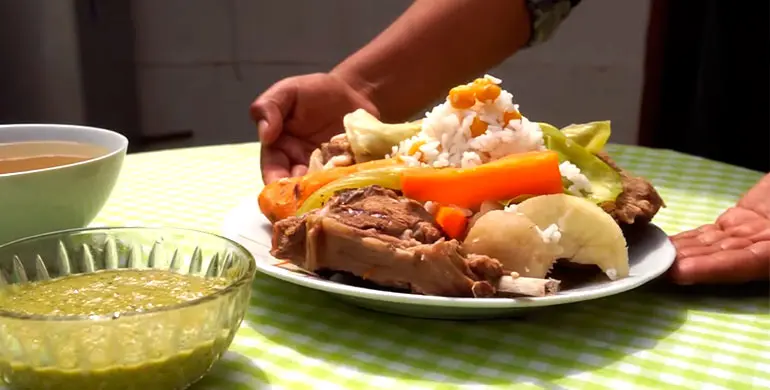
Carnival and Gastronomy: Eating the Celebration
In carnivals in Peru, food is not a side element—it is a ritual in itself. Each region prepares dishes associated with abundance, gratitude and communal bonding.
In the Andes, carnival meals often include:
- Puchero: a hearty stew with meats, tubers and vegetables
- Timba: a festive soup prepared for large gatherings
- Chicha de jora: fermented corn drink shared in ceremonies
On the coast, flavors shift toward freshness and heat:
- Ceviche
- Seafood stews
- Tamales
- Tropical fruits and sweets
Eating during carnival is a social act. Neighbors cook together, invite strangers, and share tables. Through gastronomy, travelers experience culture not as a performance, but as daily life. In this sense, carnivals in Peru are tasted as much as they are seen.
Practical Tips for Living peruvian carnivals
To enjoy carnivals in Peru fully, preparation is essential:
- Wear clothes you can lose—water, paint and powder are inevitable.
- Use waterproof bags for phones and documents.
- Apply sunscreen, especially in coastal regions.
- Carry small bills for street vendors.
- Observe before participating in rituals with ceremonial meaning.
- Maintain awareness in crowded spaces, as in any major festival.
Flexibility is key. Schedules change, parades extend, music continues into the night. Carnival follows its own rhythm. Those who adapt enjoy it most.
You might be interested in: What to Pack for a Manu Jungle Tour: Essential Packing List
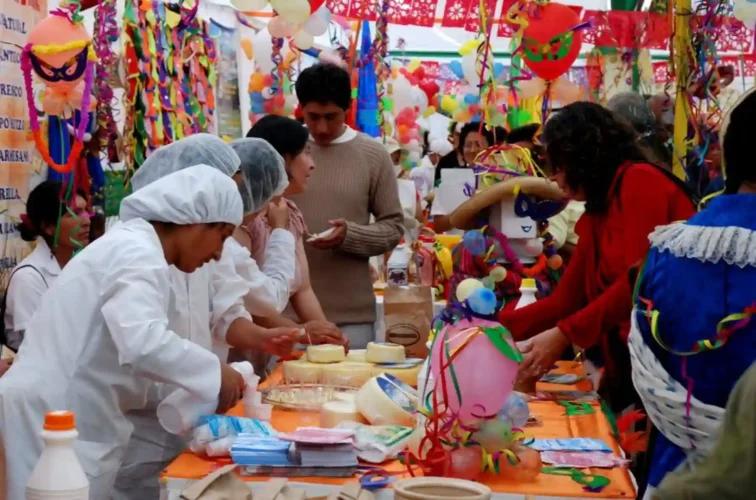
The Soul of Carnivals in Peru
Carnivals in Peru are far more than festive dates on a calendar. They are living expressions of history, spirituality and collective identity. Each splash of water, each song and each dance carries the memory of ancient cultures and colonial encounters.
For travelers, carnival offers something rare: not observation, but participation. It dissolves the boundary between visitor and resident. In laughter, rhythm and shared streets, Peru opens its cultural heart.
To experience carnival in Peru is to understand that culture is not preserved in museums—it is danced, sung, cooked and lived in public. And for a few unforgettable days each year, the country becomes a single celebration of color, memory and joy.


