
The state of Peru has ceased to be a secret that Peru is a foodie destination. The cuisine of the country has been receiving an increasingly international focus over the past few years. And so, when I went to Peru, I was eager to taste ceviche and, of course, ceviche. It was the Peruvian dish that I liked most.
Having travelled all over the country in a month and a half, I have now realized that there is much more to Peru than ceviche. I also sampled lomo saltado (, it’s a dish made with beef, onion, tomato, soy sauce, and served with French fries and white rice) Rocotto relleno de papa, ( It is made from grated potato, vegetables such as carrot, onion, green beans, and any type of meat and also egg, and is fried in a lot of oil) and chicha morada ( A drink made from boiled purple corn, with added cinnamon, lemon, pineapple peel, and also sugar). I attended a food festival in Lima and had a taste of the foods that are unique to the Amazon area. Peru is a country with a variety of climate zones and a range of ingredients growing locally. The food that you find here is as varied as the country itself. Eat local in restaurants all over the country or go on a food tour in Lima, where you will have the opportunity to taste local food.
These are some of my best selections of Peruvian food.
Traditional Peruvian food
CEVICHE
You must not visit Peru without trying it at least once because Ceviche is the national food in Peru. It is said to be best eaten in Lima, but good ceviche is available along the entire coast. The food is prepared from uncooked fish soaked in lime juice. Onions and choclo, huge kernels of corn, are served as a side dish.
In Peru, there are numerous variations of this dish, depending on which part of Peru you are in. In the south, it is no wonder that the vast majority of people cook ceviche out of trout. In the north, where seafood or a combination of seafood is prevalent, it comes as no surprise that most people cook ceviche out of trout. Other restaurants may use more or fewer of the chillies (so always ask how hot it will be). In other locations, ceviche is prepared with a touch of passion fruit juice, milk, garlic, or cilantro.

AJI DE GALLINA
Among all the food in Peru, the one that I liked second was aji de gallina. I had this more than once, in the form of a dish with rice in Lima, or an adjunct to potatoes in Arequipa.
Aji de gallina is chicken cooked in a sauce made of cheese and walnuts. The sauce is coloured with yellow peppers, referred to as aji, and commonly includes black olives. The dish is spicy, slightly, and is served with rice or potatoes (or both) and an egg, hard-boiled at a distance is placed on top. It is the ideal food to consume high in the Andes on a cold night when one needs to warm up.
LOMO SALTADO
Another popular Peruvian food is Lomo Saltado. I heard about its existence soon after I arrived in Lima, and our taxi driver informed me of its existence and that I absolutely had to try it when I was in Peru.
Lomo Saltado is an excellent example of Peruvian Chinese fusion food since the food is a beef stir-fry that has been imported to the country by Chinese immigrants and has since become a standard Peruvian dish.
It is prepared from strips of marinated beef, onions, tomatoes, peppers (which are often the aji that is also served in aji de gallina), and other various vegetables that change region by region, and restaurant by restaurant. You may also have fried potatoes on your plate, depending on the place you will eat. It is usually accompanied by rice and occasionally by French fries as well.

ROCOTO RELLENO
It is a timeless classic that is frequently served in small restaurants, as well as at market stalls. Some very fine rocoto relleno at the Arequipa market, where the dish allegedly originates, was very good. Relleno is stuffed, and rocoto relleno are peppers stuffed with ground beef, herbs and spices, onions, garlic, olives, and whatever other stuff the cook felt like stuffing in there.
Though rocotos are meant to be slightly spicy, I recall the one that I had consumed to be very mild. Or perhaps it had been a bell pepper that they had served. It must have been very tasty, rich in flavours due to its numerous ingredients. And when it is too onion, quench with a glass of Chicha Morada.
CAUSA RELLENA
In my supermarket, which is back home in my supermarket in Germany, I would have an option of possibly three or four varieties of potatoes. Over in Peru, hundreds of varieties are known to its locals. I have tried some; some were purple, others orange, and some tasted buttery when I ate them, and others crumbled in my mouth. No wonder potatoes have such an enormous part in Peruvian cuisine.
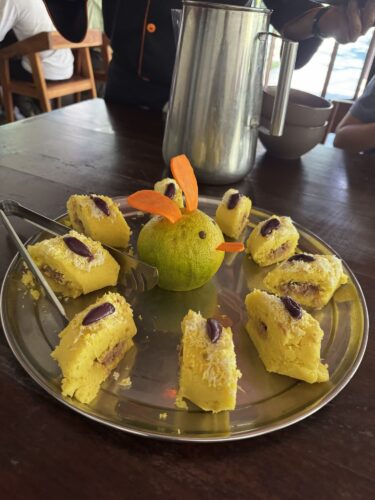
Causa is a part of the dishes where potatoes are the primary ingredient. It is simply mashed potatoes with lime and salt, and usually served in a small cake shape and topped with mayonnaise, chillies, vegetables, or meat. The varieties are interminable.
ALPACA
You can experience some exotic meat in Peru, such as llama and alpaca. Should you have an option, choose the alpaca. It is more costly, and also is far more tender than llama. Most of the restaurants exclusively serve alpaca since they do not consider the quality of the llama to be so low that it does not even feature in the menu. I wouldn’t agree with that since I had an excellent llama stew in Argentina, but I would still prefer alpaca.
There are numerous ways of eating alpaca. It is served in stews, as either a steak or even a burger. One really good meal that we had in Peru was in Cuzco when my friend had a really good alpaca burger.
CHIFA
Chifa refers to simple Asian cuisine and can be found everywhere in Peru. The earliest Asian community was established in Lima in the 17th century, and the other wave of immigrants came in the 19th century. Although the Asians only constitute 3 percent of the Peruvian population, their cuisine is extremely popular. The staple most used is Arroz chaufa. It is, as already noted, fried rice with egg, some type of meat, and vegetables.
JUANE
We will go to the jungle, to Iquitos, to be exact. It was here that my first attempt was made on Juane. People in the Amazon region eat it on June 24th, for the festival of St John the Baptist. The poor guy was beheaded, and the Juane that people eat that day represents his head. A little mean, though you may say, but that is their custom.
Juane is a sweet bundle packaged and sealed on a banana leaf. There are also rice, meat, eggs, and olives within. The ingredients used differ regionally as well as among the various restaurants, and thus shall not be surprised to find cassava or beans in the leaves. It is as though a big surprise package. Juane is one of the foods that are best eaten at the markets in Iquitos.

YUCA CON QUESO
I didn’t know of this dish until I went to a street food festival in Barranco, Lima’s artsy neighbourhood. We went through all the stalls and at last, settled down to order the yuca with cheese. A zealous cook was on hand and presented to us little balls of mashed yuca stuffed with cheese. It was delicious! When you see those little balls anywhere on the streets, get them. They are also the ideal snack to have in the afternoon when you feel hungry.
ESCABECHE DE POLLO
When we were seeking a place to eat lunch, I found esabeche de papa at one of the markets in Arequipa. It simply refers to marinated chicken. Escabeche is a dish of onions, vinegar, and honey that has been in existence in Peru since the arrival of the Spaniards five hundred years ago. Its origins, however, are Arabic, and the method was introduced to Spain by the Moors, who then introduced it to South America.
The time I ordered escabeche de chicken, I received a huge plate of chicken and plenty of vegetables on the side. The vendor also provided me with mashed potatoes, but there was no means through which I could have possibly gotten the mashed potatoes on my plate.
The chicken, as well as the vegetables, had been marinated in the same sauce, and that was yummy. As this was market food, it was served cold. Inquire whether you could get it caliente, in Spanish, meaning warm.
ANTICUCHOS
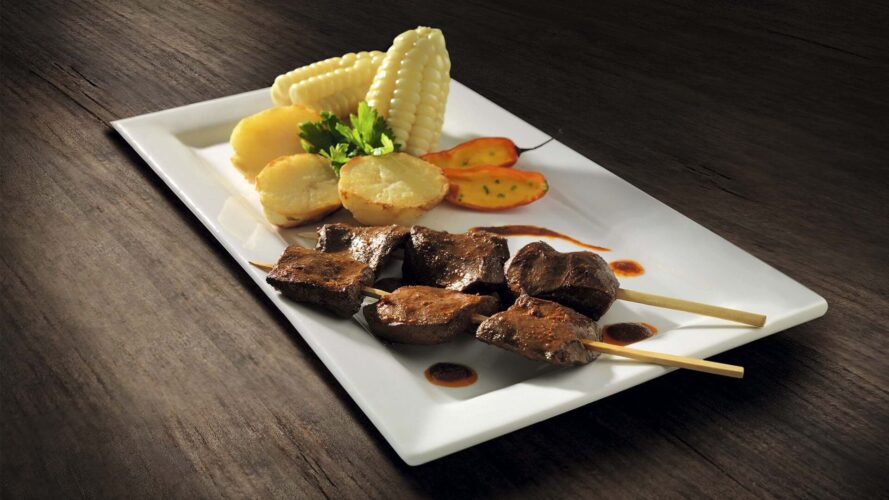
In case you are interested in trying some of the common Peruvian street food, then go with the anticuchos. They are beef hearts, roasted on a stick. The word heart is not to frighten you off. I am no great lover of any sort of organ, but anticuchos are good.
In order to convince you still further, we eat muscles when we eat meat. The heart is also a muscular heart. It lacks a bizarre texture and taste. Rather, it is flavored like a marinade and barbecue. As I mentioned, I highly recommend these skewers
CHANFAINITA
Here is a dish for the daring of your party–it is made in the old way with the lungs of the cow. Never mind that, though. In most parts of Peru, you can find versions where they have replaced lungs with normal portions of meat. All you need to do is request it first before they take your order.
Chanfainita is a stew, which is made of beef (lungs or meat) and potatoes. It includes garlic, onion, and the pepper, aji, which is typical of Peruvian cuisine. People eat it most of the time with rice, and it can warm you up on a cold day in the Andes.
Peru traditional desserts food
Peruvian desserts have a complete post of their own, which you ought to go and look at. Here we concentrate on our favourites, which we believe everybody must taste.
CHOCOLATE
I am a chocolate lover, and I believe this chocolate is a great dessert anywhere you go.
Peru has a rich history of cocoa farming, so this would be your opportunity to try out home-grown chocolate. The Choco Museo, with branches in Lima, Cusco, and Ollantaytambo, is one of the best places to do so.
The hot chocolate here was my favorite as I had a mug of hot milk alone, and a separate portion of chocolate concentrate. I was then left to myself as to the amount I wished to add. In my case, it was all because I prefer my chocolate sweet, and others may want a sweeter beverage. The brownie in the Choco Museo is also fantastic.
LUCUMA ICE CREAM
It is quite clear that, as far as the end dish is concerned, most of the dishes can be attributed to the influence of Europe, and in particular Spain. The Peruvian cuisine is a conglomeration of food influences of native Peruvians, Europeans, Asians and Africans.
A great number of the dishes were originally prepared at home by the people of Madrid, Barcelona, and Seville. The Italians introduced Cream and gelato, and that is the source of our Lucuma Ice Cream. The star of the discussed dish is the Peruvian fruit known as the Lucuma, which is a superfood. Most of the people believe that this rare Peruvian fruit has a taste of butterscotch, caramel, and brown sugar, or even ice cream. It is ideal, in addition to more traditional ingredients such as milk, eggs, sugar, cream, and vanilla to create this very common delicacy.
You are also free to pair with manjar blanco (dulce de leche) or even chocolate as an even more special final course.
SUSPIRO DE LIMEÑA
And one of our dessert dishes, one of those that will certainly fly you into space, too. This Peruvian dessert is made up of two components. The upper layer is the fluffy meringue that is prepared using the egg whites, cinnamon, and port wine, with the bottom layer being the manjar blanco caramel cream prepared using the milk, the egg yolks, the vanilla, and the sugar.
This dessert was first served in Lima in the 19th century and has been a part of Peruvian cuisine since that time. Served in glass or plastic cups. There are those people who like it at room temperature and others who like it slightly cold. We know you will like it either way, but we are quite certain that you will like it if you love caramel and cinnamon.
FANROÑETA
Stale bread may not be at the top of your list of favorite foods or dish ingredients, but you will certainly enjoy ranfa notte or bread pudding, which is comprised of bites of toasted stale bread, nuts (almonds, walnuts, etc.), port wine, zest, butter, queso fresco (a type of cheese), vanilla extract, and orange juice. Others also enjoy garnishing it with raisins.
In case you are fond of such a kind of bread pudding, the recipe of our Budin de Pan is a tasty, aromatic, and sweet dessert prepared from all the leftover bread.
PICARONES
When you walk through a majority of the Peruvian streets in the evening, you cannot help but come across these simple dessert snack foods. The inhalation will most likely prompt you to further investigate. It cannot be confused with picarones, which may be, perhaps, the most popular dessert street food in the country.
The Peruvian doughnuts, as they have been called, owing to the same rounded form, with a hole in the middle. But unlike traditional donuts, picarones do not contain solely eggs and flour. Other ingredients that only contribute a certain flavor to this deep-fried delicacy are corn, sweet potato, squash, anise, and beer, just to name a few.

Traditional Peruvian drinks
PISCO SOUR
Chile and Peru have had a continuing battle concerning the origin of the pisco sour. I don’t know which country is right, and the question can probably never be answered, but I do know that it’s a very famous drink in Peru that you can get all over the country. I’m not a fan of cocktails, but even I had to try this one in Paracas.
Pisco sour is a cocktail that uses pisco, a brandy made from grapes. The added lime juice is what makes it sour. It is also mixed with ice, bitters, and egg white, which causes it to have its frothy texture.
DIANA
Diana is a hot beverage that I found in Arequipa, and which helped me to keep warm when the sun went down, and the cold started creeping in. It is creamy and contains almonds and plenty of the spices used, such as cloves, cinnamon, and coconut.
Diana is not the easiest drink to drink in Peru, but in case you visit Arequipa, don’t forget to check it and have at least one drink.
Now there you have it, 19 things to eat and drink which you would not want to skip when travelling to Peru. In case you are interested in having dessert, take a look at our Peruvian dessert guide. However, in addition to these, there is also a tremendous number of fruits that you can taste in Peru. Peru is a gastronomic paradise.


