Book your Inca Trail 2026 with Go Treks Peru, local experts in small-group adventures. Don’t miss out!
Group Size
Difficulty level
Trip styles
Accommodation
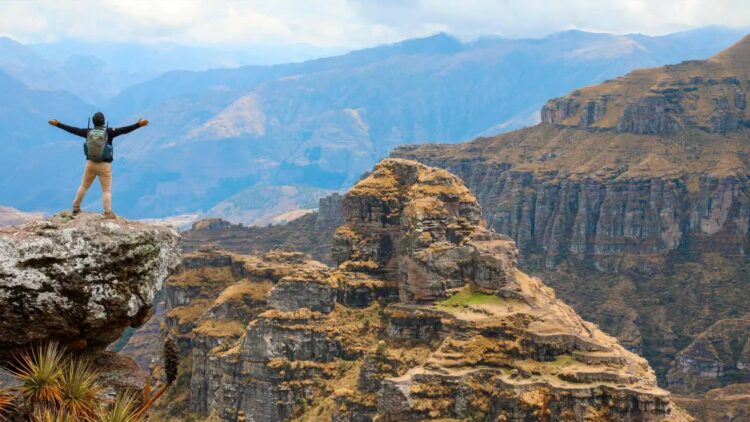
Ausangate trek 6 days to Rainbow Mountain, offers the opportunity to meet Quechua indigenous people who live at an altitude of 14,000 meters, raising llamas and alpacas. They inhabit an isolated region of the Vilcanota mountain range, amidst glaciers, vibrant lakes, and relaxing hot springs.
During this 6-day trek to Ausangate, there is a high probability of spotting a condor (the largest flying bird in South America). You may also observe Andean wildlife such as vicuñas, marmots (viscachas), geese, hawks, and wild ducks. Although you will be hiking at high altitude, once you have acclimatized, the trek is considered moderately difficult.
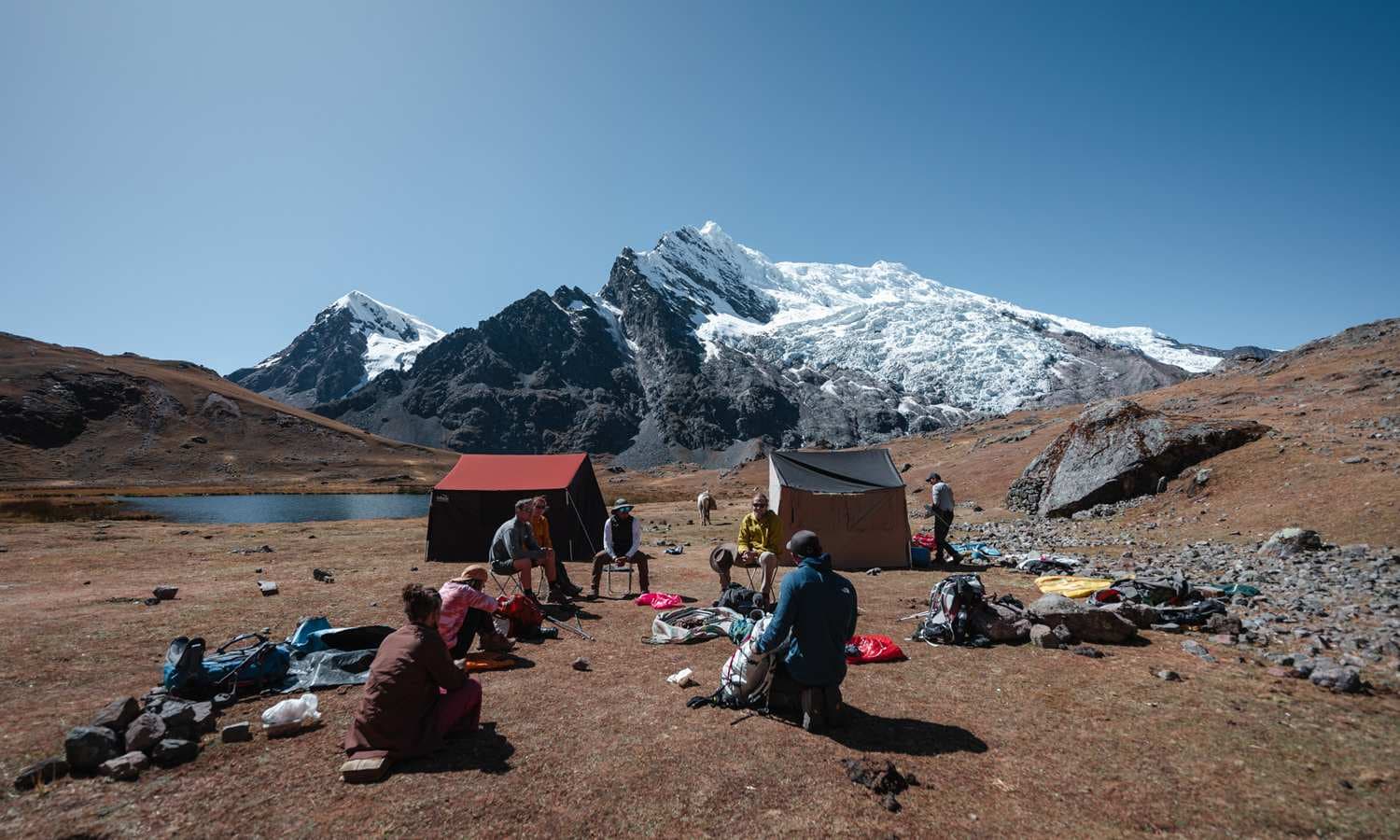
This 6-day ausangate trek starts in Cusco, with pickup at 6 am. We’ll travel in private transport to the trailhead at the base of Ausangate Mountain. The hike begins in Upispampa, passing through charming villages, stream crossings, and incredible views until we reach Upis village. There, we’ll have our base camp, enjoy a delicious lunch prepared by our chef, and have a short nap. Later, we’ll hike for 2 hours to Upis lagoon, where we can admire the starry night.
The trail eventually veers away from the road after Upis, allowing us to take in the peace and beauty of the surrounding mountains in relative isolation. The trail is well-defined and simple to follow over this section. In 2 hours, we climbed to the top of Arapa Pass (4850m). The first lake is roughly 30-40 minutes downhill from the pass’s summit. An overlook (Mirador) along the lake is a relaxing spot to have a picnic.
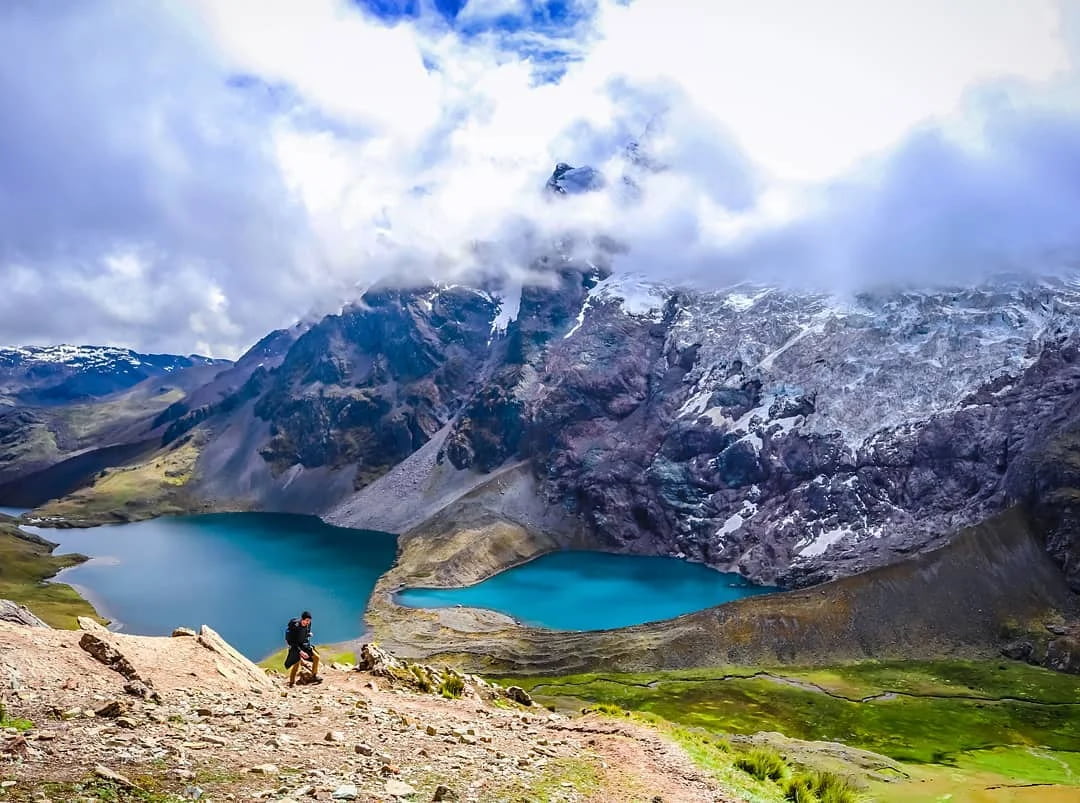
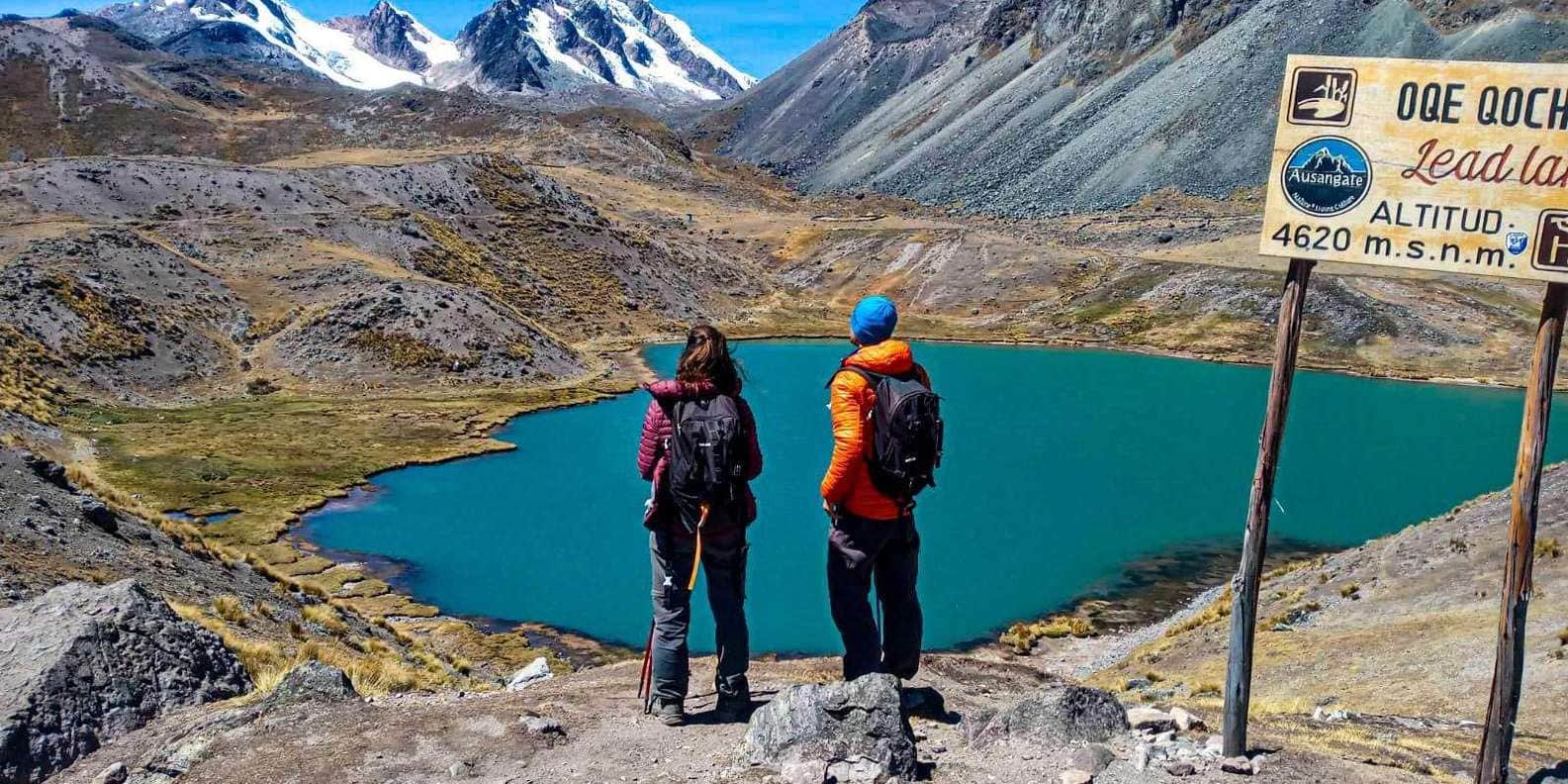
Numerous vicunas were spotted near the lake. (similar to llamas and alpacas, but wild and very shy). The journey begins at Puca Cocha, often spelt Puqa Qocha, the first of several lakes of varying hues and sizes. Here we will have lunch and camp, in the afternoon we will walk a little around the lagoons, and in the evening we will have a snack and dinner
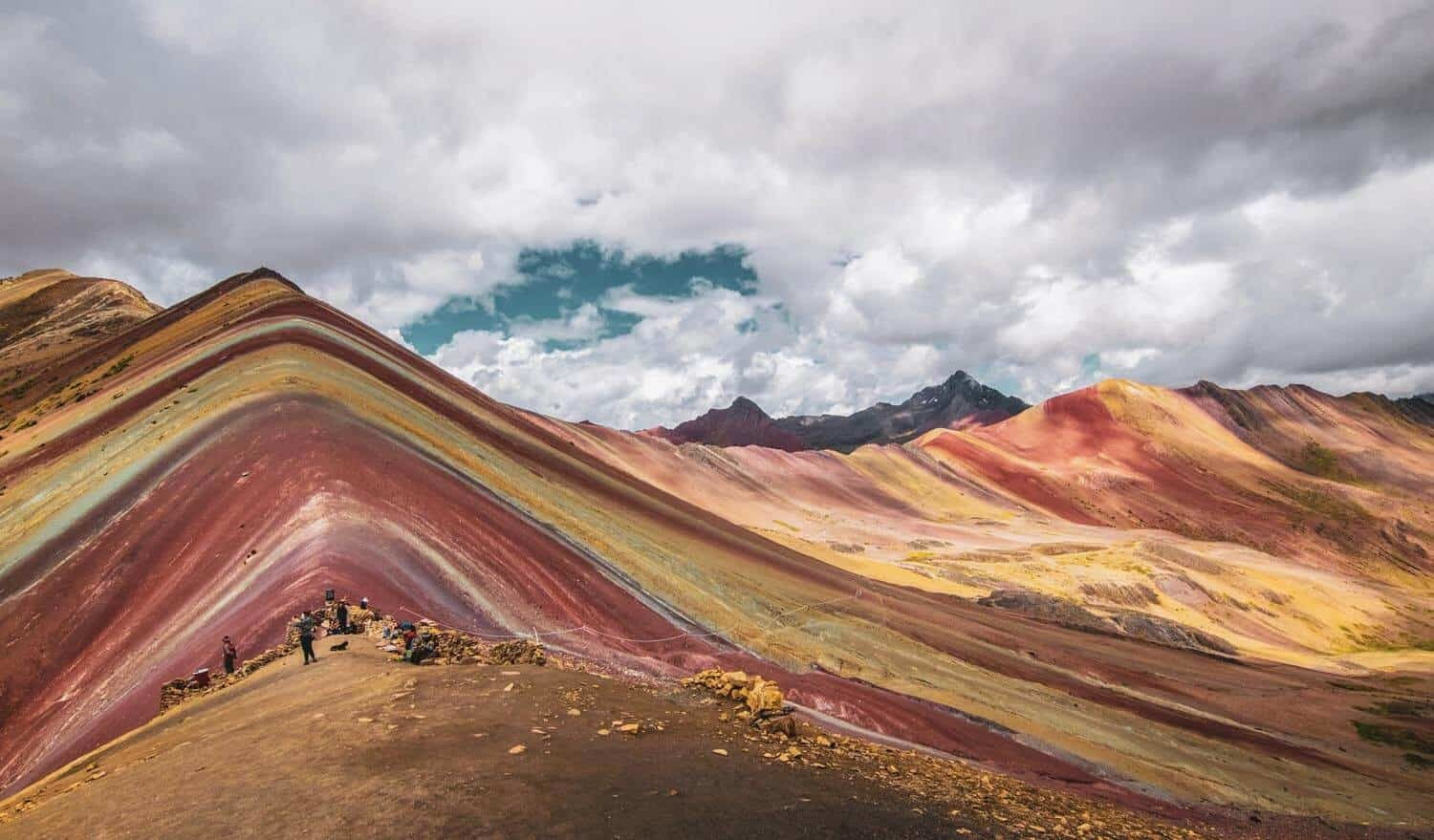
We’ll wake up with a coca tea followed by a very nutritious breakfast. Afterward, you’ll ascend a steep slope to reach Puca Cocha Pass, where you’ll be able to contemplate for the first time the multicolored mountains that surround you, dominated by red. You’ll also likely see several viscachas, or mountain rabbits, native to Peru and Bolivia, but difficult to spot and photograph due to their speed and shyness.
Afterward, we’ll descend for an hour and a half to Ananta, where we’ll have lunch.
A well-deserved rest will allow us to continue the uphill hike for another two hours until we reach Warmisaya (4985 m), where we can appreciate part of the immense chain of reddish mountains that welcomes us to Rainbow Mountain. Finally, we’ll descend for 45 minutes to Surinecocha (4800 m) and camp for the night.
The day begins with breakfast, followed by preparations for the day’s activities. The trek continues over the pass (4500 meters), ascends to the Vinicunca Valley (4300 meters), and then climbs to Rainbow Mountain (5000 meters). There, you’ll have ample time to take photos without crowds. Next, you’ll head to the Red Valley, where you’ll be rewarded with incredible views. Afterward, we’ll descend for approximately two hours to Quesouno, where we’ll have lunch. Then, we’ll ascend for two and a half hours to the Ausangate Cocha campsite, where we’ll spend the night in our tents. Along the way, we’ll pass through small villages and, of course, see llamas and alpacas
The highest point of the trek is at Palomani Pass, at 5200 m, and the climb from the campsite is long and steep. The views from there are breathtaking. Every now and then, take a moment to turn around and admire the stunning panorama of the valley and the pink mountains.
The altitude and a heavy backpack make the ascent strenuous. So take it easy and get plenty of rest. You’ll definitely make it. Fortunately, the climb offers several opportunities to rest and enjoy the scenery. You’ll know the climb was worth it as soon as you reach the summit and take in the view across the pass.
Then we descend for an hour and a half to the community of Huchuy Pinaya for lunch. Afterward, there will be the descent, which is quite steep and takes you to Jampa Campsite, where we’ll spend the night and have dinner.
The previous night was extremely cold, so when we awoke, everything, including our tent, was covered in snow, and it looked magnificent. We needed some steaming coffee to warm up immediately.
The final ascent to Jampa pass is accompanied by more colourful lakes, alpacas, and chinchillas. From the summit, you begin descending to the valley past several aquamarine lakes; you can cool off in one of them, but the water is icy! After approximately 5 hours, we arrived at the Pacchanta village.
Pacchanta has hot springs; if you are exhausted and no longer feel like walking, you can remain here and relax in the springs
Then will have lunch, say goodbye to our cook, horseman, and go back to Cusco
While we provide most of what you’ll need during your trek, there are a few things that are not included. Please make sure to bring or plan for the following:
If you have any questions or need assistance in preparing for your trek, feel free to contact us. We’re here to help!
Our Ausangate Trek is available all year round. Tour prices are based on the number of people in a group. Prices are valid from March 2025 through January 2026. All prices quoted are in $USD.
Transparent Price Guarantee: We offer fair and transparent pricing for our Ausangate Trek Tours. We ensure each service is priced accurately without unnecessary markups.
When trekking at high altitudes like the Ausangate Trek, your feet need support. Make sure you bring:
The Ausangate Trek takes you through varied weather conditions, from hot, sunny days to cold nights. Pack accordingly:
Due to the altitude and exposure, you’ll need extra protection:
Stay safe during your Ausangate Trek 5 Days with the right safety gear:
Make your experience smoother with the following items:
If you’re trekking independently or the agency doesn’t provide camping equipment, these items are essential:
The Ausangate Trek is a remote and high-altitude adventure, and being well-prepared is key. Having the right trekking gear, the ability to stay hydrated, and being prepared for altitude changes ensures not only a comfortable hike but also a safe one. Be sure to pack light, durable, and functional gear, and keep in mind the importance of respecting the local environment. Using eco-friendly products like biodegradable soap and minimizing waste is a great way to protect the pristine beauty of the Ausangate region.
Put your smartphone on airplane mode. no phone signal, and to save battery life.
Drink enough water, it is very important to hydrate yourself as we will be walking at 4000 masl and during this trek, there are streams where you can recharge water. It is also important to have purifying tablets when walking at high altitude.
Be very attentive to the weather. Conditions can change for hours at high altitudes in the Andes. Always have warm layers and waterproof layers on hand. This is especially important when climbing and traversing high passes.
Carry a first aid kit, an equipment repair kit, and a blister treatment kit in your backpack, but we have them too.
Carry a good amount of your favorite sunscreen, lip balm, and sunglasses, and wear a buffalo to protect your head and neck and help block the wind.
This hike is not recommended for children because they may have trouble walking, but if your child enjoys hiking at high altitudes, you can do it.
The higher altitude also means colder, near-freezing temperatures, so be prepared. If you decide to hike for several days, be sure to bring very warm clothing.
The best time to visit Rainbow Mountain will be in the morning or early afternoon, just after sunrise or before sunset.
Do not go to Rainbow Mountain in the afternoon during the rainy season because of the lighting. Due to the high concentration of minerals. There is a high probability of being affected by lighting.
Medication (Imodium AD or something for your stomach) because some people get an upset stomach on the trek. Also, Ibuprofen
is probably one of the most beautiful and complete trails that Cusco has. It is 55 km in total, which you can do in 4 or 5 days. Along this hike, you can see turquoise lagoons, glaciers, llamas, alpacas running, chinchillas, and the imposing snowy ausangate with an altitude of 6385 meters above sea level.
It is one of the best experiences to connect with nature and its enigma.
The perfect combination is to do this trek with the famous mountain of 7 colors where you will spend 5, 6, and 7 incredible days.
without any doubt, the best recommendation is to do physical exercises before doing this trekking running ravines, going up and down hills if you have it in your country or running at least 10 km per day, and thus be prepared to not have problems, and for people who suffer from the heart is not recommendable to do it because this trail is the highest in Cusco.
To be able to acclimatize is good to be in Cusco for 1 day or 2 days, and also the other option is to start your plans from Arequipa, Puno, and then come more acclimatized to Cusco and be better adapted to the altitude.
the best time for hiking is between the months of April to September, with very sunny days and perfect for taking good pictures and seeing the mountains more clearly in all their glory these months are the high season, and the months of October to March are the months of the rainy season and there are companies that still offer this trail and is not recommended because during the day is cloudy with rain and the road is slippery.
The answer is, of course, yes, having good camping and trekking equipment and a GPS, with maps where they can help you in the right directions where to go, camp, etc.
The Ausangate Trail is not well-marked, and unfortunately, you can get lost when it is cloudy.
The best option is to book with a company expert in this trek and also to have a better experience as GO TREKS PERU has the best professionals.
In general, this trekking is to be able to learn and know more about the Inca culture.
The weather in the Andes is very unpredictable because of the geography that we have. During the ausangate trek trail, during the day, it is sunny days, so you will need to use sunscreen, and at night, temperatures can reach below 0 degrees.
in general, is necessary to have Good trekking equipment to avoid problems with the cold and heat, and it is always necessary to have enough water to drink, the recommendation is to have 2 liters per person to avoid dehydration.
The Ausangate trail is divided into two well-marked categories: short (2-4 days) and long (5-7 days), with colorful mountains. If you have time, we recommend that you choose a 5-7 day route. This option is the most complete because in this trail you will be able to visit beautiful lagoons and the snow-capped Ausangate, and the incredible mountain of colors.
Also known as small Ausangate Treks, these shorter trails are intended to offer hikers a sort of “best of” sample of the Ausangate region in a shorter period of time. These routes usually focus on Lake Puca Cocha, the Ausangate glacier, and the Arco Iris mountain is somewhat complete.
The longer treks will take you through mountains and places that are rarely seen by hikers, a complete circuit so you can appreciate some of the high peaks from multiple angles and take amazing pictures. During the day you will see breathtaking views of glaciers and during the night, the milky way at its best from 4,000 meters to 5,200 meters.
For people who love to take pictures, this amazing trail will give you incredible gifts of turquoise lagoons, snow-capped mountains, llamas, alpacas, and the popular colorful mountain
Different hotels have a place to leave your luggage when you go out for a day trip. The other option is to leave it at the GO TREKS PERU office, and when you come back, you can pick it up without any problem.
The main reason Ausangate is considered difficult is that the entire hike is at a high altitude. This route is probably not suitable for novice hikers. It is considered one of the most difficult; however, if you have done other treks before, you should have no problem.
there are many places to rent in Cusco, the best option is to rent around the square, and the best known for quality and price is the famous speedy Gonzales that is on procuradores street.
100% Locally Owned by a Tour Guide
Go Treks Peru was founded by Elisban Condori, a local tour guide with years of experience leading treks to Machu Picchu. His goal is simple: to offer top-quality, authentic experiences led by passionate professionals who truly know the Andes.
Fair Work Conditions
We believe in ethical tourism. That means no exploitative working hours and fair pay for all our staff. We work with trained, freelance professionals who have the flexibility and respect they deserve.
Personalized Service
At Go Treks Peru, we don’t believe in one-size-fits-all. We tailor each tour to your preferences, always focusing on small groups to ensure a flexible, high-quality experience. For us, personal means unforgettable.
Sustainable Travel
All of our treks are 100% eco-friendly. We follow a strict “leave no trace” policy and encourage our travelers to protect nature and respect local communities at every step of the journey.
Excellent Customer Satisfaction
We’re proud to have consistent 5-star ratings on TripAdvisor and other platforms. Our travelers love the personal attention, seamless logistics, and genuine local connections we provide.
Discover why adventurers love traveling with Go Treks Peru. Read client reviews and explore top adventure destinations in Peru. Check our reviews on Tripadvisor or Google.
Posted on Tripadvisor
 William K
Verified
Wonderful Sulkantay Experience I went on the Sulkantay Trek, a wonderful experience . It comes with a guide, a chef and a horseman. The guide was very knowledgeable and answered all questions. The chef accommodated vegetarian/pescatarian eating habits and made different food for every lunch and dinner. The hike is medium difficulty, you will need to adapt to the altitude before you go on this hike so please, spend 5 days adapting before the start date. I paid roughly 550$ for a 5-day 4-night accommodation. And you should also bring soles for the bathrooms along the hike (2 soles each), if you want to buy any snacks, coffee at the farm. And bring some to tip the staff at the end of the trip. Very peaceful atmosphere. The hike is a great place to connect with people, and in the evening you can get some well needed rest.Posted on Tripadvisor JanetMachu Picchu 2026 I met up with my son in Aguas Calientes for a planned Machu Picchu visit. Go Trek Peru organized everything from the hotel accommodations to the roundtrip bus to Machu Picchu, to an excellent guided tour of circuit 2 (approximately 3 hours) by Nilo. He has been a tourism expert for years, which is evident as he shares his knowledge of Inca history. Go TREK Peru also organized the train tickets to Ollantaytambo with private transport to Cusco. I highly recommend Go Trek Peru! They are a newer tour company who provides an outstanding tour experience. Thank you to everyone at Go Trek Perú who made this experience memorable for my son and I. ¡Gracias por todo! ~ JanetPosted on Tripadvisor
 Paulo PSalkantay Trek It is 5 days of tracking. There has to be some experience because some parts are difficult. You may have to walk for 10 hours in one day. Everything was well organized. The Nile guide speaks fluent Spanish and English. It is 4 nights, with 3 of them sleeping in Domes, comfortable but sometimes there is no electricity and the bathroom is outside. It is recommended to have a portable charger and appropriate rain gear. The cook Santiago who made us food during the journey is very attentive and professional. The horseman who was in charge of carrying the bags was also very professional. I recommendPosted on Tripadvisor
 Lian T5 day Salkantay Trek We did the 5 day Salkantay Trek with Nilo as our guide and it was amazing. He was very knowledgeable and considerate with how our energy levels were throughout the hike. We had a small group of 3 travelers (us and one solo traveler), Nilo, chef Santiago, and horseman William. I loved traveling with everyone and it felt like a little family by the end! This was the most beautiful hike I’ve been on and I cannot recommend it enough. Each night you will be briefed on the next days activities/itinerary and it was so nice to just show up and have Nilo lead the way. It ended up being a little pricier because 2 people dropped out and to operate the company needs 4 travelers - so the original $500 turned into $667 each. For a practically private hike I think it was still a great deal. I just wish we had known ahead of time that 4 people is a requirement and we would have to offset if people dropped out.Posted on Tripadvisor
 Dylan LSalkantay 5-day ⭐⭐⭐⭐⭐ Best Trek of Our Lives – Salkantay 5-Day with Nilo! Choosing Go Treks Peru for the 5-Day Salkantay Trek was the absolute best decision we could have made—this was, without a doubt, the best trek of our lives! We basically had a private experience (one other person accompanied us on the hike.) We did have to pay a little more since a few people backed out, so if this happens to you just pay the extra bit- because it is 100% worth it!!! Our guide, Nilo, was incredible. He was so nice, deeply knowledgeable, and his passion for the trail and Andean history made every mile unforgettable. He took amazing care of our entire group, kept us motivated through the tough passes, and truly felt like a friend by the end of the journey. We were also blown away by the campsites. The accommodations were above and beyond what we ever expected for a high-altitude mountain trek. Falling asleep in such comfortable setups after a long day of hiking made the physical challenge so much more enjoyable. From the seamless organization to the hard-working crew, everything was handled flawlessly. If you are planning to do the Salkantay Trek, do yourself a favor and book with Go Treks Peru. We cannot recommend Nilo and the team highly enough!Posted on Tripadvisor
 Alejandra GarciaOne of the most unforgettable hikes I've ever done The Ausangate Trek exceeded all my expectations. The scenery is simply incredible, with beautiful glacial lakes, snow-capped mountains, and peaceful trails far from the crowds. The trek is challenging but completely worth it. Everything was well organized from start to finish, and the guide was knowledgeable, supportive, and made the whole experience even more enjoyable. The food, camping, and overall logistics were much better than I expected. If you're looking for an authentic trekking experience in Peru, I highly recommend this adventure. It was definitely one of the highlights of my trip.Posted on Tripadvisor
 William ZGreat value The tour company took care of us well, especially in our group. The food and the guide were amazing. Had heaps of funPosted on Tripadvisor
 Ralph MarcusA unique experience Everything very good, very good organization and coordination, everything was according to the plan, there were no unforeseen events. It is a physically very tough experience (due to the altitude above all) but rewarding and unique.Posted on Tripadvisor
 Weronika PWould highly recommend We had an amazing experience with Go Treks! We went for a short Inca trail which was perfect as we were short on time. Everything was planned very well and we didn’t have to worry about absolutely anything during the tour. Our guide was very knowledgeable and friendly. We were lucky to be the only people on the tour so we got a very personalized experience. We also booked the extra circuit 2 for Machu Picchu which was definitely the right choice. I’d definitely recommend this tour to anyone!Posted on Tripadvisor
 Yamile SanchezTotally worth doing the 2 Day Inca Trail I had been wanting to visit Machu Picchu for a long time, but I wanted something more than just arriving by train, so I decided to try the 2 day Inca Trail and honestly, it was such a good experience. It’s demanding at moments, but very manageable and completely worth it. The landscapes along the route are amazing, and getting to Machu Picchu after walking part of the trail makes the experience feel much more special. The guide was friendly, organized, and explained a lot about the history during the trip. If you’re planning Machu Picchu and want something a bit different, I’d definitely recommend it.Verified by TrustindexTrustindex verified badge is the Universal Symbol of Trust. Only the greatest companies can get the verified badge who has a review score above 4.5, based on customer reviews over the past 12 months. Read more
Looking for more adventures? Here you go, take a look at these other options that might be your next favorite trip.
Starting From:
US$550