
If you are searching for the latest seven wonders of the world, you are probably looking for more than just a list of famous landmarks. You may want to know which places currently hold this title, how they were chosen, what makes them remarkable, and whether you can actually visit them during your travels.
The modern list of the latest seven wonders of the world brings together seven extraordinary sites located across different continents. From ancient cities carved into rock to enormous architectural complexes and sacred monuments, each one represents a different chapter in human history.
For travelers, the list is also a useful way to discover destinations that combine history, culture, architecture and unforgettable landscapes. However, there is an important detail to understand before exploring them: these are not the same wonders as the famous Seven Wonders of the Ancient World.
You might be interested in: Everything about Saint Rose of Lima mass times 2026

What are the latest Seven Wonders of the World?
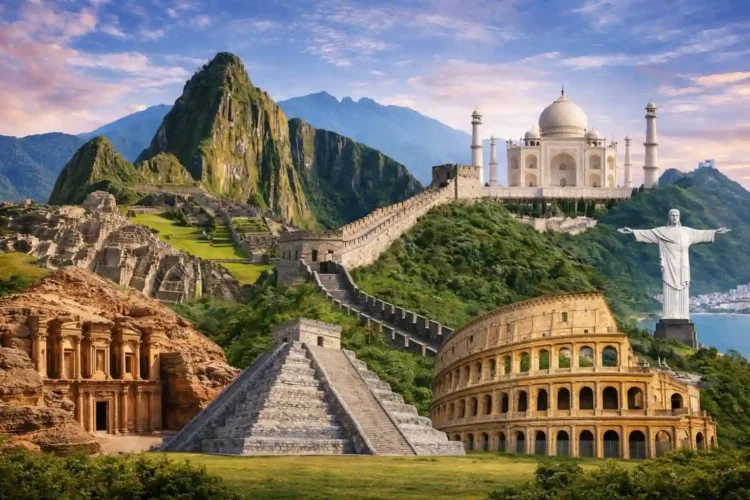
The latest seven wonders of the world are the seven monuments selected through the New7Wonders campaign and announced on July 7, 2007. The initiative involved a global public vote and received more than 100 million votes, making it one of the largest international voting campaigns of its kind.
The seven selected sites are:
- Great Wall of China – China
- Petra – Jordan
- Colosseum – Italy
- Chichén Itzá – Mexico
- Machu Picchu – Peru
- Taj Mahal – India
- Christ the Redeemer – Brazil
An important point for travelers is that these monuments are not ranked from first to seventh. The list does not establish which wonder is better, older or more impressive. All seven hold the same status within the modern list.
The selection of the latest seven wonders of the world was designed to recognize human-made monuments that represent outstanding cultural, historical and architectural achievements. As a result, the list covers a remarkable geographical range, from East Asia and the Middle East to Europe, Latin America and South Asia.
It is also useful to distinguish this list from the Seven Wonders of the Ancient World. The ancient list included monuments such as the Hanging Gardens of Babylon, the Temple of Artemis and the Colossus of Rhodes. Most of those structures disappeared centuries ago, with the Great Pyramid of Giza being the only surviving wonder from that ancient list.
The modern wonders, on the other hand, were selected in the 21st century and are all destinations that travelers can visit today.
For anyone planning an international trip, the list provides an interesting starting point. Each monument offers a completely different experience: some are archaeological sites, others are architectural masterpieces, and others are closely connected to the natural landscapes surrounding them.
The latest Seven Wonders of the World you can visit
One of the most interesting aspects of the latest seven wonders of the world is that each destination offers a different type of travel experience. You can walk along an ancient defensive system in China, enter a city carved into sandstone in Jordan, explore the remains of the Roman Empire in Italy or discover the legacy of the Maya civilization in Mexico.
Here are the first four wonders to consider for your travel list.
1. Great Wall of China
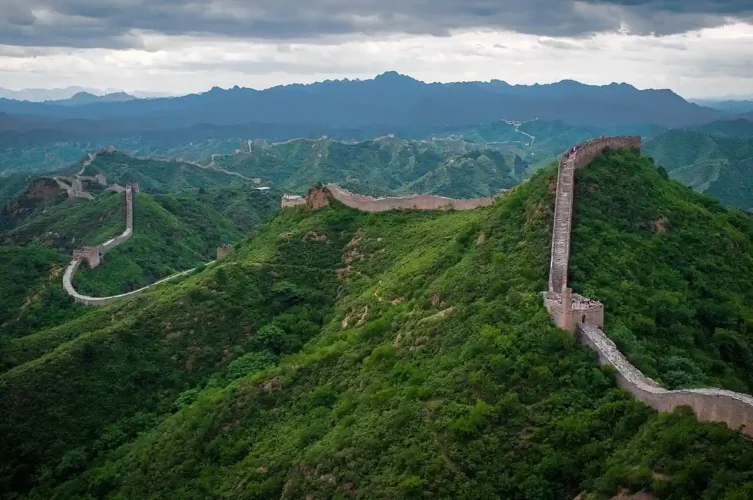
Stretching across northern China, the Great Wall is one of the most recognizable structures on Earth. Rather than being a single wall built at one time, it is a vast system of walls, fortifications, watchtowers and defensive structures constructed and modified by different Chinese dynasties over centuries.
Its original purpose was primarily defensive. The wall helped protect territories, control movement and establish strategic points along the northern frontier.
For travelers, however, the experience is about much more than history. Walking along the Great Wall means navigating steep sections, stone steps and mountain ridges while surrounded by dramatic landscapes.
Popular sections near Beijing include Mutianyu and Badaling. Mutianyu is particularly appealing to visitors who want impressive scenery and a slightly less crowded experience than some of the most famous sections.
Because different sections have different levels of difficulty about the latest seven wonders of the world, travelers should consider their physical condition and the season before choosing where to visit.
The Great Wall is especially interesting for people who enjoy combining cultural heritage with outdoor activities. Few historical landmarks allow visitors to experience ancient architecture while hiking through mountains in this way.
You might be interested in: What is Peru known for? 15 reasons travelers fall in love with Peru
2. Petra, Jordan
Petra is one of the most extraordinary archaeological destinations in the Middle East. Located in southern Jordan, the ancient city is famous for its buildings and monuments carved directly into rose-colored sandstone cliffs.
One of the most memorable moments of visiting Petra is entering through the Siq, a narrow natural gorge that leads toward the heart of the archaeological site. At the end of the passage, visitors encounter the Treasury, one of the most recognizable façades associated with Petra.
But the Treasury is only part of the site.
Petra was once an important center of trade for the Nabataean civilization, which developed sophisticated systems for managing water in an environment where resources were limited. The city includes tombs, temples, streets, monumental façades and other structures spread across a large area.
That means visiting Petra requires time and comfortable footwear. Travelers who only see the Treasury may miss much of what makes the ancient city remarkable.
For those interested in archaeology, ancient civilizations and desert landscapes, Petra can be one of the most rewarding destinations on the list of the latest seven wonders of the world.

3. Colosseum, Italy
In the center of Rome stands the Colosseum, one of the most recognizable symbols of the Roman Empire of the latest seven wonders of the world.
Construction began during the first century AD under Emperor Vespasian and was completed under his successor Titus. The enormous amphitheater could accommodate tens of thousands of spectators and was used for public spectacles, including gladiatorial contests and other forms of entertainment.
What makes the Colosseum particularly fascinating is the way its architecture reflects the organization and engineering capabilities of ancient Rome.
Its elliptical design, multiple levels and sophisticated circulation system allowed large crowds to enter and leave the building efficiently. Beneath the arena was an extensive network of underground passages and rooms known as the hypogeum.
Today, walking through the Colosseum offers travelers an opportunity to connect the remains of the structure with the history of ancient Rome. The surrounding archaeological area also makes it easy to combine the visit with other important landmarks, including the Roman Forum and Palatine Hill.
For first-time visitors to Italy, the Colosseum is especially valuable because it can be incorporated into a broader historical itinerary through Rome.
You might be interested in: Rainbow Mountain in Cusco Peru I Everything you need to know

4. Chichén Itzá, Mexico
In Mexico’s Yucatán Peninsula, Chichén Itzá offers a completely different experience. The archaeological site was one of the most important urban centers of the Maya civilization and is particularly famous for El Castillo, also known as the Temple of Kukulcán talking about the latest seven wonders of the world.
The pyramid is one of the most recognizable structures associated with Maya architecture. Its design reflects the mathematical, astronomical and religious knowledge developed by the civilization.
Chichén Itzá is also much more than a single pyramid. The archaeological complex contains plazas, temples, columns, ball courts and other structures that help visitors understand the importance of the city in the Maya world.
One of its most interesting features is the connection between architecture and astronomy. During the equinoxes, the position of the sun creates a shadow effect along the pyramid that has traditionally been associated with the serpent deity Kukulcán.
For travelers, visiting Chichén Itzá can be an opportunity to explore ancient history while also discovering the broader cultural landscape of the Yucatán Peninsula.
The site is particularly appealing to travelers interested in Indigenous cultures, archaeology and ancient architecture. It also works well as part of a larger itinerary that includes destinations such as Mérida, Valladolid and the region’s cenotes.
These four destinations already demonstrate why the latest seven wonders of the world are so diverse. The Great Wall represents centuries of defensive engineering, Petra reveals the sophistication of the Nabataean civilization, the Colosseum reflects the power and organization of ancient Rome, and Chichén Itzá showcases the remarkable achievements of the Maya.
But the list does not end there. Three more destinations complete the modern collection, including a spectacular Inca citadel in the Peruvian Andes, an iconic monument in India and one of Brazil’s most recognizable landmarks.

5. Machu Picchu, Peru
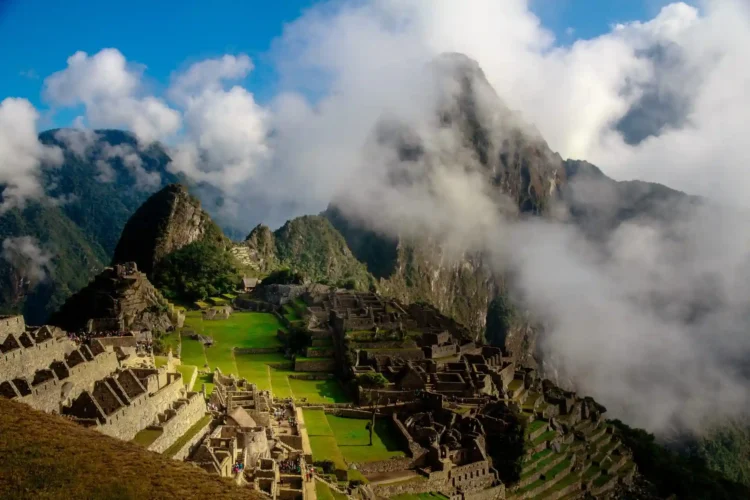
High in the Peruvian Andes, Machu Picchu is one of the most extraordinary archaeological sites in South America and one of the most recognizable destinations on the list of the latest seven wonders of the world.
The ancient Inca citadel sits at approximately 2,430 meters above sea level, surrounded by steep green mountains and dramatic valleys. Its location is one of the reasons the experience feels so different from visiting many other major landmarks around the world. Here, architecture and landscape are inseparable.
Machu Picchu was built during the 15th century, generally associated with the reign of the Inca ruler Pachacuti. Although its exact purpose continues to be discussed by researchers, the site includes ceremonial spaces, agricultural terraces, residential areas, plazas and sophisticated stone structures.
One of the most impressive characteristics of the latest seven wonders of the world is the precision of the stonework. Large blocks were fitted together with remarkable accuracy, often without mortar. The Incas also adapted the settlement to the mountain rather than trying to flatten the terrain. Terraces helped manage agriculture and water, while the site’s drainage systems contributed to its long-term preservation.
For international travelers, visiting Machu Picchu is rarely just a quick stop. It is usually part of a larger journey through Cusco and the Sacred Valley, where visitors can discover other archaeological sites and learn more about Andean culture.
There are also several ways to reach the citadel. Travelers can take a train to the town of Machu Picchu Pueblo and continue by bus, while trekking routes provide a more immersive experience for those who want to combine hiking and archaeology.
The Inca Trail is perhaps the best-known trekking route, but alternatives such as the Salkantay and Lares routes offer different landscapes and experiences.
Machu Picchu is especially attractive to travelers who want a destination where history, mountains, architecture and cultural heritage come together. Its inclusion among the latest seven wonders of the world also makes it one of the most important landmarks to consider when planning a trip to Peru.
You might be interested in: What mountains are in Peru? 15 mountains you should know

6. Taj Mahal, India
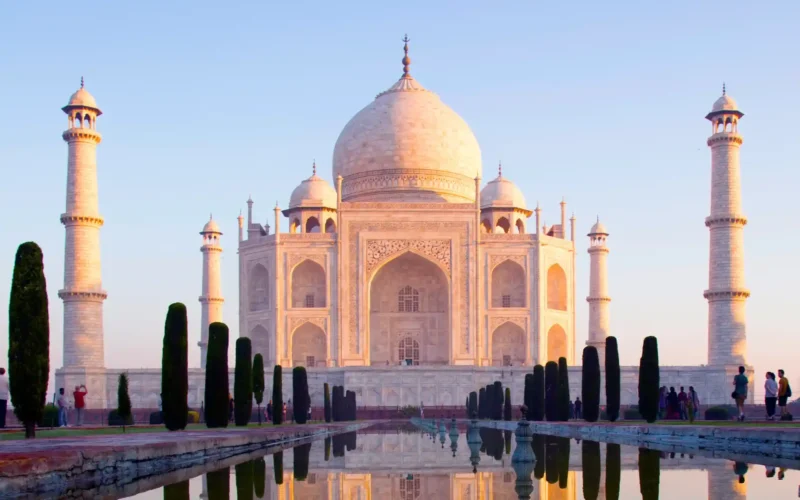
In the city of Agra, India, the Taj Mahal stands as one of the world’s most recognizable examples of Mughal architecture.
Built in the 17th century under Mughal emperor Shah Jahan, the monument was commissioned as a mausoleum for Mumtaz Mahal, his wife. The building is primarily made of white marble and is known for its symmetrical design, enormous central dome, minarets and intricate decorative details.
The Taj Mahal is often described simply as a symbol of love, but its architectural significance goes much further. Its design combines influences from Persian, Islamic and Indian architectural traditions, creating a monument that reflects the cultural diversity of the Mughal Empire.
For travelers, one of the most memorable aspects is the way the monument changes appearance depending on the light. Its white marble can look different at sunrise, during the day and around sunset, which is why many visitors carefully plan the time of their visit.
The main mausoleum is surrounded by formal gardens and reflective pools that reinforce the site’s carefully planned symmetry. The complex also includes a mosque and an architectural structure on the opposite side designed to maintain visual balance.
The Taj Mahal can also be incorporated into a broader itinerary through northern India. Many travelers combine Agra with Delhi and Jaipur, creating the popular Golden Triangle route.
For visitors who look for the latest seven wonders of the world and interested in architecture, history and cultural heritage, the Taj Mahal offers a very different experience from Machu Picchu or Petra. Rather than being an ancient city or mountain settlement, it is a monumental expression of architecture, power and personal memory.
That diversity is precisely what makes the latest seven wonders of the world so interesting: each destination tells a different story about the civilization that created it.
7. Christ the Redeemer, Brazil
Overlooking Rio de Janeiro from the summit of Corcovado Mountain, Christ the Redeemer is one of Brazil’s most recognizable landmarks.
The Art Deco statue depicts Jesus Christ with his arms extended over the city. Completed in 1931, it has become both a religious symbol and an iconic part of Rio de Janeiro’s identity.
The statue itself is impressive, but its location is equally important. From the summit, visitors can enjoy panoramic views of Rio’s coastline, mountains and urban landscape. This makes the experience different from visiting many archaeological wonders: the surrounding city becomes part of the attraction.
The monument can be reached through the Tijuca National Park, one of the world’s largest urban forests. Visitors commonly travel by train or other transportation options to reach the summit of the latest seven wonders of the world.
Because weather can affect visibility, choosing a clear day can make a significant difference to the experience. On days with good conditions, the views can extend across some of Rio’s most famous areas.
Christ the Redeemer is particularly appealing to travelers who want to combine a major cultural landmark with a vibrant city experience. Visitors can explore neighborhoods, beaches, viewpoints and cultural attractions around Rio before or after visiting the statue.
Together with the Great Wall, Petra, the Colosseum, Chichén Itzá, Machu Picchu and the Taj Mahal, Christ the Redeemer completes the seven destinations recognized by the New7Wonders campaign.

Are the Pyramids of Giza one of the latest Seven Wonders?
This is one of the most common points of confusion when people search for the latest seven wonders of the world.
The short answer is no. The Great Pyramid of Giza is not one of the seven modern wonders selected through the 2007 New7Wonders campaign.
However, there is an important reason why people often see it mentioned alongside them.
The Great Pyramid of Giza is the only surviving monument from the traditional Seven Wonders of the Ancient World. The ancient list was created more than two thousand years ago and included monuments that were considered extraordinary achievements of the ancient Mediterranean and Near Eastern world.
The other ancient wonders have disappeared over time, while the Great Pyramid has survived.
Because of its extraordinary historical importance, the Great Pyramid was given an honorary recognition during the New7Wonders campaign rather than being included as one of the seven modern winners.
This distinction is important because the two lists represent completely different historical contexts.
The Ancient Seven Wonders include:
- Great Pyramid of Giza
- Hanging Gardens of Babylon
- Statue of Zeus at Olympia
- Temple of Artemis at Ephesus
- Mausoleum at Halicarnassus
- Colossus of Rhodes
- Lighthouse of Alexandria
The modern list includes the Great Wall of China, Petra, Colosseum, Chichén Itzá, Machu Picchu, Taj Mahal and Christ the Redeemer.
Therefore, if you are planning a trip based on the latest seven wonders of the world, Egypt’s Great Pyramid should not be counted as one of the seven modern selections. Nevertheless, it remains one of the most important monuments in human history and a destination that many travelers consider essential.
How were the latest Seven Wonders of the World chosen?
The selection of the latest seven wonders of the world was the result of the New7Wonders campaign, a global initiative created by Swiss-Canadian filmmaker and adventurer Bernard Weber.
The project began with a much larger group of monuments from around the world. Over time, the campaign narrowed the selection to 21 finalists.
People around the world were then invited to vote for the landmarks they believed deserved recognition. According to New7Wonders, more than 100 million votes were cast during the campaign.
The final announcement took place in Lisbon, Portugal, on July 7, 2007.
The latest seven wonders of the world winners were not selected by UNESCO or through an official archaeological ranking. This distinction matters because the list is sometimes presented as though it were an internationally established scientific classification.
Instead, it was a global public voting campaign designed to identify a new group of iconic human-made landmarks.
The final seven represented different civilizations, regions and historical periods:
- Great Wall of China: Chinese defensive architecture and centuries of history.
- Petra: Nabataean engineering, trade and rock-cut architecture.
- Colosseum: Roman engineering and the cultural history of ancient Rome.
- Chichén Itzá: Maya architecture, astronomy and cultural heritage.
- Machu Picchu: Inca architecture and Andean engineering.
- Taj Mahal: Mughal architecture and artistic traditions.
- Christ the Redeemer: Brazilian culture, religious symbolism and Rio de Janeiro’s identity.
One important detail is that the seven are not ranked against each other. There is no official first-place or seventh-place wonder. Each was selected as part of the same group.
The campaign also explains why the word “latest” can be slightly misleading. These are the New 7 Wonders of the World, but the list has not been replaced every few years. The selection was announced in 2007 and remains the modern list commonly referenced today.
For travelers, this means that searching for the latest seven wonders of the world will generally lead to the same seven destinations: Great Wall of China, Petra, Colosseum, Chichén Itzá, Machu Picchu, Taj Mahal and Christ the Redeemer.
What makes the list particularly interesting is not simply the title itself, but the opportunity to compare completely different forms of human achievement. A mountain citadel in Peru, a rock-cut city in Jordan and a monumental statue overlooking a Brazilian city may seem unrelated at first, yet each represents a powerful connection between architecture, culture and history.
That variety also means there is no single best wonder for every traveler. The right choice depends on whether you are most interested in archaeology, hiking, architecture, ancient civilizations, religious heritage or simply experiencing one of the world’s most iconic destinations.

Which of the latest Seven Wonders should you visit?
Choosing between the latest seven wonders of the world can be difficult because each destination offers a completely different travel experience. There is no single “best” wonder for everyone. The right choice depends on what you want to experience during your trip.
If you are fascinated by ancient civilizations and archaeology, Machu Picchu, Petra and Chichén Itzá are excellent choices. These destinations allow you to explore the remains of civilizations that developed sophisticated architecture, engineering and cultural traditions centuries ago.
For travelers interested in architecture and monumental structures, the Taj Mahal, Colosseum and Great Wall of China offer very different experiences. The Taj Mahal stands out for its symmetry and artistic details, the Colosseum showcases Roman engineering, and the Great Wall combines monumental construction with dramatic mountain scenery.
If your priority is landscape and city experiences, Christ the Redeemer is particularly appealing. Its location above Rio de Janeiro means that visiting the monument can be combined with beaches, viewpoints, cultural attractions and urban exploration.
Here is a simple way to compare them:
| Wonder | Best for | Travel experience |
| Great Wall of China | Hiking and history | Mountains, fortifications and panoramic views |
| Petra | Archaeology | Ancient city carved into sandstone |
| Colosseum | Ancient Rome | Architecture and Roman history |
| Chichén Itzá | Maya culture | Archaeology and ancient architecture |
| Machu Picchu | Inca history and nature | Mountains, archaeology and trekking |
| Taj Mahal | Architecture | Mughal heritage and monumental design |
| Christ the Redeemer | City and landscapes | Rio de Janeiro, culture and panoramic views |
The latest seven wonders of the world can therefore appeal to very different types of travelers. Before choosing one, consider how much time you have, what type of destination you enjoy and whether you prefer a cultural itinerary, outdoor adventure or a combination of both.
Can you visit more than one of the New Seven Wonders on one trip?
Yes, it is possible to visit more than one of the New Seven Wonders during the same trip, although doing so requires careful planning.
The biggest challenge is geography. The seven destinations are spread across several continents, so visiting all of them in a single vacation would require considerable time and multiple international flights.
A more realistic approach is to combine wonders that are relatively close to one another or that fit naturally into a broader itinerary.
For example, travelers exploring Europe can potentially combine the Colosseum in Rome with other major historical destinations in countries such as Greece, France or Spain. However, none of the other six modern wonders is located particularly close to Rome, so adding another wonder usually means taking a longer international journey.
A trip through Latin America offers another possibility. Chichén Itzá in Mexico and Christ the Redeemer in Brazil are both on the same continent, although they are still separated by a considerable distance. A traveler with several weeks available could build an itinerary around both countries.
For visitors interested in South America, Machu Picchu and Christ the Redeemer can theoretically be combined. You could explore Peru before continuing to Brazil, creating a journey that brings together Andean archaeological heritage and the landscapes and culture of Rio de Janeiro.
Another possibility is to combine Machu Picchu with Chichén Itzá as part of a longer Latin American itinerary. Both destinations offer opportunities to learn about major Indigenous civilizations of the Americas, although their architecture, historical contexts and landscapes are very different.
Travelers visiting Asia can consider the Taj Mahal alongside other destinations in India or neighboring countries. The Great Wall of China can also be incorporated into a broader East Asian itinerary.
However, trying to visit several latest seven wonders of the world simply to collect them can make a trip unnecessarily rushed. These are destinations that deserve time to appreciate their history and surroundings.
Instead of asking how many wonders you can visit, it may be more rewarding to choose one or two that genuinely match your interests.
For example, someone who loves hiking may enjoy spending several days exploring the Cusco region and Machu Picchu rather than rushing through multiple countries. Likewise, a traveler passionate about ancient history might prefer a longer itinerary through Rome and Petra.
The latest seven wonders of the world work best as inspiration rather than as a checklist. The goal is not necessarily to see all seven as quickly as possible, but to experience the history and culture behind each destination.
You might be interested in: Everything you must know about Peru Independence day history

Latest Seven Wonders of the World: which one should you visit first?
If you are visiting one of the latest seven wonders of the world for the first time, the best option depends largely on the type of trip you want.
For many travelers, Machu Picchu is an especially memorable first choice because the experience goes beyond visiting a monument. The journey can include Lima, Cusco, the Sacred Valley and the Andes before reaching the Inca citadel.
This makes the destination particularly appealing if you want to combine history with nature and adventure.
You can explore ancient Inca sites in Cusco, discover traditional Andean communities, travel through mountain landscapes and, depending on your itinerary, hike along one of the region’s trekking routes before reaching Machu Picchu.
Petra may be a better first choice if you are fascinated by archaeology and ancient civilizations. Entering the Siq and seeing the Treasury appear between the sandstone cliffs creates a very distinctive experience.
The Great Wall of China is ideal for travelers who enjoy hiking and expansive landscapes, while Chichén Itzá offers a fascinating introduction to Maya history and architecture.
If architecture is your main interest, the Taj Mahal and Colosseum provide two completely different experiences: one reflects the artistic and architectural traditions of the Mughal Empire, while the other offers a direct connection with the Roman world.
Meanwhile, Christ the Redeemer is an excellent choice if you want to combine a famous landmark with a lively urban destination. Rio de Janeiro allows travelers to experience the monument while also exploring beaches, mountains, neighborhoods and Brazilian culture.
Ultimately, there is no universally correct order in which to visit the latest seven wonders of the world. Your first wonder should be the one that best matches your travel interests and the type of experience you want to remember.
Latest Seven Wonders of the World: a journey through human history
The latest seven wonders of the world offer much more than a collection of famous landmarks. Together, they represent different civilizations, architectural traditions and ways in which people transformed their surroundings.
The Great Wall demonstrates the scale of ancient defensive construction. Petra reveals the ingenuity of a civilization that flourished along important trade routes. The Colosseum reflects the engineering and social organization of ancient Rome, while Chichén Itzá showcases the achievements of the Maya.
Machu Picchu demonstrates the extraordinary ability of the Incas to build within a challenging mountain environment. The Taj Mahal represents the artistic and architectural sophistication of the Mughal period, and Christ the Redeemer has become an enduring symbol of Rio de Janeiro and Brazil.
One of the most interesting things about these destinations is that no two experiences are alike. Some require hiking, others invite you to explore archaeological ruins, and others are located in the middle of vibrant modern cities.
That is why the latest seven wonders of the world can be an excellent starting point for planning a trip based on history, culture, architecture and adventure.
Whether you choose to walk along the Great Wall, enter Petra through the Siq, admire the Colosseum, discover the Maya world at Chichén Itzá, explore the Andes around Machu Picchu, watch the light change across the Taj Mahal or admire Rio from Corcovado, each wonder offers a different way of understanding the cultures that shaped our world.
You do not need to visit all seven to appreciate what makes them extraordinary. Sometimes, one carefully planned journey is enough to turn a famous name on a list into a place, a story and a memory that stays with you long after you return home.


