
Ayni meaning is reciprocal help. In Andean communities that practice it, one household may help another plant or harvest its crops with the understanding that the help will be returned when needed. The return can happen on another day or later in the agricultural season. Each household gets extra hands at a different moment, when the work on its own land calls for them.
Picture two families preparing to plant potatoes. One family has its plot ready this week and asks its neighbors to help. They work together for a day. The following week, when the neighbors are ready to plant, the family that received help joins them. Both families contribute time and effort, and both get support at a point when a larger group can make a difference.
That example gives the word ayni a practical meaning. It describes a relationship that people put into action when they decide whom to ask for help, how much time they can give, and when they can return the work.
What‘s the ayni meaning in Quechua?
The Quechua word ayni is commonly translated as reciprocal help or reciprocal labor. The first translation describes the relationship between the people involved. The second is especially useful when the exchange takes the form of work, such as planting a field or bringing in a harvest.
The word reciprocal matters because it describes what happens after the first act of help. A household that receives support takes on a responsibility to contribute in turn. The people involved may agree on a date in advance, or they may work out the timing when the next task comes up. Either way, each household understands that it can give and receive help within the same relationship.
What makes help reciprocal?
Imagine that a neighbor spends a morning helping a family finish planting. When the neighbor’s own field is ready, the family sets aside time to work there. The first morning shows one side of the exchange. The later workday shows how the family that received support fulfills its commitment.
Several kinds of help can look similar while the work is happening. People digging in the same field could be relatives doing a favor, workers hired for the day, or neighbors exchanging labor. The arrangement between them explains what the work means. In an exchange of ayni meaning, the people giving help understand that they can call on the receiving household when they have work of their own.
A household that receives help from several neighbors may also have several commitments to remember. One neighbor might be ready to plant the following week, while another needs help at harvest. A single busy day in one field can therefore lead to a series of smaller workdays across different plots.
When is the help returned?
The timing depends on when the other household needs support and when the people involved can give it. Two families may grow the same crop and still prepare their land at different times. One plot might be ready now, while the other needs another week. This difference allows a group of people to work on one plot first and move to the next when it is ready.
In Huatta, near Lake Titicaca in Peru, research on agricultural labor for ayni meaning is as an exchange in which the return can take place later. The delay helps explain how the arrangement works. Each family can put its own work on the calendar and still make time for its neighbors. If the dates shift, the households can talk through when the extra hands will be most useful.
The gap between workdays can be short or long. One family may return the help during the same planting period. In another illustrative exchange, a neighbor may help with planting and ask for support later in the season, when several tasks come together at harvest. The timing makes sense when it follows the work people actually need to get done.
You might find interesting: https://gotreksperu.com/travel-in-peru/
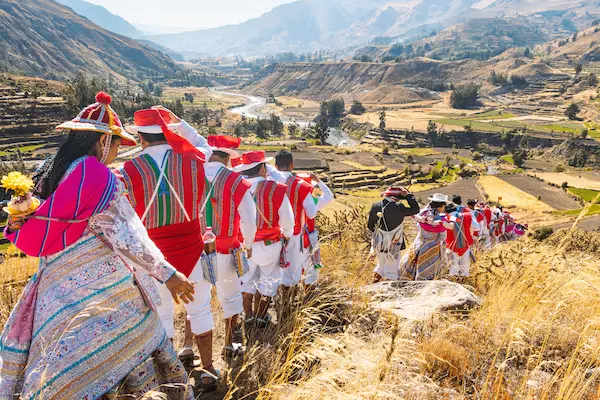
Examples of ayni in Andean communities
Planting and harvesting show how reciprocal labor can meet different needs. During planting, a household may want to keep several tasks moving in sequence. At harvest, it may need people to dig, gather, sort, and carry at the same time. The examples below illustrate how families could organize and return that support.
Planting potatoes on a neighbor’s plot
Suppose a family has prepared its potato plot and set aside the seed potatoes. It asks a neighboring household to join them on a day when everyone can be there. One person helps prepare the rows, another places the seed potatoes, and others cover them with soil. With several people sharing the tasks, the group can keep moving through the field.
For the neighbors, joining the planting day means setting aside time they could have spent on work at home. Their own plot will be ready later, so they can offer help now. When they are ready to plant, the family that received help joins them. One person may work on the rows while another takes on whatever part of the planting needs attention.
The second workday completes the exchange. On the first day, the neighbors contribute to a plot that belongs to another household. On the second, they can concentrate on their own plot with help from the people they supported. Both families use their time where it makes the most difference that day.
Helping a family bring in its harvest
Imagine a family preparing to harvest potatoes. Lifting the crop from the soil is one part of the job. The potatoes also need to be collected, sorted, and moved out of the field. With only a few people available, the family may spend much of the day switching between tasks. With extra hands, some people can keep digging while others gather what has already been lifted.
The family asks another household to help. A few people work along the rows, while others collect potatoes or carry sacks to the edge of the plot. Later, when the neighbors are ready to harvest, members of the first family return the support. At that field, they may spend more time carrying sacks or sorting the crop, depending on where help is needed.
The two workdays can involve different tasks even when both households grow potatoes. One family may need people to lift the crop. The other may already have enough people digging and need help moving it. What connects the workdays is the commitment to make time for each other and contribute where the receiving household needs help.
Returning help when plans change
Consider two households that have agreed to help each other during planting. The first workday goes as planned. A few days later, the second household realizes its plot will be ready earlier than expected. It lets the first family know and asks whether someone can come in the morning. The first family can then see which tasks it can move and who is available.
This kind of change shows how much coordination sits behind a day of shared work. The people asking for help need to explain when they plan to start and what they need done. The people returning the help need to say what time they can give. An agreement becomes useful when both households can turn it into a workday that fits their schedules.
| Situation | Help a household receives | How the help is returned |
| A potato plot is ready for planting | Neighbors help prepare rows, place seed potatoes, or cover them | The household joins the neighbors when their own plot is ready |
| A harvest requires several people at once | Another household helps lift, collect, sort, or carry the crop | The family helps when the other household needs to bring in its harvest |
| A planting date changes | Neighbors adjust their plans to contribute when the plot is ready | The receiving household makes time when the neighbors call on it |
You might find interesting: Andean cosmology: 7 keys to understanding the Andean worldview

What is the difference between ayni and minka?
A useful way to understand the difference is to ask who benefits from the work and how the people involved organize it. A typical example of the ayni meaning involves households helping one another in turn. A common example of minka, also written minga in some contexts, involves people coming together to complete a task that serves a shared purpose. The terms and arrangements can vary by community.
Two households exchange work on their plots
A family asks its neighbors to help plant potatoes. The work benefits that household on the first day. Later, members of the family go to the neighbors’ field and help plant their crop. The benefit shifts from one household to the other as they take turns contributing labor. The two workdays form a reciprocal exchange.
The number of people in the field gives only part of the picture. Several households could help on the first day, each with its own arrangement for when the work will be returned. To understand how the exchange works, look at who has agreed to help whom and what each household expects after the day is over.
Several households repair a shared irrigation channel
Imagine that sediment has built up along an irrigation channel used by several households. They agree on a day to clear it. Some people remove stones and sediment, while others check where the water is flowing. Their work restores access to a resource they use together. The benefit is shared among the households that rely on the channel.
A workday like this helps illustrate the communal purpose associated with minka. Water infrastructure can also be maintained through other local arrangements, including reciprocal work. The clearest distinction comes from how people organized the task. In the field example, households take turns working on one another’s plots. In the channel example, they contribute to a shared resource on the same day.
How ayni meaning helps families get work done
A household’s need for labor changes throughout the agricultural season. Family members may be able to manage routine work on their own. Then a field is ready for planting or a crop needs to be gathered, and several jobs must happen in a short period. Ayni meaning gives households a way to bring in extra help for those days and return it once their neighbors need support.
Sharing work across different schedules
Two households may each have enough people for much of the season, yet both could use a larger group on planting day. If their plots are ready a week apart, they can work on one field first and the other the following week. The same people contribute to both plots, and each household receives support during its own planting period.
Timing can also make an exchange harder. If both fields are ready on the same day, each household has work of its own waiting. The families might decide to help on one plot in the morning and move to the other later, or agree on separate days if the work allows. Their choices depend on how much each plot needs, who is available, and how flexible the dates are.
Keeping commitments between neighbors
A family that organizes planting around other people’s help needs some confidence that they will be there. It can share the start time and explain what work needs extra hands. The neighbors can say when they are available and what they can contribute. When the roles reverse, the family that received help can plan ahead for the commitment it made.
That commitment becomes visible in ordinary decisions. Someone may set aside a morning, move another chore to the next day, or arrange for an available household member to join the work. If plans change, telling the other family early gives it time to adjust. The exchange depends on these conversations as much as it depends on what people do once they arrive in the field.
Building trust through repeated exchanges
After two households have helped each other through planting or harvest, they have a clearer idea of how they work together. They know which tasks they can share and how much time to allow. When one family asks for help again, the other can draw on that experience to decide what it can offer.
Trust develops through the details people can see. Someone arrives when they said they would. A household lets its neighbors know when a date changes. A family remembers to return the help even after its own busiest work is over. Over time, those actions give people a reason to rely on each other when the next task comes up.
You might find interesting: Inca Agriculture: How terraces supported life in the Andes

Frequently asked questions about ayni
How do you translate the ayni meaning into English?
“Reciprocal help” is a clear translation. “Reciprocal labor” works especially well when discussing an exchange of work, such as two households helping each other plant or harvest. “Mutual aid” also conveys the idea of people supporting one another. To explain ayni meaning precisely, add that the people involved expect the support to go both ways.
Does ayni have to be returned right away?
The return can take place later. A household may help its neighbor this week and receive help when its own field is ready. In a farming exchange, waiting until the other household needs the work can make the support more useful than returning it on the same day.
Can ayni involve more than two people?
Yes. Several members of two households may take part, and a family can arrange help with more than one neighbor. For example, three households might work together on one plot and then help each other on other dates. Each exchange depends on the commitments the households make to one another.
Is ayni meaning still practiced in Peru?
Yes. Research published in 2022 ayni meaning is among farming communities in the Peruvian highlands, including reciprocal work connected to agriculture and water management. The tasks and expectations can vary between communities, so specific examples help explain how households put the practice into action.
What a day of ayni meaning can mean for two households
Think back to the two potato plots. On the first planting day, one family gets the extra hands it needs to move through the rows. A week later, the neighbors are ready to plant, and the family that received help makes time to work beside them. One household has already finished its planting. The other can now finish more of its own work because that earlier commitment carried over to a second day.
Those two workdays show ayni meaning in practice. The first shows what a household gains when neighbors come to help. The second shows what it agreed to give in return. Both families have their own land and schedules, yet each can count on support for a task that would be harder to manage alone.


