
If you visit Peru in October, especially Lima, you may notice something unusual: streets filled with people wearing purple, religious songs, clouds of incense and large crowds following an image of Christ through the city. This is the Lord of Miracles, one of the country’s most important religious and cultural traditions.
For Peruvians, the celebration goes far beyond a single religious event. It is connected to centuries of history, faith, community and Peruvian identity. For travelers, October offers a unique opportunity to see a side of Lima that is deeply connected to local traditions.
But what exactly is the Lord of Miracles? Why is the procession so important? And why do Peruvians wear purple during October?
Understanding the story behind the celebration can make the experience much more meaningful if you encounter the procession during your trip to Peru.
You might be interested in: 18 peruvian fruits list you should try in Peru

What is the Lord of Miracles?
The Lord of Miracles is a Catholic devotion centered on an image of Christ crucified that has been venerated in Lima for centuries. The original image was painted on a wall in the Pachacamilla neighborhood, an area associated with an Afro-Peruvian community during the colonial period.
According to tradition, the image became especially important after a powerful earthquake struck Lima in 1655. Although much of the surrounding area was destroyed, the wall bearing the image reportedly remained standing. This event strengthened the devotion surrounding the image and attracted an increasing number of believers.
The story became even more significant after another major earthquake struck Lima and Callao in 1687. Tradition holds that the image again survived, reinforcing the belief in its miraculous protection.
These events helped establish the devotion that would eventually become one of the largest religious manifestations in Peru.
The origin of the Lord of Miracles in Peru
The history of the Lord of Miracles begins during the colonial period, when a group of people of African descent gathered around the image of Christ painted on the wall of a religious gathering place in Pachacamilla.
As devotion grew, authorities initially attempted to restrict the gatherings. However, the image continued to attract believers. Following the earthquakes of the seventeenth century, public devotion became increasingly important.
The first major procession associated with the image is traditionally connected with the earthquake of 1687. Over time, the tradition developed into the enormous October celebrations known today.
This history is important because the celebration did not emerge simply as a modern festival. It developed gradually through the relationship between the image, the people of Lima and a series of historical events that strengthened its religious significance.
Why is the Lord of Miracles important to Peruvians?
The importance of the Lord of Miracles is both religious and cultural.
For Catholic devotees, the image represents faith, protection and devotion to Christ. Many people participate in the processions to express gratitude, ask for blessings or fulfill personal religious commitments.
At the same time, the tradition has become an important part of Lima’s cultural identity. Families have passed the tradition from one generation to another, and the celebration has become part of the city’s annual rhythm.
This combination of faith, history and community is one reason why the October processions attract enormous crowds.
Why is it called the Purple Christ?
The Lord of Miracles is also commonly associated with the name “Purple Christ” because of the distinctive purple clothing worn by devotees during October.
Purple has become strongly connected with the devotion. During the celebration, you can see people wearing purple habits, shirts, dresses, scarves and other garments.
This is why October is often known in Peru as the “Purple Month.”
You might be interested in: What to wear in Machu Picchu?

What is the procession of the Lord of Miracles in Peru?
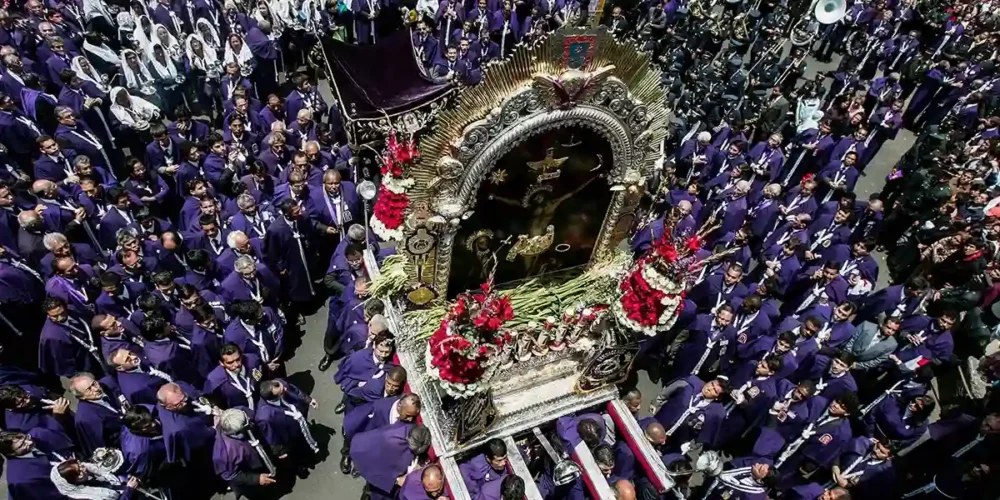
The procession is the public manifestation of devotion to the Lord of Miracles. During the event, a large religious image is carried through the streets of Lima on a heavy platform known as an anda.
Thousands of people accompany the image as it moves through different parts of the city. The atmosphere combines religious devotion with music, incense, prayers and traditional customs.
For a visitor, the scale of the event can be striking. What may initially look like a parade is actually a deeply religious ceremony in which many participants have personal reasons for being there.
How does the Lord of Miracles procession work?
The image is placed on an elaborately decorated anda, which is carried by members of the religious brotherhood associated with the devotion.
The cargadores, or bearers, carry the platform in coordinated groups. Because of its considerable weight, the responsibility is shared among many people and organized carefully.
The procession also includes other participants, including women associated with the use of incense, musicians and devotees following behind the image.
The soundscape is an important part of the experience. Religious songs, prayers, bands and the movement of the crowd create an atmosphere that is very different from an ordinary day in Lima.
Incense is also highly visible. The smoke rises around the image as participants perform traditional religious rituals along the route.
When does the Lord of Miracles procession take place?
October is the main month associated with the Lord of Miracles celebrations in Peru.
However, visitors should not assume that the procession always takes place on exactly the same days or follows the same route every year. The official schedule and itinerary can change depending on the year.
If you are planning to see the procession, check the official program for the year of your visit rather than relying on dates published in older travel articles.
Where does the procession take place?
Lima is the center of the most famous celebrations.
The Sanctuary of Las Nazarenas is particularly important because it is closely associated with the devotion and the image of the Lord of Miracles.
The processions traditionally move through central areas of Lima, including streets around the historic center. However, the exact route changes according to the annual schedule.
For tourists, this means that it is useful to check the official route before heading to a particular street or plaza.
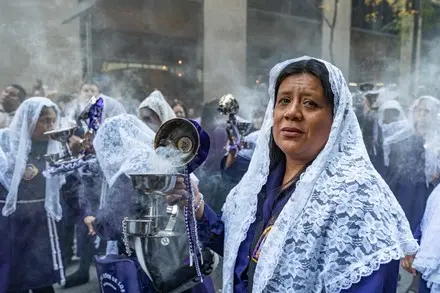
Why do Peruvians wear purple in October?
One of the first things many international visitors notice about the Lord of Miracles celebrations is the enormous amount of purple clothing.
During October, devotees can be seen wearing purple habits and other purple garments throughout Lima. The color has become one of the strongest visual symbols of the devotion.
What does purple symbolize in the Lord of Miracles tradition?
Purple is traditionally associated with the devotion to the Lord of Miracles and has become an expression of religious commitment.
For devotees, wearing purple is not simply a fashion choice. It can represent faith, devotion, gratitude and participation in the religious tradition.
Some people wear the color throughout October, while others particularly wear it when attending a procession or participating in religious activities.
What do people wear during the celebration?
The most recognizable garment is the purple habit associated with devotees of the Lord of Miracles.
However, visitors may also see people wearing purple shirts, sweaters, dresses, scarves and accessories.
Women may also wear traditional mantillas during certain religious activities.
For someone visiting Lima for the first time, the concentration of purple clothing can make the entire city feel visually different during October.
Why is October called the “Purple Month” in Peru?
The nickname comes from the strong connection between October and the Lord of Miracles.
As the month progresses, purple appears in clothing, decorations, religious objects, businesses and seasonal products.
The color has therefore become a cultural marker of October in Lima, making it easy for visitors to recognize that the city is in the middle of its annual celebration.
You might be interested in: Latest Seven Wonders of the World I The complete list
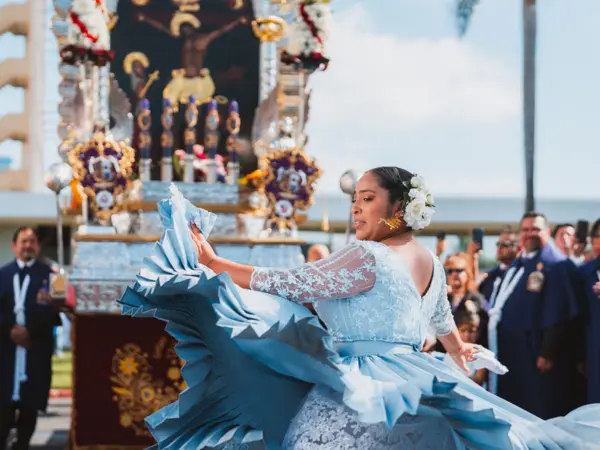
Lord of Miracles traditions you will see in Peru
The celebration involves many traditions beyond the procession itself. Understanding these elements can help travelers appreciate what they are seeing rather than simply treating the event as a colorful spectacle.
1. Purple habits
Purple habits are among the most recognizable symbols of the Lord of Miracles.
They are worn by devotees as an expression of their connection to the religious tradition. You may see entire groups of people wearing similar purple garments as they participate in the procession.
2. Incense and religious songs
Incense is another characteristic part of the procession.
The smoke surrounds the image as participants perform religious rituals. At the same time, songs and prayers accompany the movement of the anda.
The combination of incense, music and the slow movement of the crowd creates an atmosphere that can be intense and emotional.
3. Flower arrangements
The anda carrying the image is decorated with flowers and other ornamental elements.
The decorations are not simply designed to make the image attractive. They form part of the ceremonial presentation of the religious image as it moves through Lima.
4. The cargadores
The cargadores are responsible for carrying the heavy anda during the procession.
They work in organized groups and rotate throughout the route because of the physical effort involved.
Their role is one of the most recognizable aspects of the celebration and demonstrates the level of organization required to move the image through crowded streets.
5. Turrón de Doña Pepa
Food is another important part of the October tradition.
One of the best-known seasonal foods associated with the celebration is turrón de Doña Pepa, a traditional Peruvian sweet made from layers of dough, syrup and colorful decorations.
Although you do not need to attend a procession to try it, October is an excellent time for travelers to discover this dessert.
For visitors interested in Peruvian cuisine, tasting turrón de Doña Pepa can add another dimension to the cultural experience.

What can tourists experience during the Lord of Miracles celebrations?
For travelers, the Lord of Miracles offers an opportunity to experience an important part of Lima’s living culture.
The experience is not limited to watching the procession. October changes the atmosphere of different parts of the city and creates opportunities to discover traditions that may not be visible during other months.
Watching the procession in Lima
Visitors can observe the procession from the streets along the official route.
Because the event is religious, it is important to remember that it is not simply a tourist attraction. Thousands of people attend because of their faith and personal connection to the tradition.
Travelers should therefore observe respectfully, avoid interrupting participants and follow any instructions from organizers or authorities.
Exploring Lima during October
The celebrations provide an interesting reason to explore Lima’s historic center.
The procession may pass through areas containing colonial architecture, churches, plazas and other important landmarks.
Combining a cultural visit with an exploration of historic Lima can help travelers understand how religious traditions have remained connected to the city’s development.
Trying traditional food and sweets
October is also an excellent time to discover seasonal Peruvian food.
Turrón de Doña Pepa is the most obvious example, but visitors can also find purple-themed products and seasonal offerings in bakeries, markets and restaurants.
Trying local food alongside learning about the celebration provides a more complete cultural experience.
Understanding the cultural significance
You do not have to share the religious beliefs behind the Lord of Miracles to appreciate its cultural importance.
For an international visitor, the celebration provides insight into how history, religion, community and identity can coexist within a single tradition.
Approaching the event with curiosity and respect is the best way to experience it.

What to know before attending the Lord of Miracles procession
If you are planning to see the Lord of Miracles procession during a trip to Lima, knowing what to expect can make the experience much easier. The celebration is one of the city’s largest religious and cultural events, attracting thousands of devotees to the streets during October.
For visitors, the procession can be an impressive way to experience an important part of Peruvian culture. However, it is important to remember that this is first and foremost a religious celebration. People attend to express their faith, fulfill personal commitments and participate in a tradition that has been passed down through generations.
The experience is therefore very different from attending a conventional festival or parade. A little preparation will help you enjoy the event while respecting the people taking part.
Check the procession route and schedule beforehand
The dates, schedules and routes of the Lord of Miracles procession can vary from one year to another. Different processions may take place during October, and the route may include different streets in central Lima depending on the official program.
Before heading out, check the most recent information from official or reliable local sources. This is especially important if you have limited time in Lima and want to choose a convenient location from which to observe the procession.
Do not rely exclusively on an old travel blog or a previous year’s itinerary. A route that was used in one October may not be exactly the same the following year.
It is also useful to arrive before the procession reaches your chosen location. Popular areas can become crowded well in advance, particularly around important religious sites and central streets.
Be prepared for large crowds
The Lord of Miracles attracts large numbers of people, so visitors should expect crowded streets and slower movement than usual.
If you plan to watch the procession on foot, comfortable shoes are essential. You may spend a considerable amount of time standing or walking, and moving through the crowd can take longer than expected.
It is also better to carry only what you need. Keep your phone, wallet, passport and other important belongings somewhere secure, especially when walking through particularly crowded areas.
If you are traveling with children or elderly companions, establish a meeting point in case your group becomes separated. This simple precaution can make navigating the crowds much easier.
Respect the religious character of the celebration
One of the most important things to understand about the Lord of Miracles is that the procession is not a performance organized for tourists.
For many Peruvians, it is a deeply personal religious experience. Some devotees may be participating to give thanks, ask for protection or fulfill a promise connected to their faith.
As a visitor, you are welcome to observe the celebration, but it is important to do so respectfully. Avoid blocking the path of the procession, interrupting participants or treating religious rituals as entertainment.
Photography is generally an important part of documenting a trip, but be considerate when taking pictures of people participating in moments of prayer or devotion. When in doubt, observe first and photograph without interfering.
Plan your transportation around the procession
The Lord of Miracles procession can affect traffic and public transportation in parts of Lima because streets may be closed or temporarily restricted.
If you have a restaurant reservation, museum visit, airport transfer or other activity scheduled on the same day, allow more travel time than usual.
If possible, choose accommodation or transportation options that make it easier to reach the procession area without depending entirely on a car or taxi.
Walking may sometimes be the most practical way to move around areas affected by closures, although you should still consider the size of the crowds and the distance involved.
You might be interested in: Everything about Saint Rose of Lima mass times 2026
Frequently asked questions about the Lord of Miracles
Is the Lord of Miracles only celebrated in Lima?
Lima is the main center of the most famous Lord of Miracles celebrations, particularly the large October processions associated with the Sanctuary of Las Nazarenas and the historic center.
However, devotion to the image extends far beyond Lima. Religious brotherhoods and communities connected to the tradition can be found in other parts of Peru and among Peruvian communities abroad.
For travelers who want to experience the largest and most recognizable manifestation of the tradition, Lima remains the key destination.
Can tourists attend the Lord of Miracles procession?
Yes. Tourists can watch the procession and experience the atmosphere surrounding the celebration.
There is no need to be Catholic or Peruvian to appreciate its cultural importance. In fact, the event can offer travelers a valuable insight into Peruvian history, religion and community traditions.
The most important thing is to behave as a respectful observer. Stay out of the procession’s path, follow instructions from organizers or authorities and be mindful of the people around you.
If you want to understand the celebration better, learning about its history before attending can also make the experience more meaningful.
When is the Lord of Miracles celebrated?
October is the month most strongly associated with the Lord of Miracles, which is why it is often known as the “Purple Month” in Peru.
During this period, Lima takes on a distinctive atmosphere. Purple clothing becomes especially common, religious activities increase and the streets around the procession routes become much busier.
The exact procession dates and routes can change each year, so travelers should check the official schedule for the specific year they plan to visit.
Why do Peruvians wear purple during October?
Purple is strongly associated with the Lord of Miracles devotion. During October, devotees commonly wear purple habits or other purple clothing as an expression of faith and participation in the tradition.
This is why international visitors may notice an unusual amount of purple throughout Lima during this period.
The color is not simply a seasonal decoration. It has become one of the most recognizable symbols of the celebration and is closely connected to the identity of the October festivities.
Is the Lord of Miracles a Catholic tradition?
Yes. The Lord of Miracles is a Catholic devotion centered on an image of Christ crucified.
At the same time, its history is closely connected to Peru’s colonial past, the Afro-Peruvian community associated with the original image, the history of Lima and the traditions that developed around the devotion over several centuries.
This combination of religious and historical elements is part of what makes the celebration culturally significant beyond its strictly religious meaning.
What can tourists see during the Lord of Miracles procession?
Visitors may see the large decorated anda carrying the religious image, groups of cargadores carrying it through the streets, people dressed in purple, incense, flowers, religious songs and large groups of devotees following the procession.
The experience can be particularly striking for first-time visitors because several elements come together at once: the sound of music and prayers, the smell of incense, the movement of the crowd and the distinctive purple clothing associated with October.
What should tourists wear to the procession?
There is no specific dress code for visitors, but comfortable and respectful clothing is recommended.
Because you may spend several hours walking or standing, comfortable shoes are more important than dressing formally. If you visit religious spaces along the route, modest clothing is also a good choice.
You do not need to wear purple unless you want to. Purple is primarily associated with devotees and their participation in the tradition.
Is the Lord of Miracles worth seeing as a tourist?
If you are interested in Peruvian history, religion or living cultural traditions, the Lord of Miracles can be a particularly meaningful experience.
It offers something different from visiting a museum or historical monument because you are witnessing a tradition that continues to shape the city every year.
The most important thing is to approach it with curiosity and respect. Rather than simply taking photographs of the procession, take the opportunity to understand why thousands of people gather, why purple dominates the streets and how this centuries-old devotion continues to be part of Lima’s identity.
For travelers visiting Peru in October, the Lord of Miracles is an opportunity to experience a side of Lima that cannot be fully understood through conventional sightseeing alone.
Why the Lord of Miracles is an important part of Peruvian culture?
The Lord of Miracles is much more than an image carried through the streets of Lima.
Its history connects colonial Peru, religious devotion, Afro-Peruvian heritage, earthquakes, community traditions and the development of one of the country’s most recognizable cultural celebrations.
For travelers visiting Peru in October, seeing the purple clothing, hearing the religious songs, smelling the incense and watching thousands of people accompany the procession can be a memorable cultural experience.
Understanding what you are seeing makes that experience even more meaningful.
If you are planning a trip to Lima during October, consider making time to learn about the Lord of Miracles and its traditions. Whether you participate as a believer or simply observe as a curious traveler, approaching the celebration with respect will allow you to appreciate one of the most enduring expressions of Peruvian culture.


